✓ Registered Vet Practice
🚚 Fast UK-Wide Delivery, Including Northern Ireland
℞ Prescription & Non-Prescription Products
→ Need to upload a prescription?

Why Is My Dog Licking Its Paws?
What's causing it, what to look for between the toes, and when to see your vet.
Quick Answer
- Occasional paw licking is normal — persistent licking, especially if the skin looks red or stained, is worth investigating.
- Allergies are the most common underlying cause, but infections, injuries, parasites, and anxiety can all be responsible.
- Reddish-brown staining of the fur between the toes is a sign of chronic licking, often linked to a yeast infection or allergy.
- One paw vs all four is a useful distinction: one paw often suggests a local problem; all four more often points to an allergy or infection.
- A grass seed between the toes needs same-day veterinary attention — it can migrate quickly into the tissue.
Dogs lick their paws occasionally, and that's normal. The concern starts when it becomes frequent, intense, or persistent — particularly if the skin between the toes is starting to look red, swollen, or stained. Chronic paw licking nearly always has a cause, and finding it is the key to resolving it.
One Paw or All Four? It Matters.
This distinction helps narrow down the cause before you even get to the vet.
One paw only
- More likely a local problem
- Grass seed or foreign body
- Cut, splinter, or thorn
- Interdigital cyst
- Localised injury
Multiple or all four paws
- More likely a systemic cause
- Allergies (environmental or food)
- Yeast or bacterial infection
- Contact irritation
- Harvest mites
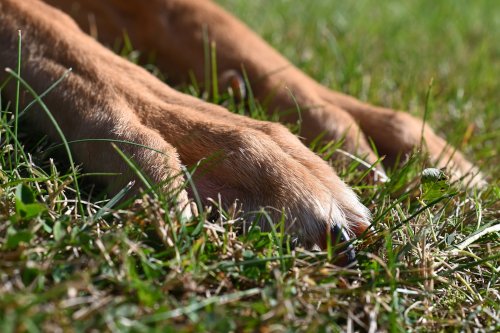
Common Causes of Paw Licking in Dogs
01 Environmental Allergies (Atopy)
Atopic dermatitis is the most frequent cause of persistent paw licking in dogs. When a dog walks on grass, through pollen, or across dusty surfaces, allergens land on the paws and trigger an itchy response. This is why paw licking linked to allergies often intensifies in spring and summer — though it can affect dogs year-round if dust mites or indoor moulds are the trigger.
The paws, belly, ears, and face are classic sites for atopy symptoms. If your dog is licking its paws alongside scratching its belly or shaking its head, allergies should be high on the list to discuss with your vet.
02 Food Sensitivities
Food-related skin reactions can show up at the paws just as readily as anywhere else on the body. Unlike seasonal allergies, food sensitivity tends to cause year-round itching — there's no "better in winter" pattern to suggest pollen is to blame. Identifying the specific ingredient requires a carefully supervised elimination diet, guided by your vet. Random food changes alone rarely get to the bottom of it.
03 Contact Irritation
The pads and skin between the toes come into contact with almost everything your dog walks on. Road salt and grit used in winter can cause significant irritation and even chemical burns to the paw pads. Fertilisers, weed killers, and lawn treatments can do the same. Hot pavements in summer can scorch the pads. After walks in treated areas or on hot surfaces, washing the paws with plain water and drying them thoroughly can help.
04 Yeast Infection
Malassezia yeast naturally lives on dog skin but can overgrow in warm, moist areas — and the spaces between the toes are ideal conditions for it. Yeast infections between the toes cause intense itching and a distinctive musty smell. The fur between the toes often turns a reddish-brown colour from the saliva deposited during chronic licking. Yeast infections between the toes are often secondary to allergies, and treating one without addressing the other typically means the problem returns.
05 Bacterial Skin Infection
Bacterial infections can develop between the toes when the skin barrier has been broken by scratching, licking, or underlying inflammation. Signs include redness, swelling, discharge, and an unpleasant smell. Like yeast infections, bacterial infections between the toes often occur alongside an underlying condition — managing that underlying cause is as important as treating the infection itself.
06 Grass Seed or Foreign Body SUMMER / AUTUMN
Arrow-shaped grass seeds are a significant cause of sudden, intense paw licking in the UK, particularly between late summer and early autumn. They lodge between the toes, and their backward-facing barbs allow them to move inward through the tissue rather than back out. Left untreated, they can track deep into the paw or up the leg, causing abscesses and serious infection.
If your dog suddenly starts intensely licking one paw after a walk, check carefully between the toes. If you can see a grass seed or a small entry wound — or can't see anything but the licking is severe — contact your vet the same day.07 Injury or Cracked Pad
Cuts, thorns, splinters, cracked or sore pads — any localised injury to the paw will prompt a dog to lick at it. Check the pads and between the toes for visible wounds, swelling, or anything embedded in the skin. Cracked pads can develop from walking on very dry ground, rough surfaces, or as a result of certain nutritional deficiencies. Minor injuries often heal with rest; anything that looks infected, is bleeding significantly, or isn't improving needs veterinary attention.
08 Interdigital Cysts (Furunculosis)
Interdigital cysts are painful, red or purple nodules that develop between the toes. They can be caused by foreign bodies, secondary bacterial infection, Demodex mites, or repeated trauma to the skin from walking on hard surfaces. Some breeds with short, coarse coats — such as Bulldogs, Boxers, and Labrador Retrievers — are more prone to them. They can rupture and become infected, and they often recur if the underlying cause isn't addressed. Veterinary assessment is needed.
09 Harvest Mites SEASONAL
Harvest mites (Trombicula autumnalis) are tiny orange-red mites that are active in late summer and autumn in the UK. They cluster in groups and are most commonly found between the toes, on the belly, and around the ears. Under close inspection they look like tiny orange dots. They cause intense itching and are picked up from long grass and vegetation. They need specific treatment from your vet; standard flea products don't reliably cover them.
10 Anxiety or Compulsive Behaviour
Some dogs develop paw licking as a response to stress, boredom, or anxiety. It often starts as a physical response to mild irritation and then becomes a habit that persists even after the original trigger has gone. Signs that behavioural licking may be a factor include licking that happens primarily when the dog is alone, at night, or in stressful situations — and skin that looks relatively normal despite the constant attention. A vet can help rule out physical causes and, where needed, discuss behavioural management options.
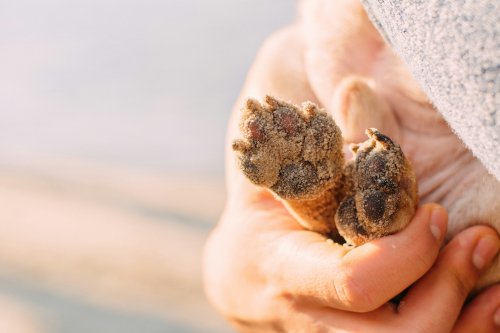
What to Look For When Checking the Paws
Checking the paws carefully gives you useful information before calling your vet:
- Reddish-brown fur staining between the toes — a sign of chronic licking, often linked to yeast or allergy
- Redness, swelling, or sores between the toes or on the pads
- Visible wound, thorn, glass, or foreign body
- Small orange dots clustering between the toes (harvest mites, late summer/autumn)
- A swollen, painful nodule between the toes (possible interdigital cyst)
- Cracked, dry, or peeling pads
- A small puncture wound or hair loss that might indicate a grass seed entry point
- Unpleasant smell from the paw, particularly a musty or yeasty odour
- Whether one paw or multiple paws are affected
- Any limping alongside the licking
Contact Your Vet Same Day
- Sudden, intense licking of one paw after a walk — possible grass seed
- Visible entry wound between the toes or a small lump that appeared rapidly
- The paw is swollen, hot, and clearly painful to touch
- There is active bleeding from the paw that doesn't slow down
- Your dog is limping as well as licking — especially if onset was sudden
- Any sign of an abscess: discharge, heat, and a noticeably swollen area
Grass seeds in particular need same-day attention. The longer they're left, the further they can migrate — and that makes removal significantly more difficult.
When to Contact Your Vet
- Paw licking has been persistent for more than a few days and doesn't seem to be easing
- The fur between the toes is stained reddish-brown — this indicates chronic licking
- Licking is accompanied by any redness, swelling, or smell
- The problem keeps coming back despite treatment
- You suspect allergies may be the underlying cause and want to investigate further
- Your dog is also scratching elsewhere, shaking its head, or showing other allergy-related signs
- You've ruled out a physical cause and suspect behavioural licking is a factor
How Pet Med Direct Can Help
Pet Med Direct stocks a range of skin care and parasite treatment products for dogs in the UK. Some products for general skin support and paw care don't require a prescription. Prescription treatments for skin infections, mites, or allergy management require a valid veterinary prescription.
If your vet has identified the cause and recommended a specific product, browse the Pet Med Direct shop to see what's available. Always treat the underlying cause, not just the symptoms — the right product depends on what's actually causing the licking.
Some treatments require a valid veterinary prescription. Pet Med Direct can only supply prescription medicines after the prescription has been checked. Always follow your vet's advice and the directions on the medicine label.
Frequently Asked Questions
My dog only licks one paw. What does that mean?
Licking concentrated on a single paw usually suggests something local to that paw rather than a whole-body problem. The most common causes are a grass seed or foreign body, a small cut or injury, a thorn or splinter, or an interdigital cyst. Check the paw carefully between the toes and on the pads. If you find anything or can't find anything but the licking is intense and sudden, contact your vet.
Why is the fur between my dog's toes stained reddish-brown?
The reddish-brown colour comes from porphyrins in your dog's saliva — these compounds stain light-coloured fur when deposited repeatedly over time. It's a clear sign that licking has been going on for a while, even if you haven't noticed it much. The underlying cause still needs identifying and addressing; the staining itself is just an indicator of chronic licking.
Could road salt be irritating my dog's paws in winter?
Yes. Road salt and grit used during winter can cause significant irritation to the pads and skin between the toes — and dogs often lick their paws after walks to remove the discomfort, which can introduce more of the irritant into the mouth. Rinsing and drying your dog's paws after walks on treated roads is a practical way to reduce this, particularly during cold weather. Protective paw wax products are available too, though their effectiveness varies.
My dog mainly licks its paws at night. Is that significant?
Nighttime paw licking is often allergy-related — allergens that have built up on the coat and paws throughout the day can cause itching as the dog settles down. It can also be a sign of anxiety or a compulsive habit, particularly if the dog is alone or the household has gone quiet. If it's happening regularly enough to disturb the dog's sleep or yours, it's worth a vet conversation.
Can paw licking be caused by anxiety?
Yes. Stress and anxiety can cause or worsen paw licking in dogs, and repetitive licking can become a compulsive habit over time. Separation anxiety, environmental changes, or general boredom are all possible factors. A vet can help rule out physical causes first — physical and behavioural causes can look identical from the outside — and discuss management options if anxiety is confirmed as a driver.
How do I check my dog's paws properly at home?
With the dog calm and settled, gently hold each paw and spread the toes apart. Look between each toe for redness, swelling, staining, small wounds, lumps, or anything embedded in the skin. Check the pads for cracking, cuts, or foreign material. Sniff the paw — a musty or yeasty smell can suggest infection. Note which paw or paws are affected and what you found, so you can describe it accurately to your vet.


Need pet products or prescription medicines? Visit the Pet Med Direct shop.
Shop Pet Med Direct