✓ Registered Vet Practice
🚚 Fast UK-Wide Delivery, Including Northern Ireland
℞ Prescription & Non-Prescription Products
→ Need to upload a prescription?

Why Is My Dog Drinking More Water Than Usual?
What increased thirst can tell you — and when to act.
Quick Answer
- Increased thirst (polydipsia) in dogs is a recognised symptom that often points to an underlying medical condition.
- Common causes include diabetes, Cushing's disease, kidney disease, liver disease, and certain medications.
- In unspayed female dogs, increased thirst alongside lethargy or vaginal discharge can indicate pyometra — a uterine infection that needs urgent treatment.
- Don't restrict water if you think your dog is drinking too much — they may need it. Contact your vet instead.
- Increased thirst alongside increased urination is a combination that almost always needs investigation.
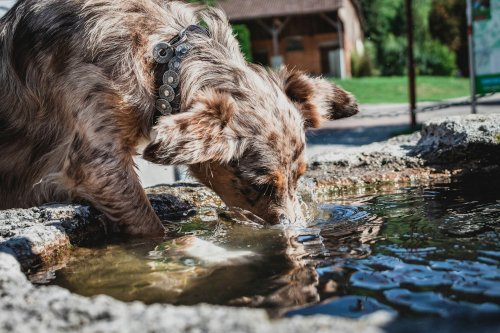
Dogs drink more in hot weather and after exercise — that's entirely normal. What's worth paying attention to is a persistent, noticeable change in how much a dog is drinking day to day, especially if there's no obvious explanation like heat or increased activity.
Increased thirst and increased urination (polydipsia and polyuria) often go together, and in combination they're one of the clearest signals the body uses to tell you something is wrong internally. Several serious conditions produce this pattern — and most are significantly more manageable when caught early.
How to Know If Your Dog Is Drinking More Than Usual
If you're unsure whether your dog's water intake has genuinely increased, measure it for a few days. Normal water intake for a dog is roughly 50–60ml per kilogram of body weight per day — so a 20kg dog might drink around 1–1.2 litres. This varies with diet (wet food provides more moisture than dry food), temperature, and activity. A dog consistently drinking significantly more than this is worth a vet check, even if the dog seems otherwise well.
Also note: if your dog is urinating more frequently, producing larger amounts, or having accidents indoors despite being housetrained, those are additional signs that something medical may be going on.
Common Causes of Increased Thirst in Dogs
01 Hot Weather and Exercise
This is the most straightforward explanation and the first to rule out. Dogs lose moisture through panting and need more water in warm weather or after vigorous exercise. If the increased drinking is clearly linked to temperature or activity and returns to normal in cooler conditions or after rest, this isn't usually a cause for concern. If the pattern persists regardless of weather or activity levels, something else is likely going on.
02 Diet Change
A switch from wet food to dry food significantly reduces moisture from the diet and will naturally increase how much a dog drinks. This is normal and expected. Similarly, a particularly salty treat or food can cause temporary increased thirst. If the change in thirst clearly coincides with a diet change and is proportionate, there's usually no cause for concern.
03 Diabetes Mellitus
Increased thirst and urination are among the most characteristic signs of diabetes in dogs. The body can't use glucose effectively, so it spills into the urine and draws water with it — leading to a cycle of excessive urination and compensatory drinking. Other signs include weight loss despite a normal or increased appetite, lethargy, and a tendency toward recurrent infections. Diabetes in dogs is manageable with insulin therapy and dietary changes, and the sooner it's diagnosed, the better the outcome tends to be.
04 Cushing's Disease (Hyperadrenocorticism)
Cushing's disease causes the body to produce too much cortisol, which directly increases thirst and urination. It's more common in middle-aged and older dogs. Other signs include a pot-bellied appearance, symmetrical hair loss on the flanks, muscle weakness, increased appetite, and panting. Diagnosis requires specific blood and urine tests. Several treatment options exist depending on the underlying cause.
05 Chronic Kidney Disease
The kidneys regulate water balance in the body. As kidney function declines, the kidneys lose their ability to concentrate urine — the body produces large volumes of dilute urine and the dog drinks more to compensate. This cycle of polyuria and polydipsia is a classic early sign of chronic kidney disease (CKD). Other signs may be subtle at first, including mild weight loss, reduced appetite, and occasional vomiting. CKD is manageable with appropriate diet and supportive care — early detection matters.
06 Liver Disease
The liver plays a central role in metabolism, and liver disease can cause increased thirst among a range of other signs — including vomiting, weight loss, jaundice (yellowing of the skin or whites of the eyes), and a swollen abdomen from fluid accumulation. Blood tests are needed to assess liver function, and diagnosis often requires further investigation.
07 Pyometra (Unspayed Female Dogs)
URGENT — UNSPAYED FEMALES
What Is Pyometra?
Pyometra is a serious infection of the uterus that can develop in unspayed female dogs, typically in the weeks after a season. The uterus fills with pus, and the infection produces toxins that affect the whole body — including causing increased thirst and urination.
Signs include increased thirst, lethargy, reduced appetite, vomiting, and in the open form of pyometra, a visible vaginal discharge. In closed pyometra, there's no discharge — making it harder to spot but more dangerous. Without treatment (usually emergency surgery), it can be fatal.
If you have an unspayed female dog who is drinking significantly more than usual in the weeks after a season, contact your vet promptly. Do not wait for other symptoms to develop.
08 Medications
Several commonly prescribed medications cause increased thirst and urination as a recognised side effect. Corticosteroids (steroids) are the most common example and often produce noticeable polydipsia and polyuria even at short-term doses. Diuretics, some anti-epileptic drugs, and certain behavioural medications can also increase water intake. If your dog started drinking more shortly after starting a new medication, mention it to your vet — though don't stop prescribed medication without speaking to them first.
09 Hypercalcaemia (High Blood Calcium)
Abnormally high calcium levels in the blood affect kidney function and can cause increased thirst and urination, alongside lethargy, weakness, and loss of appetite. Hypercalcaemia has several possible causes including certain cancers, primary hyperparathyroidism, and vitamin D toxicity. It's identified through blood tests and treated according to the underlying cause.
Contact Your Vet Promptly
- An unspayed female dog is drinking more in the weeks after a season — possible pyometra
- Increased thirst alongside significant lethargy, vomiting, or loss of appetite
- Vaginal discharge in an unspayed female alongside other symptoms
- Rapid deterioration in an older dog who has recently developed increased thirst
- Signs of diabetic crisis: vomiting, extreme lethargy, a sweet smell on the breath, collapse
Pyometra is a life-threatening condition in unspayed females. If you have any suspicion, don't wait — contact your vet the same day.
When to Contact Your Vet
- Increased thirst has been going on for more than a few days without an obvious cause
- Your dog is also urinating more frequently or producing larger volumes of urine
- Indoor accidents have started in a previously housetrained dog
- Increased thirst alongside weight loss, a pot belly, hair loss, or lethargy
- Your dog started a new medication and thirst has increased noticeably
- You want to rule out a medical cause and your dog is drinking significantly more than usual
How Pet Med Direct Can Help
Pet Med Direct stocks a range of products for dogs in the UK. Prescription medications for conditions such as diabetes, Cushing's disease, and kidney disease require a valid veterinary prescription. If your vet has diagnosed the underlying cause of your dog's increased thirst and recommended a specific product, browse the Pet Med Direct shop to see what's available.
Some medicines require a valid veterinary prescription. Pet Med Direct can only supply prescription medicines after the prescription has been checked. Always follow your vet's advice and the directions on the medicine label.
Frequently Asked Questions
Should I restrict my dog's water if they're drinking too much?
No. Never restrict a dog's water without explicit veterinary guidance. Many conditions that cause increased thirst also cause the body to genuinely need more water. Restricting access to water in these cases can cause serious harm. Contact your vet to investigate the cause — restricting water is not a treatment for polydipsia.
Is it normal for dogs to drink more as they get older?
It shouldn't be assumed to be. Older dogs are more prone to conditions such as kidney disease, Cushing's disease, and diabetes — all of which can cause increased thirst. A new or worsening increase in water intake in a senior dog is worth a vet check and basic blood and urine screening, rather than being attributed to age alone.
My dog drinks a lot but seems otherwise healthy. Does that matter?
Yes, it can. Several conditions that cause increased thirst — including early kidney disease, diabetes, and Cushing's disease — may produce few other noticeable signs in the early stages. Dogs are good at appearing well even when something is wrong internally. Blood and urine testing can often identify these conditions before other symptoms appear, giving the best chance of effective management.
What is pyometra, and how serious is it?
Pyometra is a uterine infection that develops in unspayed female dogs, usually in the weeks after a season. It's serious — without treatment it can be fatal. The standard treatment is emergency surgical removal of the uterus. Signs include increased thirst, lethargy, vomiting, and sometimes (but not always) vaginal discharge. If you have an unspayed female dog and any of these signs appear together in the weeks after a season, treat it as urgent and contact your vet the same day.
Can diabetes be managed in dogs?
Yes. Diabetes in dogs is typically managed with daily insulin injections, a consistent diet, and regular veterinary monitoring. Most dogs with well-controlled diabetes maintain a good quality of life. Early diagnosis leads to better outcomes. If you suspect diabetes based on increased thirst, increased urination, weight loss, and appetite changes, a vet can confirm this with blood and urine tests.
My dog is on steroids and drinking a lot. Is that normal?
Increased thirst and urination are well-recognised side effects of corticosteroid treatment in dogs. If the increase is significant or distressing, mention it to your vet at the next opportunity — they may be able to adjust the dose or frequency. Don't stop steroid treatment suddenly without veterinary guidance, as this can cause its own problems. The side effects typically reduce once the course is finished or the dose is tapered.

Need pet products or prescription medicines? Visit the Pet Med Direct shop.
Shop Pet Med Direct