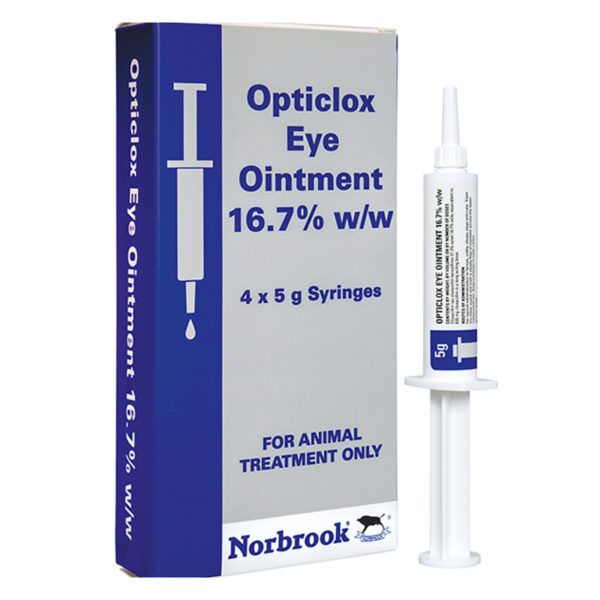
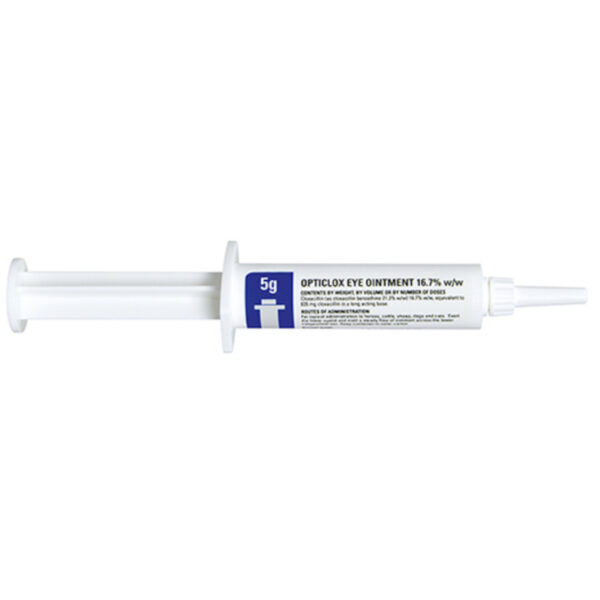
Opticlox Eye Ointment 16.7% w/w 5g is a POM-V antibiotic eye ointment used to treat suitable bacterial eye infections, as diagnosed by your vet. It is applied directly to the eye surface to help clear infection and relieve redness, discharge and irritation.
This product can be supplied as a single 5g tube or as a 4-tube box pack. Your vet will advise how much Opticlox eye ointment you need for your pet’s treatment plan and show you how to apply it safely. Always use this medicine only for the animal named on the prescription and exactly as your vet directs.
All orders require review by a licensed veterinarian.Please allow 1–2 working days for processing.
Opticlox eye ointment is used to treat certain bacterial infections of the eye and eyelids. These infections may cause:
Red or inflamed eyes
Watery, sticky or pus-like discharge
Squinting or holding the eye closed
Rubbing or pawing at the face
By delivering an antibiotic directly to the affected eye, Opticlox eye ointment helps control the infection and supports healing of the delicate eye tissues. Your vet will examine the eye first to confirm that this is an appropriate treatment.
Pack Sizes – Single Tube or 4 Pack
For flexible prescribing, Opticlox eye ointment is available as:
Single 5g tube – ideal for one pet on a standard course
4 x 5g tube box pack – helpful for longer courses, repeat treatment or multi-animal use under veterinary supervision
Order the quantity that matches your prescription. Your vet will advise whether one tube is enough or if a full 4-pack is more suitable.
How Opticlox Eye Ointment Works
Opticlox eye ointment contains an antibiotic from the penicillin group. This antibiotic damages the cell wall of susceptible bacteria. It weakens and kills the bacteria, helping the body clear the infection.
As the infection improves, you should start to see:
Less redness and swelling
Reduced discharge around the eye
Less rubbing or pawing at the face
Your animal opening the eye more comfortably
Not all eye problems are caused by bacteria. Some are due to viruses, injury, ulcers, allergies or foreign bodies. This is why Opticlox eye ointment should only be used when your vet has examined the eye and advised this medicine.
When Vets May Prescribe Opticlox Eye Ointment
Your vet may prescribe Opticlox eye ointment when they find signs that fit a bacterial eye infection, such as:
Conjunctivitis with suspected bacterial involvement
Some infections of the eyelids or surface of the eye
Eye infections following minor trauma, where appropriate
They may also carry out tests such as fluorescein staining to check for corneal ulcers. This helps them decide which medicines are safe and whether extra treatment is needed.
How to Apply Opticlox Eye Ointment
Your vet or veterinary nurse will demonstrate the correct technique. As a simple guide:
Wash your hands before and after handling the eye and tube
Gently clean away discharge with cooled boiled water and cotton wool, if your vet agrees
Hold your pet’s head steady
Gently pull down the lower eyelid to create a small pocket
Squeeze a thin ribbon of Opticlox eye ointment into this pocket, as your vet has shown
Release the eyelid and allow your pet to blink to spread the ointment
Your vet will tell you:
How many times per day to apply the ointment
Whether to treat one eye or both eyes
How many days or weeks the course should last
Try to give doses at evenly spaced times through the day. Do not stop treatment early, even if the eye looks better, unless your vet advises this.
If you are using more than one type of eye medicine, ask your vet which order to use them in and how long to leave between products.
Extra Eye-Care While Using Opticlox
To support healing while using Opticlox eye ointment, your vet may recommend:
A buster collar or medical pet shirt to prevent rubbing or scratching
Keeping the eye area clean and gently wiping away dried discharge
Avoiding smoky, dusty or windy environments during recovery
Monitoring both eyes, as some infections can affect them in turn
Contact your vet promptly if you notice:
The eye becoming more painful, cloudy or very red
Your pet keeping the eye tightly shut or showing obvious discomfort
Thick green or blood-stained discharge
Your pet becoming dull, off food or generally unwell
These signs can suggest that the infection is not improving, that another condition is present or that extra treatment is needed.
Safety Information
Opticlox eye ointment is a POM-V medicine. It must only be used:
For the animal named on the prescription
Under direct veterinary supervision
Exactly as your vet and the label instruct
Important points to remember:
Do not use Opticlox eye ointment in any other animal without veterinary advice
Tell your vet about any other eye drops, ointments or medicines your pet is receiving
Inform your vet if your pet has a known allergy to penicillins or related antibiotics
Avoid letting the tube tip touch the eye, eyelids or any surface to keep it clean and reduce the risk of contamination
People with a penicillin allergy should handle the tube carefully and may prefer to wear disposable gloves. If ointment gets into your own eye, rinse with plenty of clean water and seek medical advice if irritation persists.
Store Opticlox eye ointment as directed on the packaging. Keep all tubes in the original carton and out of sight and reach of children and animals. Do not use the ointment after the expiry date or beyond any stated in-use period once opened. Return any unused or expired tubes to your vet or pharmacist for safe disposal.
Used exactly as your vet directs, Opticlox eye ointment can play an important role in treating suitable bacterial eye infections and helping your animal’s eyes feel more comfortable again.
















 Prescription Required
 Prescription Required
 Prescription Required
 Prescription Required
 Prescription Required
 Prescription Required
 Prescription Required