✓ Registered Vet Practice
🚚 Fast UK-Wide Delivery, Including Northern Ireland
℞ Prescription & Non-Prescription Products
→ Need to upload a prescription?

How to Find Fleas and Ticks on Dogs and Cats
Learn how to spot fleas and ticks on dogs and cats, the signs to watch for, where to check, and when to seek advice.
Fleas and ticks are two of the most common external parasites found on pets. They can cause irritation, skin problems and, in some cases, help spread disease. Fleas are especially common on both dogs and cats, and the cat flea is the species most often found on both animals. Ticks are usually picked up outdoors and the clearest sign is simply finding one attached to your pet’s skin.
Many owners do not spot fleas or ticks straight away. Some pets show obvious itching, while others can carry parasites with only mild signs at first. Grooming behaviour, especially in cats, can reduce the number of visible adult fleas, which means an infestation can be easy to miss.


Why early checking matters
Finding fleas and ticks early is important because these parasites do more than just make pets uncomfortable. Fleas can trigger flea allergy dermatitis, a skin reaction caused by flea saliva, and heavy flea burdens can contribute to anaemia, especially in young animals. Fleas can also play a role in the transmission of other parasites and infections.
Ticks matter for a different reason. They attach firmly to the skin and feed on blood. Some ticks can carry infections, and they can also pose a risk to people handling infested animals. Cornell notes that tick-borne illness is uncommon in cats, but care is still needed when removing ticks because ticks can transmit disease to humans.
Common signs of fleas on dogs and cats
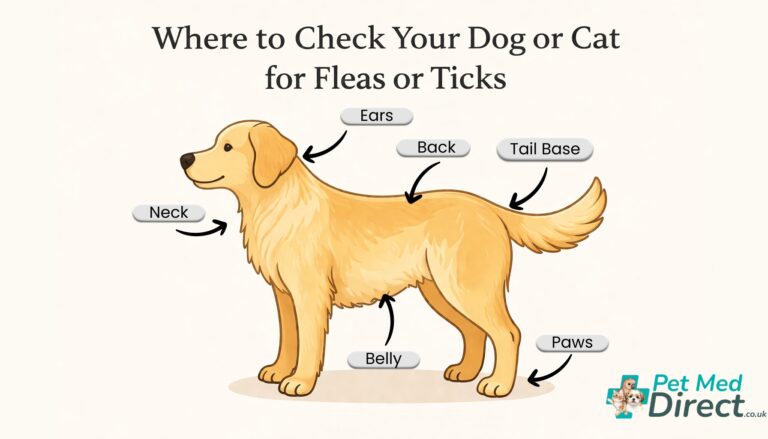
One of the first things owners notice is scratching. Pets may also bite, lick or rub at their skin more than usual. In dogs with flea allergy dermatitis, itching can be intense, and the lower back, tail base, inner thighs and belly are often affected. In cats, signs can include itching and small crusty bumps, often around the neck, face or back.
You may also notice:
- Restlessness
- Hair loss
- Red or irritated skin
- Scabs or crusts
- Tiny dark specks in the coat known as flea dirt
- Live fleas moving quickly through the fur
These signs do not prove fleas on their own, because many skin conditions can look similar, but they are good reasons to check your pet carefully.
Common signs of ticks on dogs and cats
Ticks are often easier to confirm than fleas because owners may actually find one attached to the skin. They usually look like a small dark bump at first, and after feeding they can become larger and more obvious. Dogs that spend time outdoors, especially in fields, woodland or rough grass, are more likely to pick up ticks, although any pet that goes outside can be exposed.
Cats that roam outdoors can also pick up ticks. Cornell advises owners not to panic if they find a tick on a cat, but to handle removal carefully and avoid touching the tick with bare skin.
TIP: Firstly, Always Wear Gloves
How to check your dog or cat for fleas
The best time to check is when your pet is calm and standing in good light. Use your fingers or a fine comb to part the fur and look closely at the skin. Focus on areas where fleas are often found, such as the neck, the back, the tail base, the belly and around the hindquarters. Cats may groom fleas away, so evidence such as flea dirt can be easier to find than live fleas.
A flea comb can help lift debris from the coat. If you see tiny black specks, place them on damp white tissue or cotton wool. Flea dirt is made from digested blood and may leave a reddish-brown stain when wet. While that simple check is widely used in practice, the safest point for owners is this: if you find black specks, skin irritation or fast-moving insects, it is sensible to treat the finding seriously and seek advice if you are unsure. The presence of fleas, flea dirt and compatible skin signs all support the diagnosis.
How to check your dog or cat for ticks
Run your hands slowly over your pet’s body and feel for any small lumps attached to the skin. Then part the fur and inspect closely. Pay extra attention after walks in long grass, woodland, heath or farmland. Ticks are often found around the head, ears, neck, feet, between the toes and under the collar area, although they can attach anywhere. The most reliable sign is seeing the tick itself attached to the skin.
If you find a tick, do not squeeze it with your fingers. Wear gloves if possible, use a proper tick remover, and remove it carefully according to product instructions. After disposal, wash your hands. If the area becomes inflamed or your pet seems unwell, veterinary advice is the right next step.

Fleas vs ticks: what is the difference?
Fleas move quickly and are usually harder to catch sight of. They live in the coat, feed on blood and lay eggs that fall into the environment, including bedding, carpets and cracks in the home. That is why a flea problem is often not just on the pet but also in the pet’s surroundings.
Ticks are different. They attach to the skin and remain in place while feeding. Owners are more likely to find a single tick or several ticks attached after outdoor exposure rather than seeing them running through the coat.
Why fleas can keep coming back
Flea infestations can be frustrating because adult fleas are only part of the problem. Eggs drop off the pet into the environment, where they can develop further. CAPC states that effective flea control should address fleas on the pet, environmental infestation and future re-infestation, and that moderate to severe infestations may take several months to bring under control.
That means owners may still see activity for a period even after starting treatment, especially if bedding, carpets and resting areas are heavily contaminated. Consistency matters.
When to speak to a vet
You should consider veterinary advice if:
- your pet is very itchy
- the skin is sore, inflamed or infected
- you are finding repeated ticks
- your pet seems weak or unwell
- you suspect flea allergy dermatitis
- you are unsure which treatment is suitable for your pet’s age, species or health status
Regular parasite checks are a sensible part of routine pet care. CAPC recommends preventive physical examinations at least every 6 to 12 months, with parasite protection guided by a vet and tailored to the pet’s lifestyle and exposure.
Final thoughts
Checking for fleas and ticks does not take long, but it can make a big difference. A few minutes spent looking through your dog or cat’s coat can help you spot a problem early, reduce discomfort and get the right treatment started sooner. Fleas may show up as itching, skin irritation or flea dirt, while ticks are most often confirmed by finding one attached to the skin.
For pets that go outdoors, routine checking is a good habit all year round. Fleas and ticks are easier to deal with when they are found early, and the right prevention plan can help reduce the risk of ongoing infestations.

Fleas

Ticks
Always ask a Vet before treating for Fleas and Ticks for expert advice.
Shop for shop Fleas and Ticks below
What people say about our shop
Clients Testimonials

Incredible service!
Ordered my dog’s medication in the afternoon and it arrived the very next day. Couldn’t believe how fast it was delivered. I’ll definitely be using Pet Med Direct again!
Sarah J. - Manchester
Super quick delivery and great prices.
Placed my order for flea treatment on Monday morning, and it was at my door by Tuesday. Everything was well packaged and exactly as described. Brilliant service.
Mark R. - London
Fast and reliable.
I needed my cat’s prescription tablets urgently, and Pet Med Direct didn’t disappoint. The order was processed straight away and arrived quicker than expected. Highly recommend.
Laura H. - Glasgow
Excellent communication and next day delivery
I was kept updated from order to dispatch, and my parcel arrived the following morning. It’s great to find a company that genuinely cares about speed and service.
Tom D. - Belfast
Newsletter Updates
Enter your email address below to subscribe to our newsletter.
Your privacy is our policy.