





















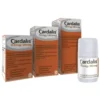
Cardalis chewable tablets for dogs
PRESCRIPTION NEEDED (Pom-V)
Cardalis chewable tablets for dogs are a prescription-only medicine (POM-V) used for the management of congestive heart failure in dogs, particularly when caused by degenerative valve disease or dilated cardiomyopathy.
Each tablet contains a combination of benazepril (an ACE inhibitor) and spironolactone (an aldosterone antagonist). Together, these help reduce the workload on the heart, control fluid build-up and support more comfortable breathing and activity.
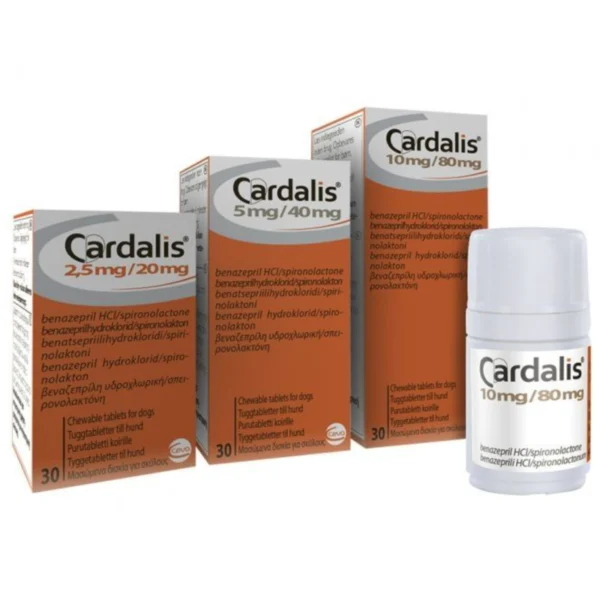
Cardalis is available in 3 strengths – 2.5mg, 5mg and 10mg – so your vet can choose the most appropriate tablet or combination based on your dog’s weight and treatment plan. The tablets are flavoured and chewable to make daily dosing easier.
Key points:
-
Prescription-only (POM-V) heart medication for dogs
-
Combines benazepril and spironolactone in one chewable tablet
-
Used to manage congestive heart failure due to heart valve disease or cardiomyopathy
-
Strengths: 2.5mg, 5mg and 10mg
-
Given once daily as directed by your vet, with regular check-ups
Available in 2.5mg, 5mg & 10mg – 30 Tablets
Cardalis chewable tablets for dogs
Cardalis chewable tablets for dogs
PRESCRIPTION NEEDED (Pom-V)
Cardalis chewable tablets for dogs – combined heart support in one tablet
Cardalis chewable tablets are designed to help manage congestive heart failure (CHF) in dogs. CHF commonly develops as a result of chronic valve disease or dilated cardiomyopathy and can lead to coughing, tiredness, reduced exercise tolerance, laboured breathing and fluid build-up.
Cardalis contains two active ingredients that work together to support the heart and circulation:
-
Benazepril – an ACE inhibitor that helps relax blood vessels, reduce blood pressure within the circulation and decrease the workload on the heart.
-
Spironolactone – an aldosterone antagonist that helps counteract harmful effects of the hormone aldosterone, including fluid retention and remodelling of the heart and blood vessels.
By combining these actions in one chewable tablet, Cardalis can make long-term heart therapy simpler for you to give and for your dog to receive.
What Cardalis is used for
Vets prescribe Cardalis for the management of congestive heart failure in dogs. It is typically used in dogs that have been diagnosed with heart disease and are showing clinical signs such as:
-
Coughing, especially at night or after exercise
-
Reduced exercise tolerance
-
Fast or laboured breathing
-
Lethargy or reluctance to move
-
Pot-bellied appearance due to fluid build-up
Your vet will usually have performed investigations such as a physical examination, chest X-rays, ultrasound (echocardiography) or blood tests before recommending Cardalis as part of your dog’s heart treatment plan.
How Cardalis works
Cardalis tackles heart failure from two directions:
-
Benazepril
Benazepril is an angiotensin-converting enzyme (ACE) inhibitor. ACE inhibitors reduce production of angiotensin II, a substance that causes blood vessels to constrict and blood pressure to rise. By reducing angiotensin II, benazepril helps:
-
Relax and widen blood vessels
-
Lower resistance the heart has to pump against
-
Decrease fluid build-up related to heart failure
-
Spironolactone
Spironolactone blocks the action of aldosterone, a hormone that promotes sodium and water retention and contributes to heart and blood vessel changes over time. Blocking aldosterone can help:
-
Reduce fluid retention
-
Support more stable blood pressure and circulation
-
Slow some of the harmful remodelling that occurs with chronic heart disease
Together, these effects can help your dog feel more comfortable and maintain a better quality of life.
Strengths and tablet form
Cardalis chewable tablets are available in three strengths for flexible dosing:
-
Cardalis 2.5mg
-
Cardalis 5mg
-
Cardalis 10mg
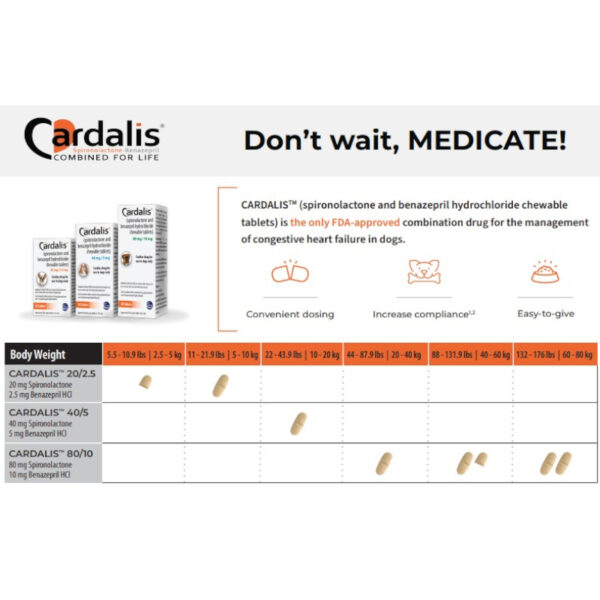
Your vet will choose the appropriate strength or combination of strengths based on your dog’s bodyweight and the dosing schedule recommended for their specific condition. The tablets are flavoured and chewable, which helps many dogs accept them more readily, but your vet team can advise ways to give them if your dog is fussy.
How Cardalis is given
Cardalis is given by mouth once daily, usually at the same time each day and often with food. Your vet will provide exact instructions.
General points (always follow your own vet’s advice):
-
Give the number and strength of tablets shown on your dog’s prescription.
-
Try to give Cardalis at the same time every day to keep blood levels stable.
-
If your dog misses a dose, contact your vet for advice before giving more.
-
Do not change the dose, stop suddenly or add other heart medicines without speaking to your vet.
Cardalis is often used alongside other heart treatments, such as diuretics (water tablets) or additional medications your vet has chosen. This is normal in many heart failure cases, but changes to the plan should always be veterinarian-led.
Monitoring and check-ups
Heart disease is a long-term condition, so regular monitoring is important. While your dog is on Cardalis, your vet will usually:
-
Re-examine your dog at intervals to assess breathing rate, heart sounds and overall comfort.
-
Ask about any changes at home, such as increased coughing, breathing changes, appetite or activity level.
-
Perform blood tests periodically to monitor kidney function and electrolyte levels, especially when other heart or diuretic medicines are also being used.
-
Adjust doses or add/remove medications if your dog’s condition changes.
Keeping a simple diary of your dog’s breathing rate at rest, appetite, activity and coughing episodes can be very useful to share with your vet.
Safety, contraindications and precautions
Cardalis is not suitable for every dog. It must only be used under veterinary supervision and is a prescription-only medicine (POM-V). You should always tell your vet about your dog’s full medical history and any other medicines they are taking.
In particular, Cardalis may not be appropriate in dogs that:
-
Have severe kidney disease or very low blood pressure
-
Are severely dehydrated or experiencing acute shock
-
Have high blood potassium levels
-
Are known to be sensitive to ACE inhibitors or spironolactone
Your vet will consider all of these factors before prescribing Cardalis and will recommend blood tests as needed to monitor safety.
Possible side effects
Like all medicines, Cardalis can occasionally cause side effects. These are often mild but you should be aware of them and contact your vet if you are concerned. Possible signs can include:
-
Mild digestive upset (vomiting, soft stools, reduced appetite)
-
Lethargy or weakness
-
Increased thirst or changes in urination
-
Rarely, more serious changes affecting kidney function or electrolyte balance
If your dog seems unwell, collapses, has severe vomiting or diarrhoea, stops eating or breathing seems significantly worse, seek veterinary attention immediately. Your vet may adjust the dose, alter other medicines or change treatment depending on findings.
Use with other medicines
Cardalis is commonly used alongside diuretics (such as furosemide or torasemide) and sometimes other heart medicines. However, combinations must always be planned by your vet, as some drugs can interact or change blood pressure and kidney function.
Always give your vet a full list of prescription medicines, over-the-counter products and supplements your dog is receiving. Never start or stop any other medication without veterinary advice.
Handling advice for owners
Cardalis is for dogs only. To reduce any risk to people:
-
Keep tablets in their original blister and carton until use.
-
Store out of sight and reach of children and other animals.
-
Wash hands after handling tablets.
-
Pregnant women or women trying to conceive should take particular care when handling any medicine that affects hormone or blood pressure systems; if in doubt, ask another adult to administer the tablets.
If a person accidentally swallows a tablet, they should seek medical advice and show the doctor the product packaging.
Frequently asked questions about Cardalis chewable tablets for dogs
Is Cardalis a prescription-only medicine?
Yes. Cardalis is a POM-V medicine. Your dog must be examined by a vet and you must have a valid prescription before we can supply it.
Will my dog need Cardalis for life?
Congestive heart failure is typically a long-term condition. Many dogs require ongoing treatment with Cardalis and other heart medications for the rest of their lives, with doses adjusted over time as the disease changes.
How quickly will Cardalis start to help?
Some dogs show improvement in comfort, breathing and energy within the first days to weeks of starting Cardalis, especially when it is part of a full heart failure treatment plan. Your vet will advise when they expect to see changes and when to review progress.
Can I split Cardalis tablets?
Some strengths may be scored to allow splitting, but this should only be done if your vet has specifically advised it and if it is mentioned in the product leaflet. If tablet splitting is needed, your vet team can show you how to do this safely.
What should I do if I forget a dose?
Do not double up. If you realise you have missed a dose, contact your vet or follow the instructions provided on your prescription for missed doses.
Always follow the instructions on your dog’s prescription, the product label and the package leaflet. If you have any concerns about Cardalis chewable tablets, dosing or possible side effects, speak to your vet for personalised advice.
Visit the manufacturer’s website here
Available in 2.5mg, 5mg & 10mg – 30 Tablets
| Weight | N/A |
|---|---|
| Milligram | 2.5mg, 5mg, 10mg |
You may also like…
-
 Prescription Required
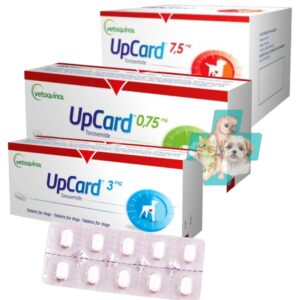
UpCard tablets for dogs
£23.00 incl. VAT£19.17 excl. VATSelect options This product has multiple variants. The options may be chosen on the product page -
 Prescription Required
Milpro worming tablets for dogs
£24.00 incl. VAT£20.00 excl. VATSelect options This product has multiple variants. The options may be chosen on the product page
Related products
-
 Prescription Required
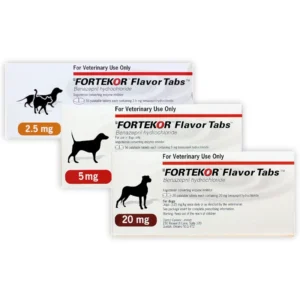
Fortekor Flavour Tablets
£60.00 incl. VAT£50.00 excl. VATSelect options This product has multiple variants. The options may be chosen on the product page -
 Prescription Required
Amoxibactin
£162.00 incl. VAT£135.00 excl. VATSelect options This product has multiple variants. The options may be chosen on the product page -
 Prescription Required
Metacam 1.5 mg/ml Oral Suspension for Dogs
£12.00 incl. VAT£10.00 excl. VATSelect options This product has multiple variants. The options may be chosen on the product page -
 Prescription Required
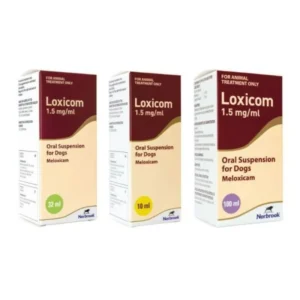
Loxicom 1.5 mg/ml Oral Suspension for Cats & Dogs
£6.00 incl. VAT£5.00 excl. VATSelect options This product has multiple variants. The options may be chosen on the product page