£70.00–£200.00Price range: £70.00 through £200.00 Inc VAT
Prescription Required
NI + GB Wide Postage Available
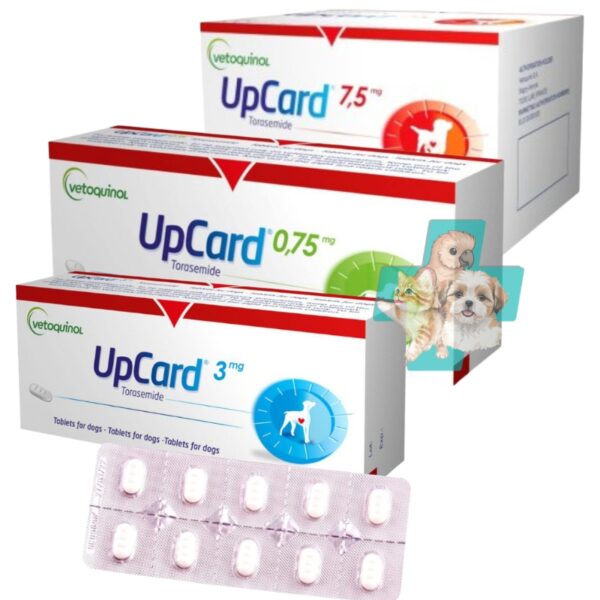
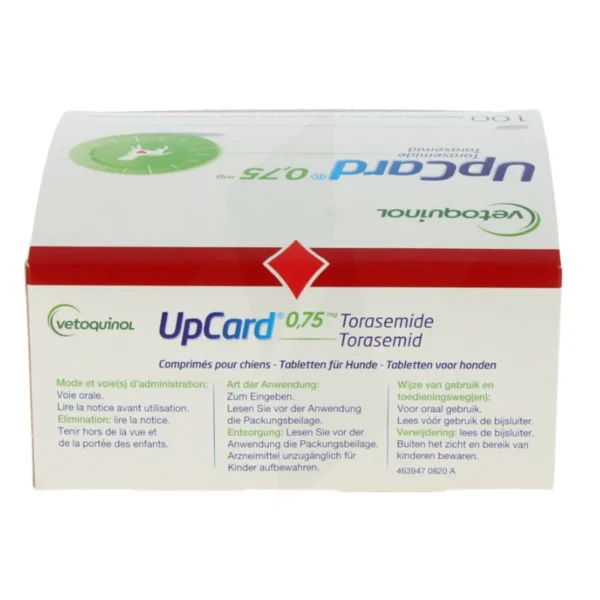
UpCard Tablets for Dogs 0.75–7.5mg
PRESCRIPTION NEEDED (Pom-V)
UpCard tablets for dogs contain torasemide, a prescription diuretic (water tablet) used to help manage fluid build-up in dogs with heart disease. By helping the body remove excess fluid, UpCard tablets for dogs can make breathing easier and improve comfort in many dogs with congestive heart failure.
This product page covers all strengths and pack sizes as variations:
UpCard 0.75 mg Tablets for Dogs – 1 x 30
UpCard 0.75 mg Tablets for Dogs – 1 x 100
UpCard 3 mg Tablets for Dogs – 1 x 30
UpCard 3 mg Tablets for Dogs – 1 x 100
UpCard 7.5 mg Tablets for Dogs – 1 x 100
Your vet will prescribe the correct strength and dose based on your dog’s weight and heart condition. Always follow the instructions on the prescription label.
Ordering This Prescription Medicine
A valid veterinary prescription is required before dispatch.
Add the medicine, strength and quantity shown on your prescription to your basket.
Upload your prescription at checkout, or send it to us afterwards by email.
Complete checkout — we’ll verify your prescription before dispatch.
All orders require review by a licensed veterinarian.Please allow 1–2 working days for processing.
UpCard tablets for dogs are used to manage congestive heart failure and related fluid build-up.
When the heart does not pump efficiently, fluid can collect:
In the lungs (pulmonary oedema)
Around the lungs (pleural effusion)
In the belly (ascites)
Dogs may cough, breathe faster, tire quickly or have a swollen abdomen. UpCard tablets for dogs help the body remove this extra fluid through the kidneys. This can make breathing easier and help dogs feel more comfortable.
UpCard strengths and packs on this page
All of the following sit under this single product as variations:
0.75 mg – 1 x 30 tablets
0.75 mg – 1 x 100 tablets
3 mg – 1 x 30 tablets
3 mg – 1 x 100 tablets
7.5 mg – 1 x 100 tablets
Your vet will choose the most suitable strength. They may also adjust the number of tablets over time as part of ongoing dose checks.
Benefits of UpCard tablets for dogs
Used as your vet directs, UpCard tablets for dogs can:
✔ Help remove excess fluid from the lungs and body ✔ Make breathing easier and reduce coughing linked to fluid build-up ✔ Support more comfortable sleep and rest at night ✔ Improve exercise tolerance in many dogs with heart failure ✔ Offer once-daily dosing in many treatment plans
UpCard tablets for dogs do not cure heart disease. However, they are a key part of managing the signs of fluid overload and can support a better quality of life.
How UpCard tablets for dogs work
UpCard tablets for dogs contain torasemide, a loop diuretic.
Torasemide:
Acts on the kidneys
Increases the amount of water and salt lost in the urine
Reduces the volume of fluid in the bloodstream
Helps lower fluid build-up in the lungs and body cavities
As fluid levels fall, the heart has less volume to handle and the lungs can work more effectively. This can ease breathing and reduce distress.
Because UpCard tablets for dogs increase urine production, your dog will usually drink and urinate more often. Your vet will explain what is normal and what needs a check.
When vets may prescribe UpCard tablets for dogs
Your vet may prescribe UpCard tablets for dogs when:
Your dog has congestive heart failure with fluid in the lungs or abdomen
Extra diuretic support is needed alongside other heart medicines
A once-daily loop diuretic is preferred for long-term management
Before starting UpCard tablets for dogs, your vet will usually:
Take a full history and examine your dog
Check the heart and lungs with a stethoscope
Run blood tests to assess kidney function and electrolytes
Often recommend X-rays and sometimes an ultrasound (heart scan)
These checks help confirm the diagnosis and make sure UpCard tablets for dogs are safe and appropriate.
How to give UpCard tablets for dogs
Always follow the dose and schedule on the prescription label. General guidance:
Give the exact number and strength of UpCard tablets for dogs prescribed
Your vet will usually recommend once-daily dosing, at the same time each day
Tablets can often be given with a small meal; keep the routine consistent
Make sure your dog swallows the full dose and does not share it with other pets
If you miss a dose or are unsure whether it was given, contact your vet for advice. Do not double the next dose unless your vet has told you to.
Never adjust the dose of UpCard tablets for dogs, or stop them suddenly, without speaking to your vet.
Monitoring dogs on UpCard tablets
Dogs on UpCard tablets for dogs need regular checks. Your vet may:
Recheck breathing rate at rest and listen to the chest
Monitor bodyweight and body condition
Ask about thirst, urination and appetite
Repeat blood tests to monitor kidney values and electrolytes
You can help at home by:
Counting your dog’s breathing rate while asleep, as your vet shows you
Keeping notes on cough frequency, energy and appetite
Watching for changes in drinking and urination
Share this information at each review so your vet can fine-tune the dose of UpCard tablets for dogs.
Safety information
UpCard tablets for dogs are a POM-V medicine and must only be used under veterinary supervision.
Important points:
Use only for the dog named on the prescription
Do not use UpCard tablets for dogs in any other animal
Tell your vet about all other medicines your dog receives, especially other diuretics, ACE inhibitors or NSAIDs
Make sure your dog has constant access to fresh water
Contact your vet urgently if you notice:
Very low energy, collapse or severe weakness
Refusal to drink or marked loss of appetite
Vomiting, diarrhoea or very dark urine
Sudden changes in breathing or obvious distress
Your vet may adjust the dose or temporarily stop UpCard tablets for dogs if they are worried about dehydration or kidney stress.
Storage and disposal
Store UpCard tablets for dogs in the original packaging
Keep in a cool, dry place away from direct sunlight
Keep out of sight and reach of children and other animals
Do not use after the expiry date on the pack
Return any unused or expired UpCard tablets for dogs to your vet or pharmacist for safe disposal. Do not throw veterinary medicines into household waste.
Used exactly as your vet directs, UpCard tablets for dogs can play a vital role in controlling fluid build-up in heart disease and helping dogs with congestive heart failure feel more comfortable.


 Prescription Required
 Prescription Required
 Prescription Required
 Prescription Required
 Prescription Required
 Prescription Required