✓ Registered Vet Practice
🚚 Fast UK-Wide Delivery, Including Northern Ireland
℞ Prescription & Non-Prescription Products
→ Need to upload a prescription?

Dehydration in Horses
What causes dehydration in horses, which signs to watch for, why no single test is enough and when to call your vet.
Quick Answer
- Dehydration in horses happens when a horse loses more fluid than it takes in, and it can progress quickly, so it is always safest to ask your vet for advice if you are unsure.
- Signs include a horse that seems quieter than usual, drinks differently, passes fewer or drier droppings, or has a dry mouth, thick saliva or gums slow to return to pink.
- Signs of heat-related illness, or dehydration together with diarrhoea, fever or colic signs, mean you should phone your vet immediately.
- UK sources differ on the skin pinch test, so it should not be relied on alone to judge hydration.
- Offer fresh, clean water and watch your horse closely, but contact your vet if signs persist, get worse or worry you.
Dehydration in horses happens when a horse loses more fluid than it takes in. Fluid leaves the body through sweating, breathing, urine and droppings. Electrolytes, which are minerals such as sodium, potassium and chloride, are often lost too.
It can affect any horse, especially in warm weather, during exercise or when travelling. This guide explains the causes, the signs and what to do. For cooling a horse with heat illness, see Heat Stress in Horses.
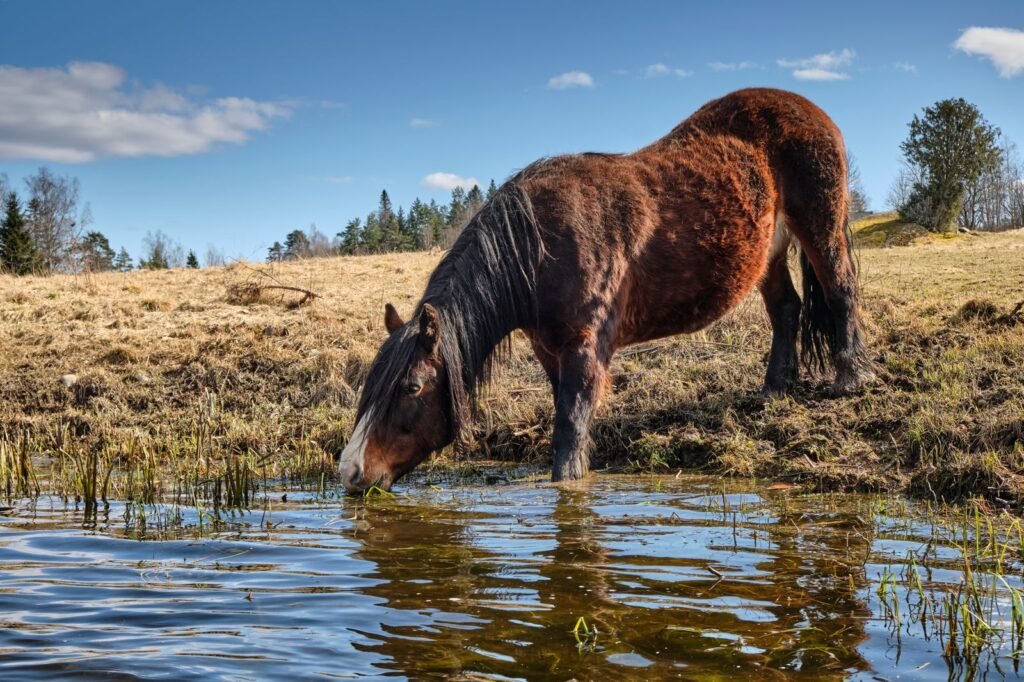
What causes dehydration in horses?
The British Horse Society (BHS) says limited or reduced water intake is one of the most significant causes. Several everyday situations can lead to it.
Not enough water, or water a horse avoids
Horses may drink less if the water is unclean or there is not enough of it. Another horse guarding the supply can also put them off.
Stable water absorbs ammonia, which may put some horses off, so change it at least daily. In winter, frozen water is the main reason horses drink less.
Hot weather and exercise
Heat and exercise increase sweating, which means fluid and electrolytes are lost. Recovery after exercise may be slower if they are not replaced.

Travel
Horses commonly drink less during transport. World Horse Welfare says they can lose around 2 to 3 kg of water per hour of travel in hot weather.
Illness
Diarrhoea or fever can quickly upset a horse's fluid balance, even when outward signs look mild. See Why Does My Horse Have Diarrhoea? for more.
The link with colic
Water is constantly moved into and out of the gut. The BHS says low hydration can affect how food passes along the gut and raise the risk of impaction colic, where a firm ball of feed blocks the intestine.
For the full picture, see Signs of Colic in Horses.
Signs of dehydration in horses
Early signs are easy to miss. The BHS says several signs together make dehydration more likely, and a horse should not be judged dehydrated from one sign alone.
- Seeming quieter than usual, tired or dull
- Drinking more or less than usual
- Fewer or drier droppings
- Darker urine, or urinating less often
- A dry mouth and thick saliva
- Gums that take longer than normal to return to pink after gentle pressing, or gums that look darker or redder
- A higher heart rate than normal
The RSPCA describes pressing a thumb firmly on the gum. The pink colour should return in 1 to 2 seconds, and longer may suggest dehydration.
Watching how much your horse drinks is a reliable guide, according to the BHS. Intake should be monitored, not assumed.
The skin pinch test is more disputed. The BHS says research shows it is not an accurate measure of hydration, yet Blue Cross still lists slow skin return after pinching as a sign of dehydration, and World Horse Welfare lists a slow skin pinch among its signs of heatstroke. So do not rely on it, or on any single test, by itself.
Emergency: Contact a Vet Immediately If…
- Your horse shows signs of heat-related illness, such as panting, a high temperature, dark urine or dark gums, along with signs of dehydration.
- Dehydration signs come with diarrhoea, a fever or colic signs.
- Your horse seems very dull, or the signs are getting worse.
Phone your vet or the nearest out-of-hours emergency vet straight away. If you suspect heat illness, also move the horse into shade while you wait.
When to Contact Your Vet
- Any time the signs persist, get worse or worry you.
- If you are unsure whether your horse is dehydrated.
- If you suspect colic. Ring your vet first and follow their instructions.
The BHS says dehydration can progress quickly and may not be easy to recognise, so it is always safest to seek veterinary advice if you are unsure.
What to do if you suspect dehydration
While you contact your vet, offer fresh, clean water and keep a close eye on your horse. If it is hot, move the horse into the shade.
If you think your horse has colic, ring your vet first. Advice for colic is different from advice for dehydration, so follow your vet's instructions on feed and water rather than deciding yourself.
Some points from the BHS are worth remembering:
- Soaked feed adds some water, but it should not be the main way to keep a horse hydrated.
- If you use electrolytes, keep plain fresh water available at all times.
- Avoid overly concentrated electrolyte solutions, and follow the manufacturer's instructions.
The Royal Veterinary College says treatment of colic often involves giving fluids and pain relief. UK owner guidance says little more than that on treating dehydration, so your vet is the person to ask.
Preventing dehydration in horses
Constant access to clean, fresh, palatable water is essential. Beyond that, these habits from UK welfare sources help:
- Offer more than one water source, especially for horses kept in groups.
- Check troughs and buckets several times a day, and keep them clean.
- Do not rely on streams or ponds, because they are not always safe or reliable.
- Ride in the cooler parts of the day in hot weather, and check breathing and heart rate recover afterwards.
- On long journeys, plan rest breaks every three to four hours and offer water. Take water from home if your horse is reluctant to drink away from home.
- In winter, break the ice daily and keep spare containers of water in case taps freeze.
Grass is mostly water, so grazing horses get a lot from it. Horses on restricted grazing or conserved forage may need their drinking monitored more closely.
A reluctant drinker may be tempted by a little apple juice in the water, as long as plain water is also on offer.
How much water is normal? Sources quote different amounts. Blue Cross gives roughly 25 to 55 litres a day, depending on weather, diet and work. The RSPCA's winter page says 20 to 70 litres for an average adult horse, and the BHS says 50 to 70 litres in hot weather for a 500 kg horse. Use these only as rough guides, and tell your vet if your horse's drinking changes.
How Pet Med Direct Can Help
Dehydration is a situation for your vet first. Please phone your vet if you are worried, before you buy or give anything.
Once you have your vet's advice, you can browse our equine range. If your vet prescribes a medicine, how pet prescriptions work explains the process. Prescription-only medicines (POM-V) are supplied solely against a valid prescription from the horse's own vet.
Some pet medicines require a valid veterinary prescription. Pet Med Direct can only supply prescription medicines after the prescription has been checked. Always follow your vet's advice and the directions on the medicine label.
Frequently Asked Questions
How can I tell if my horse is dehydrated?
Look for several signs together, such as fewer or drier droppings, a dry mouth, thick saliva, dull behaviour or slow gum colour return. A single sign is not enough. If you are unsure, phone your vet.
Is the skin pinch test reliable?
UK sources differ. The BHS says research shows it is not an accurate measure of hydration, while Blue Cross still lists slow skin return after pinching as a sign. It should not be relied on alone.
How much water does a horse drink?
Sources quote anything from about 20 to 70 litres a day for an average adult horse, depending on weather, diet and work. Blue Cross gives roughly 25 to 55 litres. A noticeable change in your horse's usual drinking is worth mentioning to your vet.
Does dehydration cause colic?
Low hydration can affect how food passes along the gut and raises the risk of impaction colic. Blue Cross also notes that colic risk may rise when a horse has not drunk enough.
Do horses need electrolytes?
Sweat carries salts as well as water. If electrolytes are used, they should be properly diluted and plain water should always be available. If you are unsure whether your horse needs them, ask your vet.
Should I give water to a horse with suspected colic?
Ring your vet first and follow their instructions. Advice for colic is different from advice for dehydration, so do not decide on your own what to do about water or feed.
How can I encourage a horse to drink more?
Change water often, offer a few different sources and keep buckets clean. In winter, adding warm water can help a horse that dislikes cold water. Flavourings such as apple juice may help, provided plain water is also available.
Related Equine Health Guides
Sources and Further Reading
- The British Horse Society — Dehydration in horses: causes, signs and treatment
- The British Horse Society — Horse care in hot weather
- The British Horse Society — Exercise, competing and travelling a horse in the heat
- The British Horse Society — Winter horse care & routine
- Blue Cross — Horse feeding and watering
- Blue Cross — Keeping horses safe in the summer sun
- Blue Cross — Horse colic prevention and management
- RSPCA — Keeping Your Horse Cool in Summer
- RSPCA — Winter & Cold Weather Care for Horses
- World Horse Welfare — Heatstroke in horses
- World Horse Welfare — Feeding horses
- Redwings Horse Sanctuary — Horses in summer
- Royal Veterinary College — Colic Fact File
This article was researched from the sources listed above. It is general information for horse owners and is not a substitute for advice from your own vet.

Need pet products or prescription medicines? Visit the Pet Med Direct shop.
Shop Pet Med Direct