✓ Registered Vet Practice
🚚 Fast UK-Wide Delivery, Including Northern Ireland
℞ Prescription & Non-Prescription Products
→ Need to upload a prescription?

Equine Herpesvirus (EHV)
What EHV is, the signs that need a vet at once, and how to protect other horses.
Quick Answer
- Equine herpesvirus is a common virus in horses worldwide, and it can cause respiratory illness, abortion in pregnant mares and, less often, neurological disease.
- If your horse suddenly becomes wobbly or uncoordinated, cannot pass urine or droppings, cannot stand, or a mare aborts, isolate the horse and call your vet immediately.
- If your horse has a fever with nasal discharge or a cough, isolate it and call your vet straight away, because EHV signs look very like equine flu.
- Most adult horses probably carry the virus silently, and stress such as travelling or moving yards can bring it back.
- According to the BHS, no vaccine is registered to prevent the neurological form, so isolation and good hygiene matter, and your vet will advise on both.
Equine herpesvirus (EHV) is a common virus, and most horses meet it early in life. Often it causes mild illness or none at all. Occasionally, though, it causes serious disease that spreads between horses.
This guide explains the forms of EHV, the signs that call for urgent help, how it spreads and what to do if you are worried. It is general information, not a diagnosis. Only your vet and a laboratory can confirm EHV.
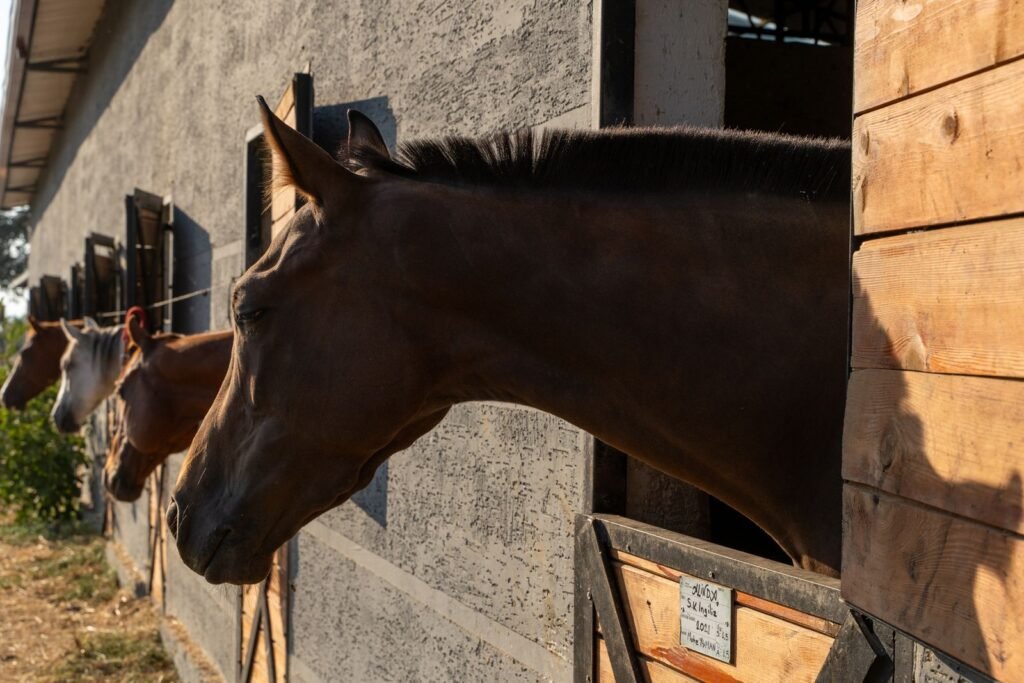
What is equine herpesvirus?
Equine herpesvirus occurs in horse populations worldwide. EHV-1 and EHV-4 are the two most common types in the UK.
EHV-1 can cause respiratory disease, especially in young horses. It can also cause abortion in pregnant mares and neurological disease in horses of any age. EHV-4 usually causes only low-grade respiratory disease, but it can occasionally cause abortion.
Many horses first meet the virus as foals. After recovery it can stay in the body in an inactive state, known as latency. The HBLB Codes say most adult horses are probably latent carriers, and there is currently no reliable test for carrier status.
The virus can reactivate during stress, such as travelling, moving yards or attending a competition. The horse can then shed virus without looking ill.
Forms of equine herpesvirus disease
Respiratory disease
The BHS says the respiratory signs of EHV-1 and EHV-4 are very similar to equine flu. They include a temperature above 38.5°C, nasal discharge, a dry cough, loss of appetite, reduced performance and lethargy.
It is most common in weaned foals and yearlings, often in autumn and winter. Many horses have mild signs or none. Unpredictably, though, some outbreaks lead to widespread infection on a yard and very sick horses. Our guide to Equine Influenza (Horse Flu) covers the flu side.
Abortion and newborn foals
Pregnant mares can abort suddenly with no warning signs. This is usually late in pregnancy, from eight months onwards, but it can happen as early as four months. It can follow a recent infection or reactivation in a carrier.
A foal born alive but infected before birth is usually abnormal from birth, for example weak, jaundiced or struggling to breathe. According to the HBLB Codes, such foals usually die or need euthanasia within about three days.
The aborted foal, membranes and fluids are particularly dangerous sources of infection to other horses.

Neurological disease (EHM)
Neurological signs are mainly linked to EHV-1. They occur because the virus damages the spinal cord. The BHS says outbreaks of this form are rare.
The signs can follow an initial fever, or appear suddenly with no earlier respiratory signs. They usually occur in the second week after infection.
- Incoordination or weakness, mostly in the hind legs.
- Inability to pass urine or droppings, or dribbling urine, which can look like mild colic.
- Bladder weakness.
- In severe cases, a horse that cannot stand.
Severity ranges from mild hindlimb incoordination to total paralysis. Our guide to Signs of Colic in Horses covers colic, but with wobbliness or trouble passing urine, call your vet at once.
How EHV spreads
EHV spreads readily between horses. It passes mostly through droplets from coughing and snorting, and by direct contact, such as noses touching over a stable door. It also spreads indirectly through shared equipment, tack, feed bowls, and people's hands and clothing.
The virus can survive in the environment for weeks. Horses with no signs can also spread it, so exposure can happen before anyone knows. Older foals with respiratory signs, and sometimes horses with neurological signs, are highly contagious.
Your vet will advise on isolation and on how to protect other horses on your yard.
Emergency: Contact a Vet Immediately If…
- Your horse is suddenly uncoordinated, wobbly or collapsed.
- Your horse cannot stand.
- Your horse cannot pass urine or droppings, or is dribbling urine.
- A mare aborts suddenly, has a stillbirth, or gives birth to a weak or jaundiced foal.
Isolate the horse and call your vet or the nearest out-of-hours emergency vet straight away. Do not move any horses on or off the premises while you wait.
When to Contact Your Vet
- Your horse has a fever with nasal discharge or a cough, is lethargic or is off its food.
- Any horse on the yard shows signs of infection. The EIDS advice is to involve your vet immediately.
- You have pregnant mares on the yard and any concern about EHV.
- Your horse has been in contact with a suspected or confirmed case.
Isolate the horse and phone your vet straight away. Do not vaccinate a horse that has recently been in contact with a case without asking your vet.
What to do if you suspect EHV
The BHS advises you to isolate the horse and contact your vet immediately. Your vet will take a nasal swab and possibly a blood sample.
- Closely monitor every horse that had direct or indirect contact, and record temperatures twice a day.
- Stop horses moving on and off the premises. Sources give a 28-day figure for confirmed cases. The HBLB Codes, written mainly for breeding premises, say to keep isolation and movement restrictions for at least 28 days after the last abortion, stillbirth or newborn foal death, or after the last neurological case. The British Equestrian (BEF) information sheet recommends 28 days after diagnosis. Your vet will advise on how long applies to you.
- Use separate equipment for each horse, and do not share tack.
- Wash your hands between horses and change outer clothes between healthy and affected horses. Deal with affected horses last.
- Do not send a suspected case to a stud, or to premises with pregnant mares.
Do not mix pregnant mares with other horses, particularly weaned foals, yearlings and other young stock.
How vets diagnose and treat EHV
EHV can only be diagnosed definitively by a suitably equipped laboratory. Vets take nasal swabs and blood samples. After an abortion or a newborn death, the foal and placenta go for a specific post-mortem at a facility that can contain infection.
The HBLB Codes say no validated specific anti-equine herpesviral treatments are currently available. Your vet decides how to treat signs and complications.
Neurological cases need strict barrier nursing and isolation. The BHS says horses with more severe signs, and those unable to stand, may need to be euthanised on welfare grounds.
Most horses with respiratory disease make a good recovery within a few weeks. For neurological disease the outlook is very variable, and less severe cases are likely to take several months to recover.
Preventing equine herpesvirus spread
- Quarantine new arrivals, with separate equipment and carers. EIDS advises a minimum of two weeks and the BHS a minimum of 21 days, so ask your vet what suits your yard.
- Take your horse's temperature regularly, especially after events or a move.
- Clean and disinfect stables, equipment and transport between horses.
- At events, avoid direct contact, take your own water and buckets, and avoid grazing communal areas.
- Reduce stress where possible by keeping social groups together and avoiding prolonged transport.
Vaccination can help prevent respiratory disease and abortion caused by EHV-1 and EHV-4, and can reduce the amount of virus shed. However, the BHS says there is no vaccine registered to prevent EHV-1 neurological disease. The HBLB Codes add that vaccination will not provide total protection.
The BHS especially recommends it for horses under five. Whether to vaccinate is a decision for you and your vet. See Horse Vaccinations: What to Discuss With Your Vet for more.
Telling others and reporting
The HBLB Codes say there are no legal notification requirements for EHV in the UK. They recommend that owners tell their national breeders' association if EHV abortion or neurological disease occurs. EHV is not on the GOV.UK list of notifiable horse diseases.
Because the infection can spread easily and have severe consequences, the Codes say it is very important to alert owners of horses that might be at risk through contact. The BHS also advises yards to inform others, so in-contact horses can be isolated and monitored quickly.
How Pet Med Direct Can Help
Suspected EHV is a situation for your vet first. Please isolate your horse and call them before ordering anything.
Once your vet has advised, you can browse our equine range for everyday horse care. If your vet has prescribed a medicine, our guide to how pet prescriptions work explains the process.
Some pet medicines require a valid veterinary prescription. Pet Med Direct can only supply prescription medicines after the prescription has been checked. Always follow your vet's advice and the directions on the medicine label.
Frequently Asked Questions
Is EHV the same as equine flu?
No. They are different viruses with similar respiratory signs. EHV can also cause abortion and neurological disease.
Can a healthy horse carry equine herpesvirus?
Yes. Most adult horses probably carry the virus silently and can shed it under stress. There is currently no reliable test for carrier status.
Does vaccination stop the neurological form?
No. The BHS says no vaccine is registered to prevent EHV-1 neurological disease. Vaccination can help with respiratory disease and abortion, but it does not give total protection.
Is EHV notifiable?
The HBLB Codes say there are no legal notification requirements for EHV in the UK. The Codes recommend telling the national breeders' association if EHV abortion or neurological disease occurs, and quickly alerting owners and premises that may have been in contact.
How long should affected horses stay isolated?
It depends on the situation, so sources differ. For confirmed cases, the HBLB Codes (written mainly for breeding premises) say at least 28 days after the last abortion, stillbirth, newborn foal death or neurological case, and the BEF sheet recommends 28 days after diagnosis. For high-risk contacts, EIDS advises keeping them separate for at least two weeks. Your vet will advise on your situation.
Should I vaccinate a horse that has been near a case?
No, not without asking your vet. EIDS and BEF advise against vaccinating horses with recent potential contact, and the HBLB Codes warn that vaccinating during incubation can increase the chance of neurological signs.
Is a horse safe once its signs stop?
Not necessarily. Shedding can last longer than signs, which is why isolation is advised for weeks after the last case. Follow your vet's advice before mixing horses again.
Related Equine Health Guides
Sources and Further Reading
- British Horse Society — Equine Herpes Virus (EHV): Signs & Prevention
- HBLB International Codes of Practice — Equine Herpesvirus (EHV)
- BEVA — Equine herpes virus (EHV) guidance
- British Equestrian — Equine Herpes Virus
- EIDS and British Equestrian — Equine Herpes Virus: what to do about this ever-present threat
- British Equestrian and EIDS — Equine Herpes Virus (EHV) Summary Information Sheet
- GOV.UK — Keeping horses commercially
- British Horse Society — Horse Illnesses: Equine Disease Prevention
This article was researched from the sources listed above. It is general information for horse owners and is not a substitute for advice from your own vet.

Need pet products or prescription medicines? Visit the Pet Med Direct shop.
Shop Pet Med Direct