✓ Registered Vet Practice
🚚 Fast UK-Wide Delivery, Including Northern Ireland
℞ Prescription & Non-Prescription Products
→ Need to upload a prescription?

Horse Wounds: First Aid and When to Call the Vet
Calm first aid for the first few minutes, what not to do, and the wounds that always need your vet.
Quick Answer
- Phone your vet straight away for heavy bleeding, a horse that cannot stand fully on a leg, a puncture wound, an object stuck in the wound, or a wound over a joint or near the eye.
- In the first minutes, keep yourself safe, stay calm, check your horse can stand on all four legs, and control any bleeding with firm, direct pressure from a clean pad.
- Do not put creams, gels, powders, sprays or antiseptics on a wound before your vet has advised, and never pull out a nail or other object.
- A small-looking wound can be serious, so if you are unsure, phone your vet, because many can review photos or videos.
- If your horse is not vaccinated against tetanus, contact your vet about any wound, even a minor one.
Horse wounds range from a simple graze to a true emergency. Common types include lacerations, tears, abrasions and punctures. Some areas, such as near joints and in or around the eye, carry a higher risk than others.
Wounds can also be deceptive. Large wounds can heal well, while seemingly minor ones can lead to severe infection. A small hole near a joint is generally more of a concern than a long cut over a fleshy part of the body.
This guide covers sensible first aid and the wounds that always need a vet.
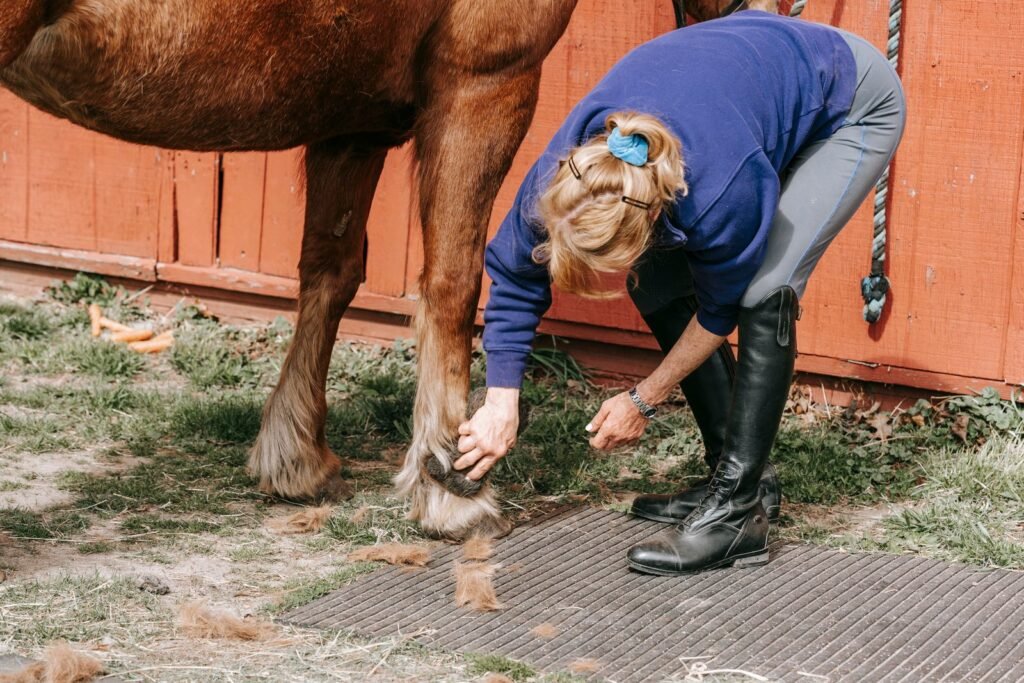
Types of Horse Wounds and Why Size Can Mislead
Grazes and cuts
A graze (abrasion) affects the surface layers of skin and may have dirt embedded in it. An incision is a clean, straight cut. A laceration is a torn wound with an irregular edge, and it may leave flaps of skin.
Puncture wounds
A sharp object can penetrate the skin or the sole of the foot. The wound may look small on the surface, but there can be significant damage underneath. Always contact your vet if you think your horse has a puncture wound.
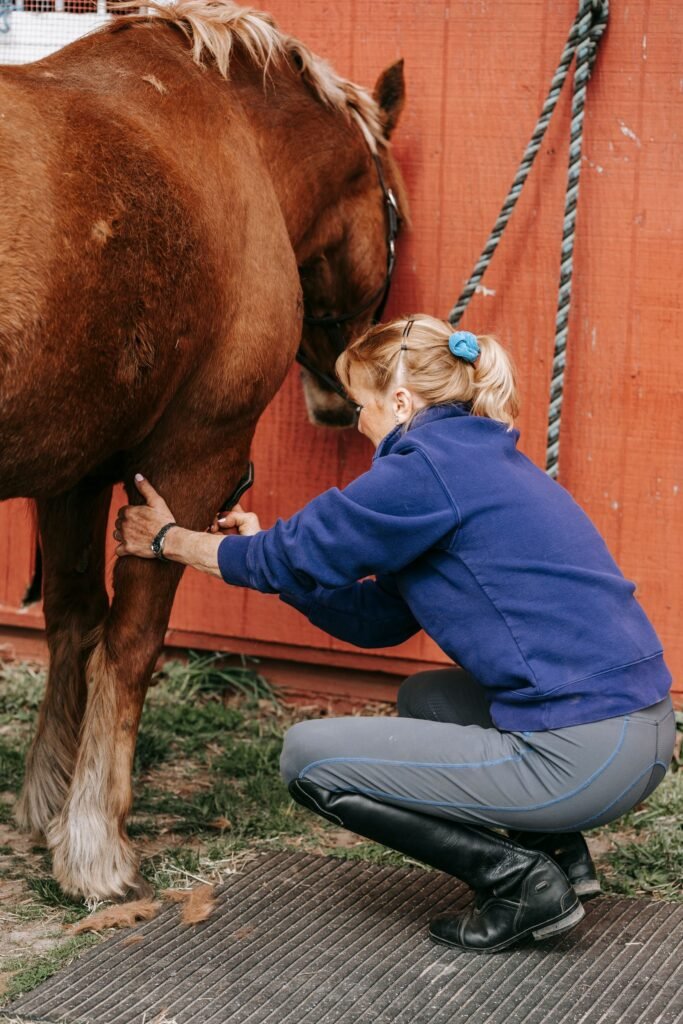
Kicks and overreach injuries
If a wound is likely to have come from a kick, there could be damage to the bone or muscle beneath it. Overreach injuries, where a hind foot strikes the front heel, can look like small cuts but can be deep.
The lower leg heals slowly
Wounds above the knee and hock heal by contraction, which is faster and stronger. In the lower limb, contraction is very limited, so healing is often slower and scarring is more common. A wound that is slow to heal can develop proud flesh, which is too much healing tissue, and your vet will need to deal with it. If you have any concern about how a wound is healing, ask your vet.
First Aid for Horse Wounds: The First Few Minutes
Horses in pain can be unpredictable. Therefore, put safety first, then work through these steps.
- Wear your riding hat. If you cannot proceed safely, wait for your vet. If the horse is stuck, you may also need to call the emergency services.
- Stay calm and, if possible, get a second person to help hold the horse.
- Check your horse is acting normally and can stand fully on each leg.
- If it can stand on all four legs, lead it to a safe, clean, dry place with access to clean water and your first-aid kit.
- If the wound is not clearly visible, clean it with mains or drinking water until you can assess it. Gentle cold hosing helps, but avoid a powerful stream that pushes dirt deeper.
- Phone your vet. If you are unsure whether you need them, ring anyway.
Gloves help protect the wound from contamination. After first aid, keep watching your horse for worsening lameness, swelling, signs of infection, pain and stress.
Controlling Bleeding
Press firmly and evenly on the wound with a clean pad or sterile swabs. If blood soaks through, add more material on top rather than removing the soaked layer, because lifting it can disturb a forming clot. If the wound is somewhere you cannot bandage, press a wad of swabs against it until help arrives.
Bright red blood that spurts, or dark red blood that flows steadily, is an emergency. Call your vet immediately and keep applying pressure.
The British Horse Society says an emergency pressure bandage is only for a wound that is pumping, pulsing or spurting blood, because it can cause damage if used wrongly. Ask your vet to show you how to bandage. Never use a tourniquet, as it can damage nerves and the blood supply.
What Not to Do With Horse Wounds
- Do not apply creams, gels, powders, sprays, antiseptics or alcohol-based treatments before your vet advises. Some can damage the tissue needed for healing, and they can delay it.
- Do not give painkillers before the vet arrives, as they can hide how serious the wound is. See Can I Give My Horse Human Painkillers?
- Do not remove a nail, thorn, splinter or any other object from a wound or foot. Leave it for your vet.
- Do not take risks examining a distressed horse. Sometimes less is more.
Emergency: Contact a Vet Immediately If…
- The bleeding is heavy, spurting, will not stop or slow down, or keeps coming through the bandage. Keep applying pressure while you call.
- Your horse cannot stand fully on a leg or will not put weight on it.
- The wound is over or near a joint, tendon sheath or tendon, or is leaking yellowish fluid. A horse may not look very lame even when a joint is involved.
- The wound is at or near the eye, or on the muzzle. Eye injuries can worsen very quickly.
- There is a puncture wound, or an object is stuck in the wound or hoof. Do not pull it out, and keep your horse as still and calm as you safely can.
- The wound is deep or gaping, goes right through the skin, has a flap, or shows muscle, bone or tendon.
- Your horse is not vaccinated against tetanus, or you are not sure, and has any wound at all.
- Your horse is in significant pain or distress, or shows signs of infection.
Call your vet or the nearest out-of-hours emergency vet straight away. Wounds through the skin heal much more quickly if they are stitched early, so do not delay.
When to Contact Your Vet
- You are unsure how serious the wound is.
- There is a bruise, lump or swelling, which can point to an underlying injury.
- The wound came from a kick or an overreach, because these can be deeper than they look.
- The wound is in the genital area, which is a high-risk site.
- The wound is not healing as expected.
- You notice worsening lameness, swelling or pain after first aid.
If in doubt, phone. Many vets can advise by phone or review photos and videos, and early care greatly affects how a wound heals.
Tetanus and Horse Wounds
Tetanus is caused by soil bacteria that enter through wounds. Deep puncture wounds and foot abscesses are especially vulnerable. It is often fatal, but it is completely preventable by vaccination.
Many cases occur without any known wound, so all horses and donkeys should be vaccinated, even retired ones. After any wound, check your horse's vaccination status, and call your vet if it is not up to date.
For an unvaccinated horse with a wound, your vet may give tetanus antitoxin. This is not the same as a vaccine and protects only for a limited time, so a vaccine course would normally follow. Your vet will advise on the vaccination schedule. See Horse Vaccinations: What to Discuss With Your Vet.
Signs usually appear 7 to 21 days after exposure, such as a jumpy horse, muscle spasms, a stiff tail and lockjaw. Call your vet at once if you see them.
How Vets Treat Horse Wounds
Your vet may clip the area, sedate your horse for a safe assessment, and flush the wound with sterile saline. They may also trim dead tissue and flaps, and close the wound with stitches where appropriate. Imaging and hospital care are sometimes needed.
For a hoof puncture, vets usually take X-rays or scans. Shallow injuries may be treated by trimming, flushing, poulticing and bandaging. Deep injuries involving joints often need surgery.
Being Prepared and Preventing Injuries
Daily health checks help you spot injuries early. Check paddocks, fencing and stables for protruding objects, keep yards free of nails and sharp debris, and pick out hooves every day. Travel, exercise and overreach boots can help prevent injuries.
The British Horse Society suggests checking your first-aid kit every six months and removing anything that has expired. Useful items include gloves, a torch, a hoof pick, clean drinking water, gauze swabs and non-adherent dressings, plus your vet's contact details.
Teach your horse to accept hosing and having its feet held before you need these skills. Keep the passport handy too, because almost every horse must have one and its food-chain declaration decides which medicines may be used. If you compete, keep a record of any veterinary treatment and talk to your vet about it before competing, because competition medication rules apply.
How Pet Med Direct Can Help
A wound that may need a vet is a situation for your vet first. Please phone them before ordering or applying anything.
Once your vet has advised, you can read how pet prescriptions work with us if a medicine has been prescribed, or browse our equine range.
Some pet medicines require a valid veterinary prescription. Pet Med Direct can only supply prescription medicines after the prescription has been checked. Always follow your vet's advice and the directions on the medicine label.
Frequently Asked Questions
Do I need a vet for every wound?
Not always. One UK vet practice says small, superficial wounds that affect only the skin can often be managed without a visit. However, the British Horse Society advises phoning your vet if you are unsure, so ring for advice.
Should I put cream, spray or powder on horse wounds?
No, not before your vet has advised. Several UK sources say some products can damage healing tissue or cause irritation. If you cannot see the wound clearly, rinse it with clean water. Cover it only as your vet advises, and phone them.
Can I pull out a nail or thorn?
No. Leave it in place, keep your horse as still and calm as possible, and call your vet immediately. Your vet decides whether and how the object comes out.
How do I stop a wound bleeding?
Press firmly and evenly with a clean pad. If blood soaks through, add more material on top. Phone your vet at once if the blood spurts, will not stop, or keeps soaking through.
Does my horse need a tetanus jab after a wound?
If your horse is not vaccinated, contact your vet about any wound, even a minor one. Your vet will advise what is needed and how to protect your horse in future.
Related Equine Health Guides
Sources and Further Reading
- British Horse Society — WoundWise: Step-by-step guide
- British Horse Society — Assessing a wound
- British Horse Society — High-risk wound areas
- British Horse Society — Bandaging and poulticing
- British Horse Society — Types of wounds and wound healing
- British Horse Society — First-aid kit
- British Horse Society — Tetanus
- British Horse Society — Hoof penetration injuries
- British Horse Society — Horse emergencies and emergency care planning
- World Horse Welfare — Wounds and first aid for horses
- VetPartners Equine — Fact Sheet: Equine Wound Management
- The Dick Vet Equine Practice — Wound Care
- The Dick Vet Equine Practice — Penetrating wounds of the foot
- B&W Equine Vets — Equine First Aid
- Blue Cross — First aid for horses
- Redwings Horse Sanctuary — Get wise about wounds!
- GOV.UK — Horse medicines and record keeping requirements
- British Equestrian — Equine anti-doping
This article was researched from the sources listed above. It is general information for horse owners and is not a substitute for advice from your own vet.

Need pet products or prescription medicines? Visit the Pet Med Direct shop.
Shop Pet Med Direct