✓ Registered Vet Practice
🚚 Fast UK-Wide Delivery, Including Northern Ireland
℞ Prescription & Non-Prescription Products
→ Need to upload a prescription?

Arthritis in Horses
What joint disease can look like, why a vet exam matters and how long-term management works.
Quick Answer
- Arthritis is inflammation of one or more joints, and it can cause pain, lameness and reduced performance.
- Early signs can be very subtle, such as mild stiffness that fades once the horse has warmed up, so any lameness is worth a vet exam, however mild.
- Arthritis cannot be cured, but it can be managed so that many horses stay comfortable, and many keep working.
- A hot, swollen, painful joint, or a sudden severe lameness, needs your vet the same day, because a joint infection can be career-ending if it is not treated quickly.
- Your vet decides on medication, joint injections and supplements, so never start or stop any of these without their advice.
Arthritis in horses is inflammation of a joint or several joints. In a healthy joint, cartilage covers the ends of the bones and gives a smooth, cushioned surface. In an arthritic joint that cartilage can wear away or become damaged, which leads to joint damage and pain.
Horses can develop arthritis at any age, but it is more common in older horses because of years of wear and tear. However, it is not only a problem of the elderly, so a stiff younger horse still deserves a proper check.
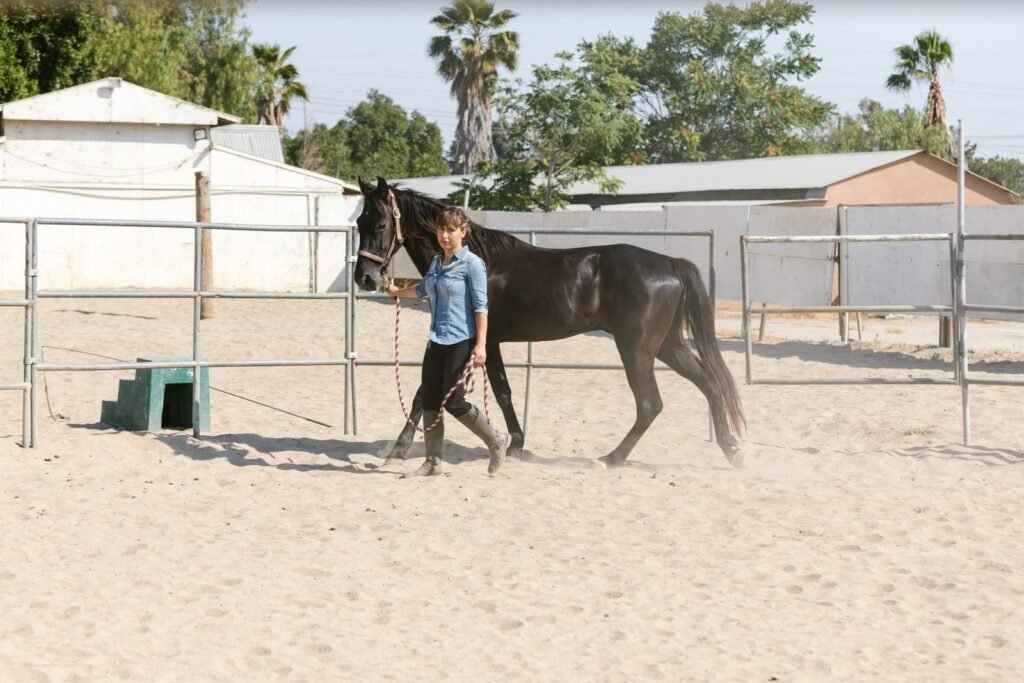
Types of Arthritis in Horses
The British Horse Society (BHS) describes four main types. They have different causes and signs, so a vet exam matters.
Osteoarthritis
Osteoarthritis, also called degenerative joint disease, is the most common type. Cartilage cannot rebuild itself once it is damaged, because it has no blood supply of its own. As the condition worsens, the bone may also deteriorate and grow bony spurs.
Hocks, fetlocks, knees and stifles are among the joints commonly affected. It can also affect the neck and back.

Neck arthritis
Osteoarthritis can also develop between the bones of the neck. It is often linked with nerve damage. This can change how the horse moves, because it uses different muscles to try to steady its neck.
Infectious arthritis
This is caused by infection in the joint. It may follow an injury, an injection into the joint, spread through the bloodstream, or surgery. It is the type that needs urgent attention, so see the emergency box below.
Traumatic arthritis
An accidental injury can inflame a joint. In some cases the cartilage wears away so much that bone starts to rub on bone, which causes more damage and pain.
Causes and Risk Factors for Arthritis in Horses
The causes are not clear, and several factors may be involved. Redwings Horse Sanctuary lists these as possible contributors to degenerative joint disease:
- General wear and tear, including age-related wear.
- Uneven weight-bearing, for example from poor conformation, hoof imbalance or other health problems.
- Previous injury or trauma to the joint area.
- Bone and cartilage problems such as osteochondrosis dissecans (OCD), bone cysts and chip fractures.
- Being overweight, which adds stress to the joints.
- Poor nutrition.
Weight matters because extra weight adds strain to the joints and adds to arthritic pain. Our guide Is My Horse Overweight? covers how to check.
Signs of Arthritis in Horses to Look For
Early signs can be very subtle. Lameness can quite often be the only sign when osteoarthritis begins. Many other conditions share the same signs, so only a vet exam can tell them apart. Things owners may notice include:
- Stiffness, or mild lameness, that may improve as the horse warms up.
- A longer warm-up time before the horse feels loose.
- Reduced performance, or reluctance to move or exercise normally.
- Swelling or heat around a joint, or a change in the shape of a joint.
- Pain when a joint is bent, or less movement in the joint.
- Muscle loss, weight loss, or uncharacteristic resistance to having a leg handled.
- With neck arthritis, difficulty grazing from the ground or pulling hay from a net.
Lameness may not be obvious if more than one limb is affected. For the wider lameness checklist, see Why Is My Horse Lame?
Emergency: Contact a Vet Immediately If…
- A joint is hot, swollen and painful, especially with lameness, lethargy or a raised temperature, as these can be signs of infectious arthritis.
- The horse has a wound or injury near a joint.
- There is a sudden-onset severe lameness, which can happen with joint capsule or ligament injury.
Do not wait to see if it settles: call your vet or the nearest out-of-hours emergency vet straight away.
When to Contact Your Vet
- Your horse is stiff or lame, however mild it looks. Your vet can investigate it, and this can help your horse stay comfortable for longer.
- You notice a slower warm-up, a drop in performance or a change in how a leg feels.
- Your horse has already been diagnosed and the signs change or seem to be getting worse.
The earlier arthritis is spotted, diagnosed and managed, the better. Please do not try to treat it yourself.
How Vets Investigate Arthritis in Horses
Your vet will usually take a history and feel the legs for heat and swelling. They will then watch the horse walk and trot, often on both hard and soft surfaces, and sometimes on the lunge.
Flexion tests are common. The vet holds a joint bent for 30 to 60 seconds and then trots the horse away, which makes pain in that joint more obvious.
Next, the vet may use nerve or joint blocks to find which joint hurts. X-rays are the best way to confirm osteoarthritis once bony changes have developed, so very early cases may not show. Ultrasound or MRI may also be used.
Pain and X-ray changes do not always match. Severe pain can occur with few X-ray changes, and the reverse can also be true.
Managing Arthritis in Horses Day to Day
Arthritis is not curable, but it can be managed for the rest of the horse's life. The aim is to reduce inflammation, pain and further damage with good management and veterinary support. Redwings says the progress of degenerative joint disease can be slowed.
- Weight: keep your horse from becoming overweight. The BHS suggests fat scoring and a weigh tape every two weeks.
- Exercise: gentle exercise, as your vet advises, can reduce stiffness. However, doing too much can cause more joint damage and inflammation.
- Turnout: regular turnout helps, ideally on ground that is as flat and even as possible, with quiet companions so the horse is not chased.
- Stabling: arthritic horses can become stiff and sore if stabled for long periods. Your vet will advise if box or field rest is needed.
- Hooves: regular foot trims matter, because overlong toes make the horse flex its limbs more. Your vet and farrier should work closely together.
- Everyday comfort: well-bedded stables, raised feeding points for horses with sore front legs or necks, and long warm-ups and cool-downs can all help.
- Travel: take care when transporting an arthritic horse, and ask your vet if you are concerned.
It also helps to keep notes or a video diary, so you and your vet can spot good and bad changes. Weather, activity and other health conditions can all affect signs.
Medicines, Supplements and Passports
Your vet may prescribe anti-inflammatory painkillers. The BHS notes that long continuous use has been linked with stomach, liver and kidney problems, so these medicines need vet supervision.
Some horses have medicine injected directly into a joint. This should only happen on your vet's recommendation. There is a risk of infection at the injection site, and some injected medicines can raise laminitis risk in horses already prone to it. Read more in Laminitis in Horses.
Joint supplements may be beneficial, but always ask your vet which one. Evidence for many alternative therapies is thin, and few vets recommend them. Do not give human painkillers unless your vet specifically directs it, as our guide Can I Give My Horse Human Painkillers? explains.
In the UK, horses are considered food-producing animals, and the declaration in the horse's passport decides which medicines can be given. GOV.UK says some medicines mean a horse must be permanently excluded from the food chain, and that this decision is irreversible. Ask your vet about this before treatment starts.
If you compete, tell your vet. British Equestrian advises that no horse should compete while on medication and that veterinary treatments should be documented. Vet sources also note that some medicines and joint supplements used for arthritis are not permitted in competition horses, so check with your vet and your governing body.
How Pet Med Direct Can Help
If your horse is lame or has a swollen joint, speak to your vet first. Please do not order anything instead of, or before, a vet visit.
Once your vet has made a plan, you can browse our equine range. Prescription-only medicines (POM-V) are supplied solely against a valid prescription from your horse's own vet. You can read how pet prescriptions work on our site.
Some pet medicines require a valid veterinary prescription. Pet Med Direct can only supply prescription medicines after the prescription has been checked. Always follow your vet's advice and the directions on the medicine label.
Frequently Asked Questions
Is arthritis curable in horses?
No. Arthritis cannot be cured, but it can be managed so that the horse stays comfortable. Many horses with osteoarthritis continue to compete and stay in full work, according to one equine vet practice.
What does arthritis look like early on?
Early signs can be subtle. Typical ones are mild stiffness that wears off with work, a slower warm-up and reduced performance. Sometimes lameness is the only sign.
Is arthritis in horses only a problem for older horses?
No. It is more common in older horses, but it can develop at any age. Redwings points out that it is not only a condition of older horses.
How do vets diagnose arthritis?
Vets use a lameness exam with flexion tests, then nerve or joint blocks and imaging. X-rays are most useful once bony changes have developed. Ultrasound or MRI may also be used.
Can arthritis be prevented?
Advice differs. One source says there is very little evidence that arthritis can be prevented, while another says lifelong weight management, fitness and plenty of turnout may help support joint health. Your vet can advise on your own horse.
Can a horse with arthritis still be ridden?
Often, yes. A diagnosis is not necessarily the end of a ridden career. A horse with mild disease can often still be worked, but review expectations with your vet, because jumping puts more impact on joints than flatwork.
Will arthritis get worse?
Symptoms can worsen over time, even with treatment. Regular reviews with your vet help them adjust the plan to keep your horse comfortable.
Related Equine Health Guides
Sources and Further Reading
- British Horse Society — Arthritis
- Horse Health Programme — Arthritis
- Avonvale Equine Vet Practice — Equine Osteoarthritis
- Redwings Horse Sanctuary — A brief guide to Degenerative Joint Disease (DJD)
- Redwings Horse Sanctuary — Care of the older horse
- B&W Equine Vets — Osteoarthritis
- Horse & Hound — Arthritis in horses, also known as Degenerative Joint Disease (DJD)
- GOV.UK — Horse medicines and record keeping requirements
- GOV.UK — Marketing authorisations for veterinary medicines
- British Equestrian — Equine anti-doping
This article was researched from the sources listed above. It is general information for horse owners and is not a substitute for advice from your own vet.

Need pet products or prescription medicines? Visit the Pet Med Direct shop.
Shop Pet Med Direct