✓ Registered Vet Practice
🚚 Fast UK-Wide Delivery, Including Northern Ireland
℞ Prescription & Non-Prescription Products
→ Need to upload a prescription?

White Line Disease (Seedy Toe) in Horses
What white line disease in horses looks like, why farriers often spot it first and when to call your vet.
Quick Answer
- White line disease, often called seedy toe, happens when the inner layers of the hoof wall start to separate, leaving a space where bacteria and fungi can invade.
- Early signs can be subtle, such as a crumbly, powdery or widened white line or a hollow sound when you tap the wall, and most horses stay sound at first.
- If you suspect it, call your farrier or vet promptly, because left untreated it can weaken the hoof and lead to lameness.
- Treatment usually means removing the damaged part of the hoof wall, which needs a farrier or vet, not a home remedy.
- Regular farrier visits, daily picking out and a dry standing area can reduce the risk, although it can be tricky to prevent completely.
White line disease in horses is a common hoof disease that can weaken the hoof and lead to lameness if it is left untreated. The white line is the lighter band of horn on the underside of the hoof, near the edge, where the wall and sole meet. Like any join or seam, it is a potential weak spot.
The exact cause is not fully understood. Some vets and farriers use "white line disease" and "seedy toe" slightly differently, so ask your vet or farrier what they see in your own horse's hoof. In this guide, we use the names the way most UK owner guides do.
What Happens in White Line Disease in Horses?
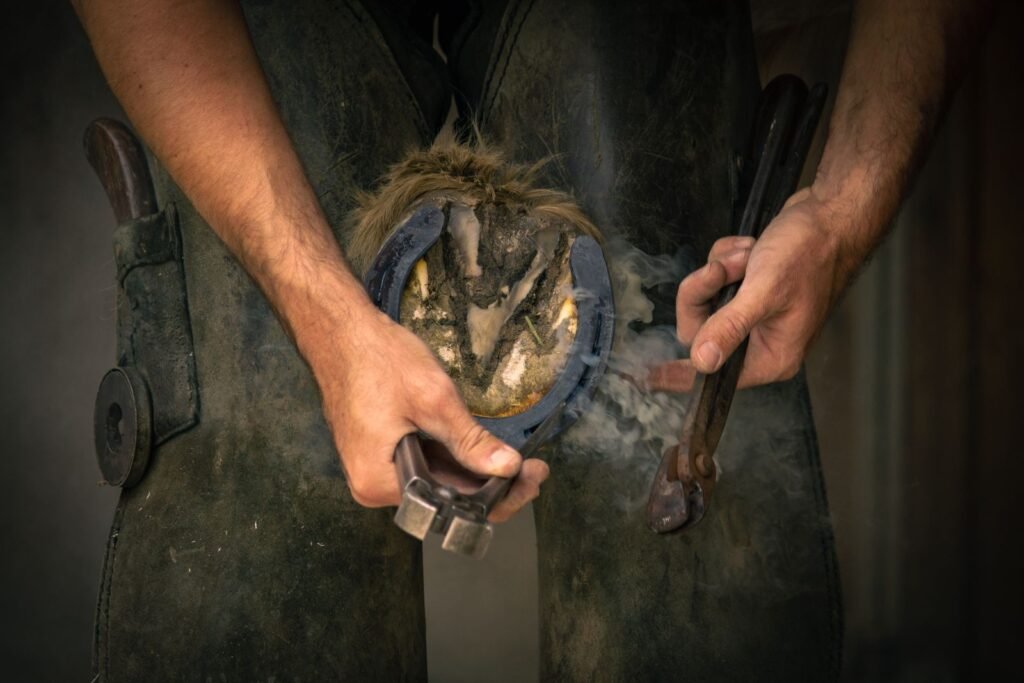
The inner layers of the hoof wall begin to separate from the structures beneath. Horn along the white line can become crumbly and soft. The space then fills with dirt, horn and debris, which exposes it to infection.
Once the horn is compromised, bacteria that do not need oxygen can thrive and spread through the hoof wall. Blue Cross describes the hole as filling with white, dead material. It usually starts at the toe and gradually moves up the wall, although it can start at the quarters or heels.
It has been found in all sizes, types and breeds of horse. Horses with poor-quality hoof horn may be more likely to get it.
Possible Causes of White Line Disease in Horses
No single cause has been proven. Sources describe several things that may play a part.
Hoof balance and shape
Long toes, dropped or underrun heels and poor hoof balance put mechanical stress on the wall. That stress can pry the wall away from the sole. Blue Cross says it normally occurs when toes are allowed to grow too long, but it can also follow laminitis or concussion from hard ground.
Wet and dry conditions
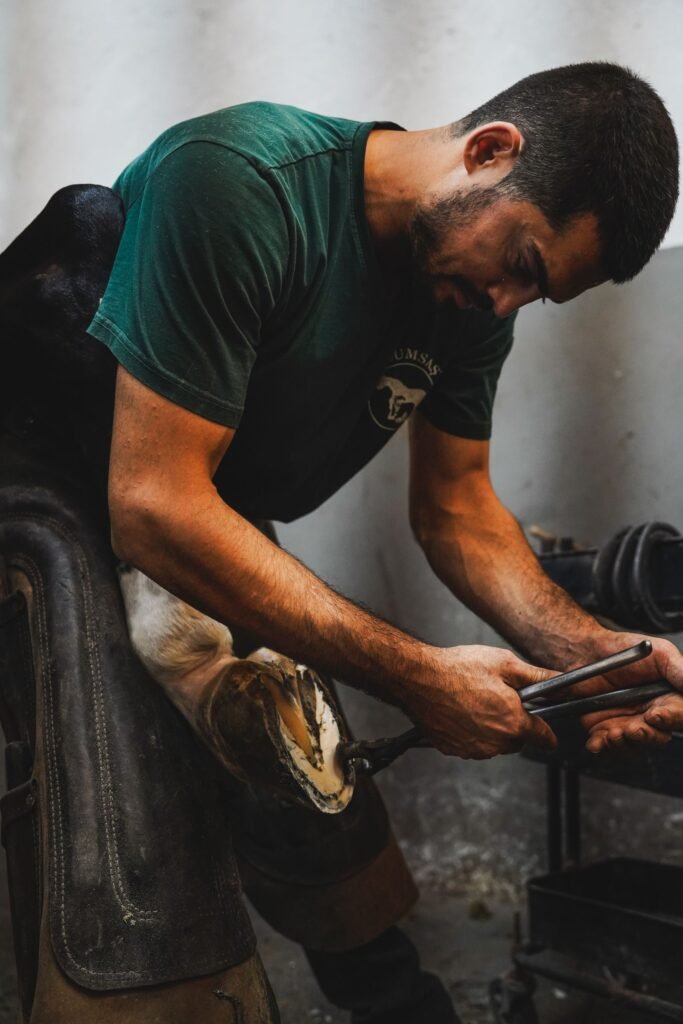
Very wet conditions soften the hoof, while extreme dryness can cause cracks. A UK veterinary review suggests softened hooves may let dirt and debris into a separation, leading to secondary infection. However, the same review says the idea that poor hygiene causes it is not supported by the limited evidence, and that it is seen in well-managed yards as well as yards with poorer hygiene. So wet, dirty conditions may make it worse, but they are not the whole story.
Nutrition
The British Horse Society (BHS) says low levels of biotin, zinc or copper, or too much iron, can weaken hoof structure. Please talk to your vet before changing your horse's diet or adding supplements.
Bacteria and fungi
Bacteria, fungi or both are commonly found in affected hooves. A farriery article points out they may simply colonise a gap that has already formed, so calling it just a fungal infection is an oversimplification.
Signs of White Line Disease in Horses to Check For
It is important to check your horse's hooves regularly, because early signs can be subtle. The outside of the hoof may look normal. Look and listen for:
- A widened white line that looks crumbly, powdery or waxy.
- A hollow sound when you tap the hoof wall over the affected area.
- A noticeable cavity around the white line when picking out, sometimes filled with grey or white crumbly material.
- As the separation moves upwards, flaring of the wall, a concave or "dished" look, or recurring abscesses.
Most horses remain sound in the early stages. As a result, it is often first spotted at a routine farrier visit. Lameness can occur if the damage affects the hoof's internal support or the pedal bone rotates.
When to Contact Your Vet or Farrier
- You suspect white line disease. Call your farrier or vet promptly.
- Your horse is lame, or you can see a large cavity.
- You are worried that the pedal bone may have moved. A larger separation could cause this, resulting in laminitis.
- Your horse has any penetrating hoof injury, such as a nail or screw. This should be seen by a vet immediately.
Your farrier can manage mild cases caught early during regular visits. The biggest concern is severe cases, so if in doubt, call your vet. See Laminitis in Horses for the urgent signs.
How White Line Disease in Horses Is Diagnosed and Managed
Your vet or farrier will make an initial diagnosis by examining the hoof. X-rays may be used to confirm where the separation is, how far it goes and whether the pedal bone has moved. They also need to tell it apart from laminitis, and from an abscess. Blue Cross says the condition needs to be managed by your vet and regular correct trimming by a farrier.
Treatment usually involves removing the damaged section of hoof wall. This exposes the infection to air, and oxygen helps kill harmful microbes. Typically, the separated wall is trimmed away until only healthy, firmly attached wall remains.
A gentle topical product chosen by your vet or farrier may be applied daily until healthy tissue returns. Special shoes, such as heart-bar or bar shoes, can help share out weight and steady the hoof. If a lot of wall is removed, some vets and farriers rebuild it, but opinion on this varies, so follow your own vet's advice.
Do not try this yourself. A UK vet review warns that topical treatments are frequently overused and can cause brittle, crumbly horn, and that some strong products can damage sensitive structures. Whether antimicrobials are needed is for your vet to decide.
Recovery and Outlook
The hoof wall grows down at roughly 1 cm per month, so it can take a considerable time to become fully formed again. Recovery can take longer if the disease reaches the coronary band.
Even so, most uncomplicated cases respond well to consistent care. A vet review describes the outlook for full recovery as excellent for uncomplicated cases, but more guarded if it follows laminitis or the pedal bone has rotated.
Keep the hoof as clean and dry as possible while the healthy wall grows down. Horses with a history of white line disease tend to get it again, so closer monitoring is sensible. If your horse is not up to date with tetanus vaccination, ask your vet.
Recurring abscesses can be linked to a stretched white line or seedy toe. See Hoof Abscess in Horses for more on that.
Reducing the Risk
White line disease can be tricky to prevent completely, but you can reduce the risk:
- Keep to a regular farrier cycle to maintain hoof balance and avoid long toes. Your farrier will advise on the interval. One Horse & Hound guide suggests visits no more than six weeks apart.
- Pick out hooves daily to remove trapped debris, and check them for changes.
- Keep bedding clean and dry, and avoid turnout in wet or muddy areas where you can.
- Offer a dry standing area.
- Feed a balanced diet to support hoof growth.
- Watch more closely if your horse has had it before.
For related hoof problems, see Cracked Hooves in Horses and Thrush in Horses' Hooves.
How Pet Med Direct Can Help
If you think your horse has white line disease, speak to your farrier or vet first. Please do not order anything instead of, or before, getting their advice.
You can browse our equine range. If your vet prescribes a prescription-only medicine (POM-V), it can only be supplied by a vet or pharmacist, in line with a prescription from a veterinary surgeon. You can also read how pet prescriptions work.
If you compete, remember that no horse should compete while on medication. Check with your vet and governing body.
Some pet medicines require a valid veterinary prescription. Pet Med Direct can only supply prescription medicines after the prescription has been checked. Always follow your vet's advice and the directions on the medicine label.
Frequently Asked Questions
Is seedy toe the same as white line disease?
UK owner guides use the two names for the same problem. More technical sources say they overlap but are not strictly identical. Your vet or farrier can explain what they see in your horse's hoof.
Will my horse be lame?
Often not at first. Most horses remain sound in the early stages. Lameness can occur if the damage affects the hoof's internal support, so call your vet.
Is white line disease in horses a fungal infection?
Not simply. Bacteria, fungi or both are commonly found, but the exact cause is not fully understood. Fungi and bacteria may colonise a separation that has already formed.
Can I treat white line disease at home?
No. Treatment usually involves removing the damaged hoof wall, which a farrier or vet should do. Overused or strong topical products can make horn brittle or damage sensitive structures.
How long does it take to grow out?
The wall grows down at roughly 1 cm per month, so it may take a considerable time. Recovery can be longer if the disease reaches the coronary band.
Does poor stable hygiene cause it?
Not on its own. Wet, dirty conditions may make it worse, but it also occurs in well-kept yards. Good hoof hygiene still helps.
How often should my farrier visit?
The BHS suggests a regular farrier cycle as advised. One Horse & Hound guide suggests no more than six weeks apart. Your farrier will tell you what suits your horse.
Related Equine Health Guides
Sources and Further Reading
- British Horse Society — White line disease in horses (seedy toe)
- British Horse Society — Hoof injuries and diseases
- Blue Cross — Common problems for horses hoofs
- Horse & Hound — White line disease/seedy toe in horses
- Vet Times — White line disease in horses
- The Farrier — White Line Disease and Seedy Toe in the Horse
- GOV.UK — Marketing authorisations for veterinary medicines
- British Equestrian — Equine anti-doping
This article was researched from the sources listed above. It is general information for horse owners and is not a substitute for advice from your own vet.

Need pet products or prescription medicines? Visit the Pet Med Direct shop.
Shop Pet Med Direct