✓ Registered Vet Practice
🚚 Fast UK-Wide Delivery, Including Northern Ireland
℞ Prescription & Non-Prescription Products
→ Need to upload a prescription?

Why Is My Horse's Leg Swollen?
How to tell harmless filled legs from a swelling that needs your vet.
Quick Answer
- A cool, soft, painless swelling in both hind legs that eases with walking is often "filled legs", which is fluid collecting in the lower leg after standing still.
- A swollen leg that is also hot, painful or lame is different, and you should call your vet straight away, especially if the horse is feverish, very lame or unwilling to move.
- A new swelling, especially one that is hot, affects just one leg or involves a joint, is a reason to call your vet.
- Other causes include injury to a tendon or ligament, a hoof abscess, mud fever and bacterial infections such as cellulitis and lymphangitis.
- Do not wait and treat a hot, painful swollen leg at home, and do not start antibiotics yourself. Antibiotics are for your vet to prescribe.
Finding your horse's leg swollen can be worrying, because it is hard to know whether to wait or ring the vet. Swollen legs are common and have many causes. Some are harmless, but others are a sign of something serious.
This guide helps you work out which type of swelling you are looking at and what to do next. Only a vet can say what is wrong, so if you are not sure, call your vet.
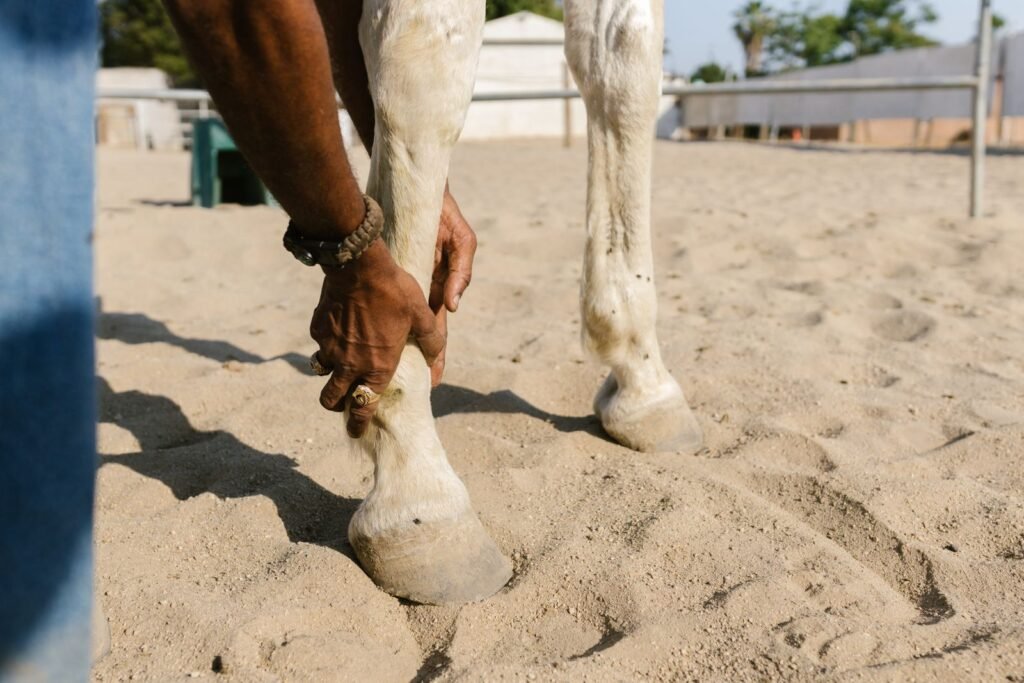
What can make a horse's leg swollen?
Filled legs (stocking up)
"Filled legs", "stocking up" and "humour" are everyday names for oedema. This is fluid that collects under the skin and settles in the lowest part of the body.
The hind legs are usually more swollen than the fronts, and the swelling is similar in each pair. It is not uncommon in autumn and winter, when horses spend more time standing in the stable.
A 2006 Horse & Hound Vet Clinic article describes this swelling as cold, soft and painless. It says the swelling goes down with gentle exercise or turnout.
Why legs fill
When a horse stands still, circulation becomes sluggish and fluid leaks out.
Your Horse lists long periods of standing still, too much protein, overfeeding or obesity, and too much moisture as possible causes. A 2016 Horse & Rider answer says there are many anecdotal reports of legs filling on new pasture or with certain hay, but no scientific evidence that this is a cause for concern.
Windgalls
Windgalls are leftover inflammation from old tendon or ligament injuries. They sit at the back of the leg at or just above the fetlock, and are usually painless.
Injury to a tendon, ligament or joint
Sprains and strains often cause inflammation, pain, swelling and lameness. Your Horse says these need immediate veterinary attention.
Lameness, heat and swelling are signs of a tendon or ligament injury, according to World Horse Welfare. Our guide to Tendon Injuries in Horses covers this in more detail.
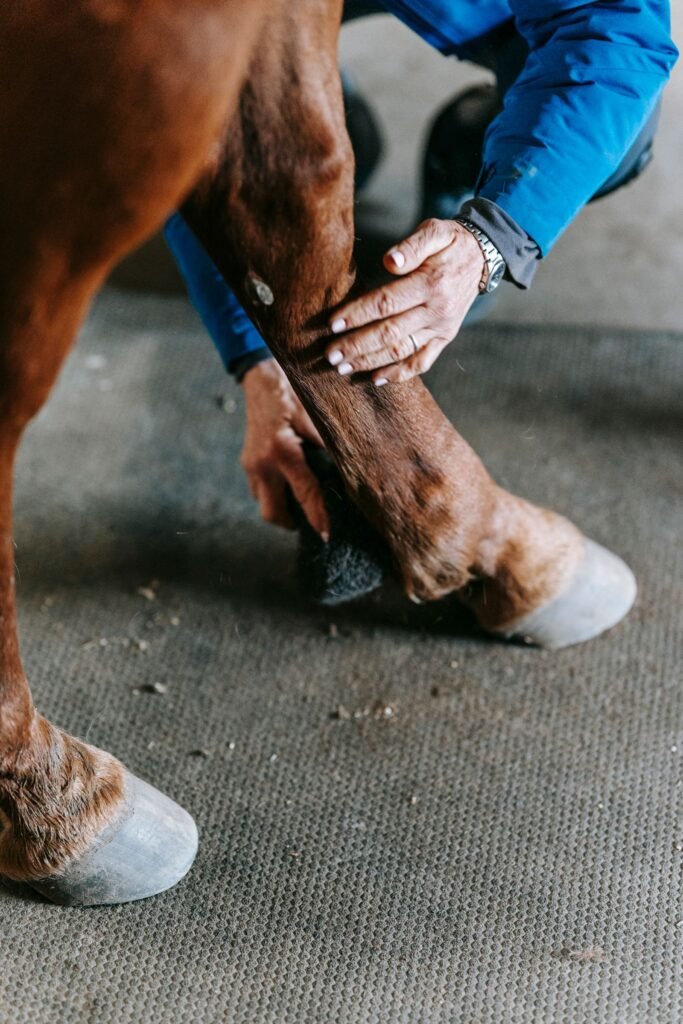
Hoof abscess
A hoof abscess can make the leg fill because of inflammation in the foot. Sudden, severe lameness is typical. Swelling can develop around the coronary band or pastern, and sometimes it extends up the leg.
See our guide to Hoof Abscess in Horses for more.
Mud fever and skin problems
Mud fever can cause heat, pain and swelling in the lower limb, and the horse may not tolerate the area being touched. The British Horse Society says infections can develop under the scabs, and the leg may swell in severe cases.
If left untreated, mud fever can lead to cellulitis and even lymphangitis. These conditions can often affect one leg at a time. Read more in Mud Fever in Horses.
Cellulitis
Cellulitis is a bacterial infection of the deeper layers of the skin. In horses it commonly affects one hind leg. It typically starts with sudden swelling that feels warm and painful, and your vet needs to see the horse.
The way in can be a tiny puncture wound that is hard to find.
Lymphangitis
Lymphangitis is inflammation of the lymph vessels. It usually affects a hind leg, which becomes hot, very painful and extremely swollen, often at least double the size of the other leg.
The horse is often unwilling to move and generally has a raised temperature. It may sweat and go off its food, and yellow fluid may ooze through the skin.
Your Horse says to contact your vet immediately if you notice these signs. The leg may never return to its original size, and a horse that has had lymphangitis once is likely to be prone to it happening again.
Whole-body causes
If all four legs fill at once and the horse seems unwell, the cause may lie elsewhere in the body. Sources mention heart problems, low blood protein and allergic reactions. Your vet needs to investigate these.
A 2006 Horse & Hound article describes a condition called purpura haemorrhagica, believed to be an allergic reaction, which can follow strangles or equine flu. Swelling of all four legs, with fever or dullness, calls for a vet at once.
Other local causes
Bruising, insect bites, scrapes, wounds, allergic reactions and arthritis can also cause heat, swelling or pain. Swelling in a single limb usually points to a local problem.
How to check a swollen leg at home
Stay calm and compare both legs. Run your hands slowly down the swollen leg to feel for heat, and gently press to check for tenderness.
Your Horse also advises you to check your horse's temperature and look closely for wounds, such as small punctures or oozing cuts.
- Is the swelling in one leg or several?
- Does it feel hot, or does your horse flinch when you touch it?
- Is your horse lame, or reluctant to move?
- Is there a wound or puncture, however small?
- Is your horse's temperature raised, or is the horse dull or off its food?
If neither heat nor pain goes with the swelling, Your Horse says it is probably a non-acute problem such as windgalls or filled legs. Even so, Your Horse says you should always call your vet about a swollen leg, particularly if you are unsure of the cause or how serious it is.
Emergency: Contact a Vet Immediately If…
- The leg is hot, painful and hugely swollen, or much larger than the other leg.
- Your horse is lame, unwilling to move, or will not put weight on the leg.
- There is a raised temperature, or your horse is dull, sweating or off its food.
- The swelling is spreading up the leg or under the belly.
- All four legs, or the head or belly, are swollen and your horse seems unwell, or there are tiny red spots on the gums.
- There is an object stuck in the leg or foot. Do not pull out nails or other objects unless your vet tells you to.
Call your vet or the nearest out-of-hours emergency vet straight away. Do not wait to see if it settles, and do not try to treat it at home first.
When to Contact Your Vet
- A leg that swells suddenly, especially if it is hot, affects just one leg or involves a joint.
- Any swelling that comes with lameness, pain or a raised temperature.
- A swelling with a wound, however small.
- Filled legs with any other signs, such as being off colour.
- Legs that keep filling, especially on box rest, so the cause can be investigated.
Tell your vet when the swelling started, which leg is affected, and whether there is a wound, heat, a temperature or lameness. If there is a wound, also say when your horse last had a tetanus vaccination.
How vets investigate a swollen leg
Your vet will ask about your horse's health and the signs you have seen. They will examine the legs and joints, and may watch your horse walk and trot or take its temperature. If injury or disease is likely, they may X-ray or scan the legs.
For cellulitis or lymphangitis, your vet may prescribe antibiotics and anti-inflammatory medication. In lymphangitis, controlled exercise follows once the horse is comfortable enough to move. Severe cases can be hard to control.
What not to do
- Do not treat a hot, painful, lame swollen leg at home and wait.
- Do not start antibiotics yourself. A Horse & Hound vet says antibiotics should only be prescribed by your vet, for cases that really need them.
- Do not bandage tightly or unevenly. Tight bandages can damage tendons.
- Do not remove a nail or other object stuck in the foot or leg unless your vet tells you to.
Vets and therapists disagree about bandages and cold hosing for filled legs, so ask your vet what suits your horse.
Looking after filled legs
Movement is the main help. Horse & Hound quotes a Royal Veterinary College surgeon who says in-hand walking twice a day helps prevent oedema. Daily turnout and sessions on the horse walker also help.
If you often find your horse's leg swollen after a night in, also keep the legs from staying cold, wet and muddy. Wash off mud, towel the legs dry and check the legs daily.
In the UK, horses are considered food-producing animals, and some medicines mean a horse must be permanently excluded from the food chain, with a declaration signed in its passport (GOV.UK). Ask your vet about this when a medicine is prescribed. If you compete, talk to your vet and check your sport's anti-doping rules about any medicine your horse has had.
How Pet Med Direct Can Help
A hot, painful or lame leg is a situation for your vet first. Please call them before ordering anything.
Once your vet has assessed your horse, you can browse our equine range for everyday horse care. If your vet has prescribed a medicine, our guide to how pet prescriptions work explains the process.
Some pet medicines require a valid veterinary prescription. Pet Med Direct can only supply prescription medicines after the prescription has been checked. Always follow your vet's advice and the directions on the medicine label.
Frequently Asked Questions
Is a filled leg an emergency?
Not usually, if both hind legs look similar and feel cool, soft and painless, and the swelling eases with walking. Heat, pain, lameness, one swollen leg or any other sign of illness changes that, so call your vet. If you are unsure, call your vet anyway.
Why is my horse's leg swollen after a night in the stable?
When a horse stands still, circulation becomes sluggish and fluid collects in the lower legs. Gentle exercise or turnout usually helps. However, if the leg is hot, painful or lame, ring your vet.
Can I cold hose a swollen leg?
Sources differ. Your Horse suggests cold hosing for mild swelling that a vet has already assessed, but a Horse & Hound vet does not routinely recommend it for every filled leg. Ask your vet first, and never use it instead of a vet visit when a leg is hot and painful. Bandages must never be uneven or too tight.
Can mud fever cause a swollen leg?
Yes. Severe mud fever can cause swelling, and left untreated it can lead to cellulitis or lymphangitis. The British Horse Society advises speaking to your vet if you notice any swelling.
Related Equine Health Guides
Sources and Further Reading
- Your Horse — Equine vet explains common causes of swollen legs in horses and tips to manage it
- Your Horse — Lymphangitis in horses: symptoms and treatment advice from a vet
- Horse & Hound — Filled legs in horses: how to identify the cause
- Horse & Hound — Filled legs in a horse on box rest: what you need to consider
- Horse & Rider — Why is grass causing my horse's legs to swell up?
- British Horse Society — Mud Fever In Horses: Signs & Causes
- British Horse Society — Hoof abscesses in horses
- World Horse Welfare — Tendon and ligament injuries in horses
- GOV.UK — Horse medicines and record keeping requirements
- British Equestrian — Equine anti-doping
This article was researched from the sources listed above. It is general information for horse owners and is not a substitute for advice from your own vet.

Need pet products or prescription medicines? Visit the Pet Med Direct shop.
Shop Pet Med Direct