✓ Registered Vet Practice
🚚 Fast UK-Wide Delivery, Including Northern Ireland
℞ Prescription & Non-Prescription Products
→ Need to upload a prescription?

What Should I Do If My Cat Has a Seizure?
Stay calm, keep your cat safe, keep your hands away from its mouth, and know when to call your vet.
Quick Answer
- During a seizure, stay calm, make the area safe, keep your hands well away from your cat's mouth, and do not hold or restrain your cat.
- Start a timer and film the seizure if you can. Call your vet straight away if it lasts longer than two minutes (PDSA and the Royal Veterinary College both give this limit), or if your cat has more than one seizure in 24 hours (PDSA).
- Sources differ on the exact time limits, so act at the earliest one. A seizure that continues without recovery, or several in a row, is an emergency.
- After any seizure, even a first one and even if your cat seems fine afterwards, contact your vet as soon as possible for advice.
- A seizure after a dog flea treatment was used, or with tremors and wobbliness, may be poisoning, so contact your vet immediately.
If your cat has a seizure, the most useful things you can do are simple. Stay calm, make the area safe and note the time.
A seizure, also called a fit or convulsion, is a sign of abnormal brain function caused by a sudden surge of electrical activity. It is not a disease in itself, so your vet will want to find the cause.
Cats may show only one or two signs, which can make seizures harder to recognise.
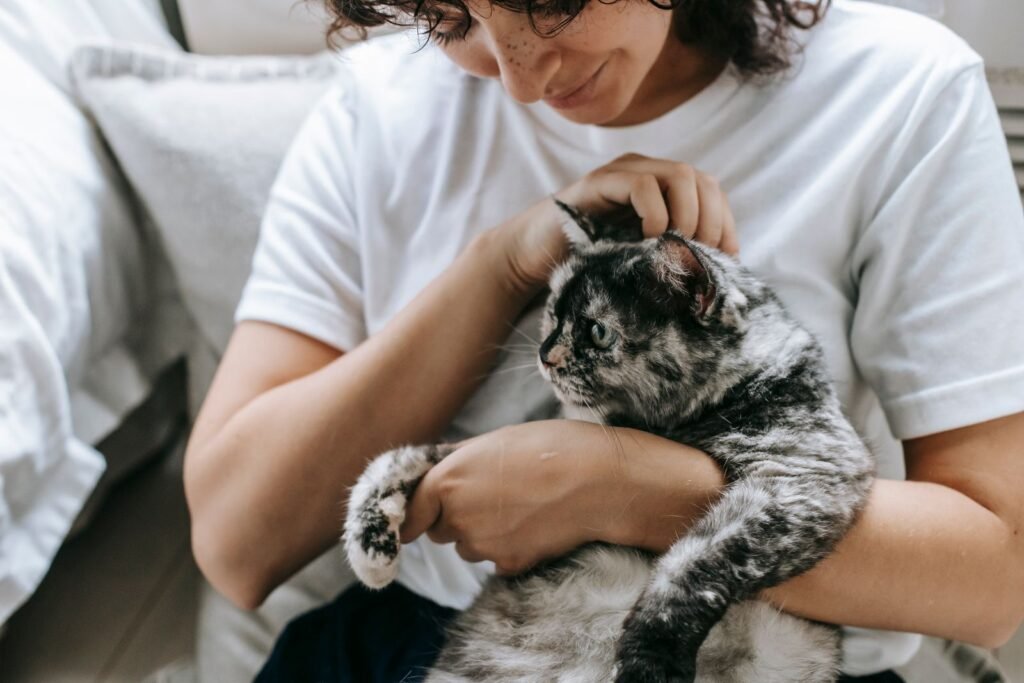
What to do while your cat has a seizure
Stay calm and make the area safe
First, stay calm. Then make sure your cat cannot hurt itself, for example by falling down stairs or off furniture. Pad the area with cushions or towels.
PDSA's cat vet advice is to move your cat only if it is in danger, such as falling from a height. If you must, protect yourself with a thick towel, blanket or gloves, because cats may bite or scratch without meaning to.
Keep other people and pets away, dim the lights and keep noise down. PDSA also says to keep the room as cool as possible and not to wrap your cat up, as it might overheat.
Keep your hands away from your cat's mouth
PDSA warns that if you go anywhere near the mouth, you are likely to be bitten. Blue Cross says not to put anything in your cat's mouth or try to rescue its tongue, and that restraining a cat may prolong the fit and you may be badly bitten.
The Royal Veterinary College says you do not need to hold a seizuring animal or stop it biting its tongue.
Do not shout at, shake or hit your cat to bring it round, as this will probably make the seizure worse. PDSA also says not to transport your cat until the seizure has stopped, unless your vet advises otherwise.
Time it and film it
Start a timer as soon as the seizure begins. The length matters because it decides how urgently you need help.
If you can, film the seizure, because PDSA says video gives your vet valuable clues. Afterwards, write down how long it lasted and what signs you saw.
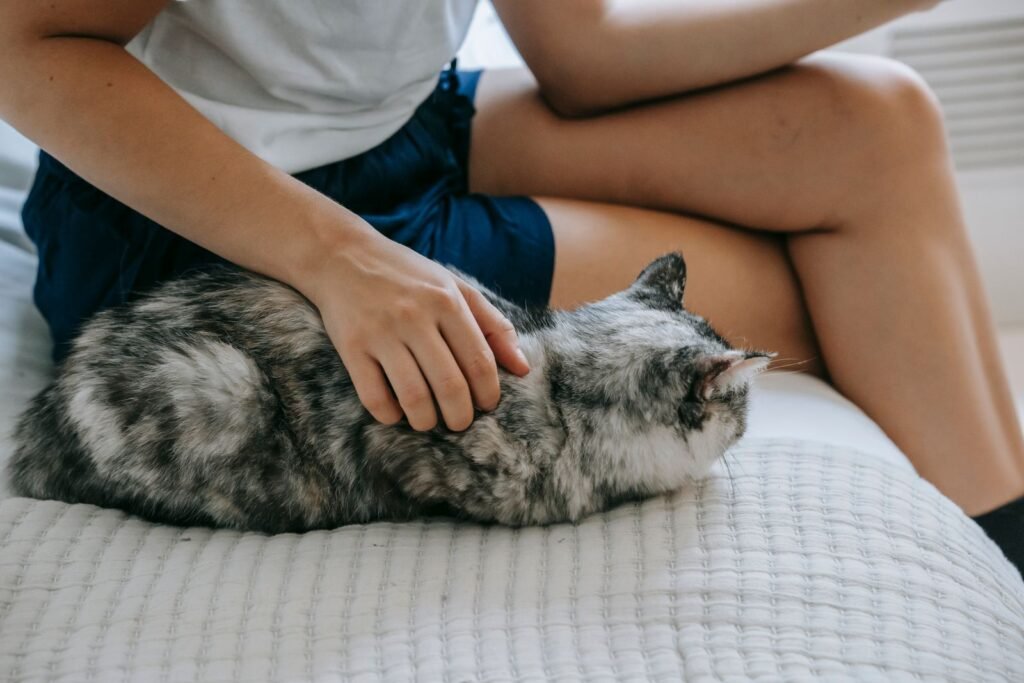
What to do afterwards
After a seizure your cat may be disorientated, wobbly or even blind for a while. International Cat Care says recovery can take anything from a few seconds to a few hours.
Reassure your cat by talking slowly and gently, and give it space and a comfortable, quiet place to rest. Keep a little water and food nearby, but do not force your cat to eat or drink.
Then call your vet, even if your cat seems fine. If your cat takes seizure medication, never stop or change it without veterinary advice.
What a seizure can look like
Seizures often happen while a cat is relaxed and resting. A partial seizure affects only part of the body, so it can be much harder to spot.
- Before a seizure, some cats drool, growl or pace.
- Sudden collapse and loss of awareness, or not responding to you.
- Violent shaking or paddling of the legs, or rigid legs.
- Chewing movements, a clamped jaw, or twitching of the face or eyes.
- Passing urine or faeces, or unusual head, neck or limb movements in a partial seizure.
Emergency: Contact a Vet Immediately If…
- The seizure lasts longer than two minutes. PDSA says to call your vet straight away, and the Royal Veterinary College says your cat should be taken to a vet practice immediately.
- Your cat has had more than one seizure in 24 hours.
- Your cat has several seizures one after another, which International Cat Care says needs urgent treatment.
- The seizure continues for more than five minutes without recovery. International Cat Care and Blue Cross treat this as an emergency, but sources differ, so do not wait for five minutes if it has already passed two.
- Your cat has had a dog flea treatment put on it, or has tremors, drooling, wide pupils or wobbliness, which may point to poisoning.
- Your cat has signs of heatstroke, such as panting or collapse.
Phone your vet or the nearest out-of-hours emergency vet straight away. They will tell you whether and when to bring your cat in. PDSA says not to transport a pet until the seizure has stopped unless your vet advises otherwise.
When to Contact Your Vet
- After any seizure, including a first or brief one. Please do not simply monitor it at home.
- Your cat takes medicine for seizures but is still having regular episodes.
- Your cat may have touched a poison, flea treatment, plant or medicine.
This article cannot tell you why your cat had a seizure. Only your vet can do that, so contact them as soon as possible.
Why a cat has a seizure: possible causes
Causes sit either inside the brain or outside it. Outside the brain, they include poisons and metabolic problems.
Poisons, including permethrin dog flea products
Permethrin is an insecticide found in some dog flea products. International Cat Care says high doses, often from spot-on dog flea treatments, can cause serious illness and even death in cats, because a cat's liver cannot break it down.
Signs include tremors, twitching, drooling, wobbling and wide pupils, and severe cases have seizures. PDSA says signs usually appear within a few hours but can take up to 36 hours. Left untreated, permethrin poisoning is usually fatal.
If a dog spot-on has been put on your cat, the Veterinary Medicines Directorate says to wash it off immediately with water and a mild detergent, seek immediate treatment from your vet and take all the product packaging with you. PDSA adds that you should wash only if your cat will allow it and call your vet straight away. A treated dog can also pass permethrin to a cat that rubs against it.
Protecting your cat from permethrin and other poisons
The Veterinary Medicines Directorate says you must never use a dog-only spot-on on your cat. Even a small part of the pipette could make your cat very unwell. International Cat Care says to always buy flea treatment made for cats. PDSA says it is best to avoid permethrin flea treatments for any dog in the same house as a cat. If you do use one, International Cat Care says to keep the treated dog and your cat apart for 72 hours.
Other poisons can cause fits too. Blue Cross says slug and snail poison containing metaldehyde is highly toxic to cats. If you suspect poisoning, phone your vet immediately and have any packaging to hand. Blue Cross says not to try to make your cat vomit without asking your vet.
For more on flea products, see our guide to fleas in cats.
Heatstroke
PDSA says heatstroke can cause seizures, and most cases follow a cat being trapped in a hot place. If you suspect heatstroke, PDSA says to start cooling your cat down immediately and then contact your vet. Blue Cross says to contact your vet immediately.
High blood pressure and other body-wide problems
High blood pressure can cause bleeding in the brain, and seizures are one possible sign. Our guide to high blood pressure in cats explains more.
Other causes outside the brain include liver or kidney disease, low blood sugar, low calcium and an abnormal heart rhythm. PDSA also lists an insulin overdose in a diabetic cat. See our guide to diabetes in cats.
Problems inside the brain, including epilepsy
Inside the brain, causes include a tumour, inflammation or infection, a stroke or a head injury. Primary epilepsy, where no structural problem is found, is an uncommon cause in cats.
PDSA says one seizure is likely a one-off and not epilepsy. Epilepsy means repeated seizures, including clusters, and many cats live normal, happy lives on regular medication.
What to tell your vet and what happens next
Tell your vet how long the seizure lasted, how many your cat has had, and what it did before and afterwards. Mention anything it may have touched, such as a poison, flea treatment, plant or medicine. Bring your video, log and any product packaging.
Tests may include blood and urine tests, an ultrasound and sometimes an MRI scan, usually at a specialist centre. Your vet will look for an underlying cause first. Anti-seizure medicine may also be needed, and the outlook depends on the cause.
How Pet Med Direct Can Help
Pet Med Direct is an online pet pharmacy, not an emergency service, so phone your vet first.
If your vet later prescribes ongoing medicine for your cat, you can read how pet prescriptions work and how repeat pet prescriptions are handled. You can also browse our cat medication range. Never stop or change your cat's seizure medicine without your vet's advice.
Some pet medicines require a valid veterinary prescription. Pet Med Direct can only supply prescription medicines after the prescription has been checked. Always follow your vet's advice and the directions on the medicine label.
Frequently Asked Questions
Is a seizure in a cat always an emergency?
Every seizure needs a call to your vet, and some are emergencies. Call straight away if it lasts longer than two minutes or your cat has more than one in 24 hours, as PDSA advises. Other sources give five minutes as the emergency point, so do not wait for five minutes if two have already passed.
Should I put something in my cat's mouth?
No. Do not put anything in your cat's mouth, and keep your hands away from it. PDSA warns you are likely to be bitten.
Will my cat swallow its tongue?
Blue Cross says not to try to rescue the tongue. The Royal Veterinary College says you do not need to hold your cat or stop it biting its tongue.
Can a dog flea treatment cause seizures in cats?
Yes. Permethrin, found in some dog flea products, can cause tremors and seizures in cats. Never use a dog-only product on your cat, and contact your vet immediately if you think your cat has been exposed.
Does one seizure mean my cat has epilepsy?
Not necessarily. PDSA says a single seizure is likely a one-off and not epilepsy. Still call your vet whenever your cat has a seizure, because causes can lie outside the brain.
Related Cat Health Guides
Sources and Further Reading
- International Cat Care — Seizures in cats
- PDSA — What to do if your pet has a seizure
- PDSA — Vet Q&As: What to know about epilepsy in cats
- Blue Cross — Emergencies in cats
- Royal Veterinary College — First Aid Guide for Your Pet
- International Cat Care — Permethrin poisoning in cats
- PDSA — Permethrin toxicity in cats
- Veterinary Medicines Directorate (GOV.UK) — Permethrin: don't put your cat at risk
- Blue Cross — Common cat poisons and toxins
- PDSA — Heatstroke in cats
- International Cat Care — Hypertension in cats
- Vets Now — How to care for your pet after a seizure or other neurological episodes
This article was researched from the sources listed above. It is general information for cat owners and is not a substitute for advice from your own vet.

Need pet products or prescription medicines? Visit the Pet Med Direct shop.
Shop Pet Med Direct