✓ Registered Vet Practice
🚚 Fast UK-Wide Delivery, Including Northern Ireland
℞ Prescription & Non-Prescription Products
→ Need to upload a prescription?

Cracked Hooves in Horses
Grass cracks, sand cracks and horizontal cracks: when a crack is only cosmetic and when to call the farrier or vet.
Quick Answer
- Cracked hooves in horses are splits in the hoof wall, and they range from little more than a cosmetic blemish to a serious cause of lameness.
- If a crack reaches the coronary band, or your horse is lame, call your vet or farrier straight away.
- Heat in the hoof, swelling near the coronary band, or pus or blood coming from a crack can mean infection, so contact your vet or farrier.
- Even shallow cracks are worth showing to your farrier, because your farrier can look for the cause, which is often hoof imbalance or overlong gaps between visits.
- Regular, correct farriery and picking out daily are the main ways to help prevent cracks.
Cracked hooves in horses are splits or breaks in the hoof wall. They can run vertically (up and down) or horizontally (side to side). Some are shallow and affect only the outer layer, while others go deep and can cause pain or infection.
Vertical cracks are the most common. Because the hoof wall grows slowly, new wall takes 10 to 12 months to grow from the coronary band to the ground. That is why a crack can take a long time to grow out.
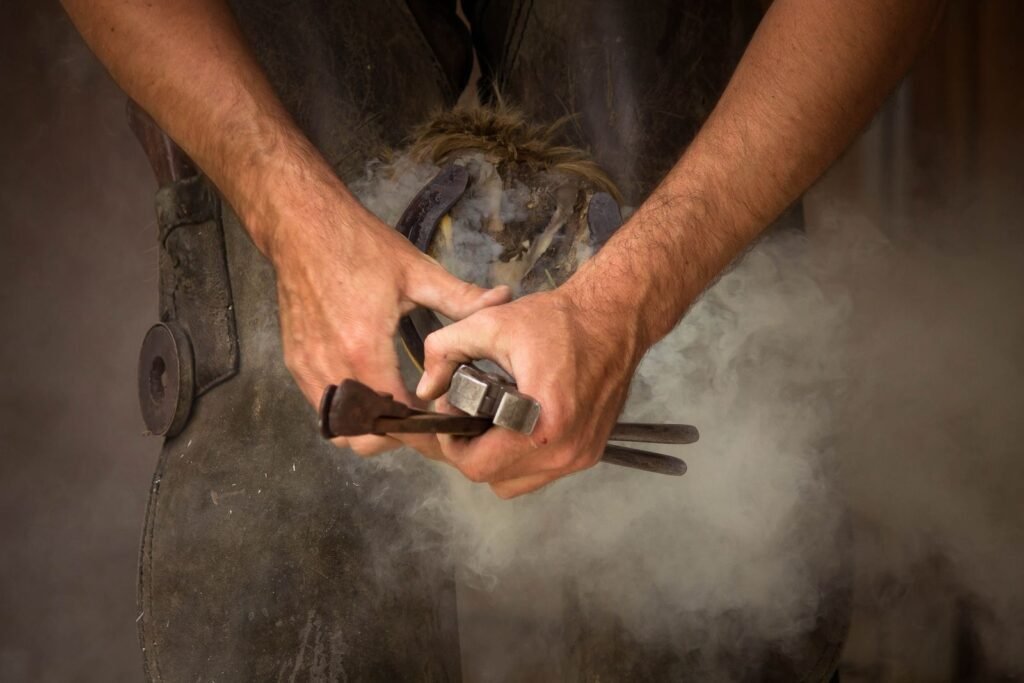
Types of Cracked Hooves in Horses
The name depends on where the crack starts.
Grass cracks
These start at the bottom of the hoof and run upwards. They are often caused by long hooves. Extreme dryness is a frequent cause, and they may develop where shoeing is infrequent and the feet are too long.
Grass cracks rarely cause severe lameness, but they can lead to infections such as abscesses.
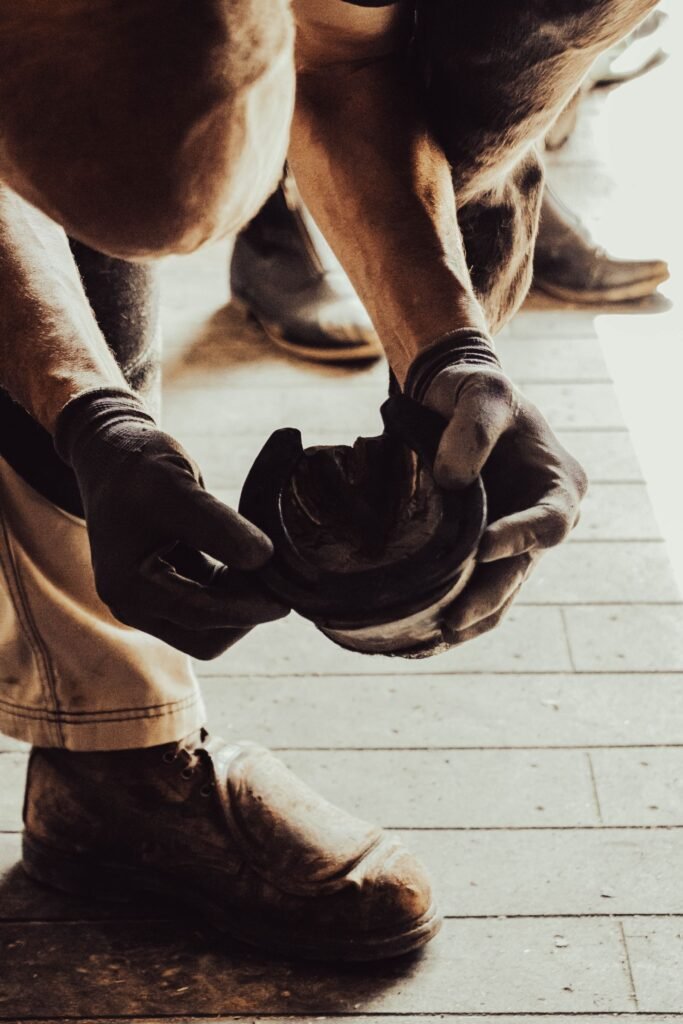
Sand cracks (quarter cracks)
These start at the top, at the coronary band, and run down. They may be linked to poor hoof balance or trauma. Because they involve the coronary band, they are more likely to cause lameness and need prompt attention.
If you notice a sand crack, speak to your farrier. It often means the horse may need trimming or shoeing differently.
Horizontal cracks
These run parallel to the coronary band and are less common. They are often related to an abscess or to nutritional issues. Most are harmless and grow out, although a substantial one can make the hoof unstable.
What Causes Cracked Hooves in Horses?
Sometimes there is no single reason. Even horses with well-maintained hooves can develop cracks because of underlying structural stresses. Common causes include:
- Hoof wall imbalance from poor trimming or shoeing.
- Infrequent farrier visits, leading to overgrown hooves. Overlong gaps between trims or shoeing are one of the simplest causes to avoid.
- Trauma to the coronary band. Coronary band injuries can cause permanent vertical cracks.
- Poor-quality hoof horn or nutritional deficiencies.
- Conformation issues such as sheared heels.
- Changes in weather. Dry weather can make hooves brittle, and drying and cracking can let bacteria into the hoof wall.
- Poorly positioned shoe clips or nails, which can make vertical cracks worse.
- An abscess that disrupts the coronary band, which can result in a sand crack. Seedy toe can also lead to cracking at the sole surface.
Horse & Hound adds that there is no scientific evidence that white hooves are softer than dark ones. For more, see Hoof Abscess in Horses and White Line Disease (Seedy Toe) in Horses.
Signs to Check for in Cracked Hooves
The most obvious sign is a visible split in the hoof wall. Pick out the hooves daily and check for small cracks, as catching them early can make a big difference. Also check:
- Whether the crack widens when your horse puts weight on the hoof. This shows the hoof is unstable.
- Heat in the hoof.
- Swelling near the coronary band.
- Any discharge, such as pus or blood.
- Any lameness. It usually only occurs with deep or infected cracks.
Cracks that go all the way through the wall to the inner layers will usually cause pain, bleeding and lameness. In vertical cracks, dirt or bacteria can become trapped and be forced up into the sensitive tissues, so an abscess is a common secondary problem.
When to Contact Your Vet or Farrier
- The crack reaches the coronary band, or your horse is lame. Call your vet or farrier straight away.
- There is heat, swelling near the coronary band, or pus or blood from the crack, which can indicate infection.
- The crack widens when your horse stands on the foot.
- You notice a sand crack of any size.
Your farrier can guide you and, if needed, suggest involving your vet. Please do not seal an infected crack yourself, as it can trap bacteria.
How Cracked Hooves in Horses Are Managed
Not all cracks need treatment, and shallow ones are often just cosmetic. However, the British Horse Society (BHS) also says hoof cracks will not heal without intervention, and that you should speak to your farrier to find the cause before infection sets in. In practice, the safest approach is to let your farrier look at any crack.
Horse & Hound describes three main aims: removing dead tissue, getting good foot balance for a level footfall, and stabilising the crack. It says that less is generally more, and that the majority need only good foot balance and a well-fitted shoe.
Deep cracks may need stabilising with special shoes, clips or patches to stop movement. Blue Cross says a farrier may also mark a groove in the wall, or put clips around the start of a grass crack, to stop it spreading.
If a crack is infected, damaged tissue is cleaned out and a vet may use antimicrobials. Hoof boots or protective coverings can help while the hoof grows out, which may take up to 12 months. With regular correct farriery, cracks should grow out.
Who Can Carry Out Farriery in Great Britain?
The Farriers (Registration) Act 1975 defines farriery as work to prepare a horse's foot for a shoe, fit a shoe, or finish off that work. The Farriers Registration Council (FRC) says that, within Great Britain (England, Scotland and Wales, but not Northern Ireland), anyone carrying out farriery must be registered, including on their own horses.
The FRC lists a few exceptions, such as enrolled farriery apprentices, trainees on approved courses, vets, trainee vets working under supervision, and people giving first aid in an emergency. It says that for others, doing this is a criminal offence which can bring a fine of up to £1,000, legal costs and a criminal record.
The FRC also says trimming that is not in preparation for a shoe does not fall within its definition of farriery. If you are unsure, check the FRC website.
The BHS recommends using a registered farrier for trimming and shoeing. To check, ask to see their registration card or use the "Find a Farrier" search on the FRC website. The FRC warns that using an unregistered person may invalidate your insurance if they lame or injure your horse.
Preventing Cracked Hooves in Horses
- Stick to a regular farrier schedule to keep hooves balanced and avoid overgrowth. Your farrier will advise, but many horses need a visit every four to six weeks.
- Pick out hooves daily and check for small cracks.
- Avoid extreme changes between wet and dry conditions where possible.
- Feed a balanced, high-forage diet to support healthy hoof growth.
- Ask your farrier whether hoof dressings suit your horse in dry weather. Research on lotions, oils and balms is limited.
- Ask your farrier or vet before using a hoof supplement. Biotin may help support hoof quality, especially if it is poor, but it needs feeding for several months.
If your horse is lame and you are unsure why, see Why Is My Horse Lame?
How Pet Med Direct Can Help
If a crack reaches the coronary band, or your horse is lame, speak to your vet or farrier first. Please do not order anything instead of, or before, getting their advice.
You can browse our equine range. If your vet prescribes a prescription-only medicine (POM-V) for an infected crack, it can only be supplied by a vet or pharmacist, in line with a prescription from a veterinary surgeon. Read how pet prescriptions work on our site.
Some pet medicines require a valid veterinary prescription. Pet Med Direct can only supply prescription medicines after the prescription has been checked. Always follow your vet's advice and the directions on the medicine label.
Frequently Asked Questions
Are cracked hooves in horses always a problem?
No. Shallow cracks are often just cosmetic. However, any crack that reaches the coronary band, or any lameness, needs your vet or farrier straight away.
What is the difference between a sand crack and a grass crack?
A sand crack starts at the top, at the coronary band, and runs down. A grass crack starts at the bottom of the hoof and runs up.
How long does a crack take to grow out?
A deep crack may take up to about 12 months. New wall takes 10 to 12 months to grow from the coronary band to the ground.
Do hoof oils or hardeners prevent cracks?
There is little clinical research to support lotions, oils and balms. Regular, correct farriery is the main way to help prevent cracks, and your farrier can advise on dressings.
Can I trim my own horse's hooves?
In Great Britain, anyone preparing a foot for a shoe, fitting a shoe or finishing that work must be a registered farrier, with a few exceptions, even on their own horse. The FRC says trimming not in preparation for a shoe falls outside its definition. Check the FRC website, and note that the BHS recommends a registered farrier for trimming and shoeing.
Can a crack cause an abscess?
Yes. In vertical cracks, dirt or bacteria can become trapped and be forced up into the sensitive tissues. An abscess can also cause a crack, as with a sand crack at the coronary band.
How often should my farrier visit?
Your farrier will advise. The BHS says usually every four to six weeks for shod horses, and sometimes longer for barefoot horses, while another guide suggests different intervals.
Related Equine Health Guides
Sources and Further Reading
- British Horse Society — Hoof cracks in horses
- British Horse Society — Hoof injuries and diseases
- British Horse Society — Essential care for your horse's hooves
- Horse & Hound — Hoof cracks in horses
- Thrums Vets — Hoof Cracks
- Blue Cross — Common problems for horses hoofs
- Farriers Registration Council — About FRC
- Farriers Registration Council — Registration
- Farriers Registration Council — Is your farrier registered?
- legislation.gov.uk — Farriers (Registration) Act 1975, section 16
- GOV.UK — Marketing authorisations for veterinary medicines
This article was researched from the sources listed above. It is general information for horse owners and is not a substitute for advice from your own vet.

Need pet products or prescription medicines? Visit the Pet Med Direct shop.
Shop Pet Med Direct