✓ Registered Vet Practice
🚚 Fast UK-Wide Delivery, Including Northern Ireland
℞ Prescription & Non-Prescription Products
→ Need to upload a prescription?

Hoof Abscess in Horses
Why sudden severe lameness is a reason to call your vet, and what usually happens next.
Quick Answer
- A hoof abscess is a painful, pus-filled infection between the sensitive tissue and the hard outer layer of the hoof, and it is a common cause of sudden, severe lameness.
- If your horse suddenly refuses to put weight on a foot, contact your vet immediately, because other serious problems can look similar.
- If something such as a nail is stuck in the foot, do not pull it out, and call your vet straight away.
- Most simple abscesses drain and heal well with proper treatment, and your vet or farrier will decide how to treat it.
- Abscesses that keep coming back, or lameness that does not improve after an abscess bursts, need a vet to look for an underlying cause.
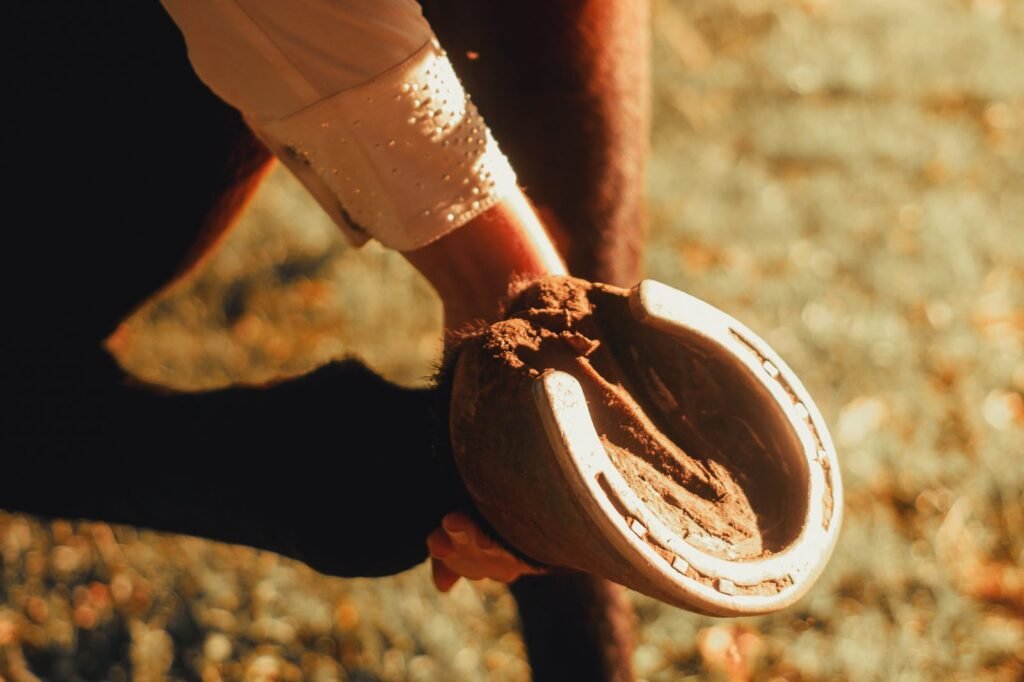
A hoof abscess in horses is a localised bacterial infection that forms between the sensitive and outer layers of the hoof. It often develops under the sole or the hoof wall. Bacteria trapped inside cause inflammation and pus, and the pressure that builds in the hoof is what causes the pain.
Hoof abscesses can affect any foot, but they are more common in the front feet than the hind. They also seem to occur more often in spring and autumn, because of environmental stresses. The good news is that most abscesses resolve quickly with proper treatment.
What Causes a Hoof Abscess in Horses?
Sometimes there is no obvious reason at all. Even so, bacteria often get in through a weak spot in the hoof. Vets and charities describe several routes.
Tiny cracks and gaps
Bacteria can enter through tiny cracks or gaps in the hoof wall or white line, and these may be invisible to the naked eye. A stretched white line or seedy toe can also weaken the hoof. For more on this, see White Line Disease (Seedy Toe) in Horses.
Puncture wounds
A sharp object such as a nail can puncture the foot. World Horse Welfare notes this can potentially be caused by improperly placed shoe nails. An abscess can also follow farriery or an injury such as standing on a sharp object.
Bruising from stones
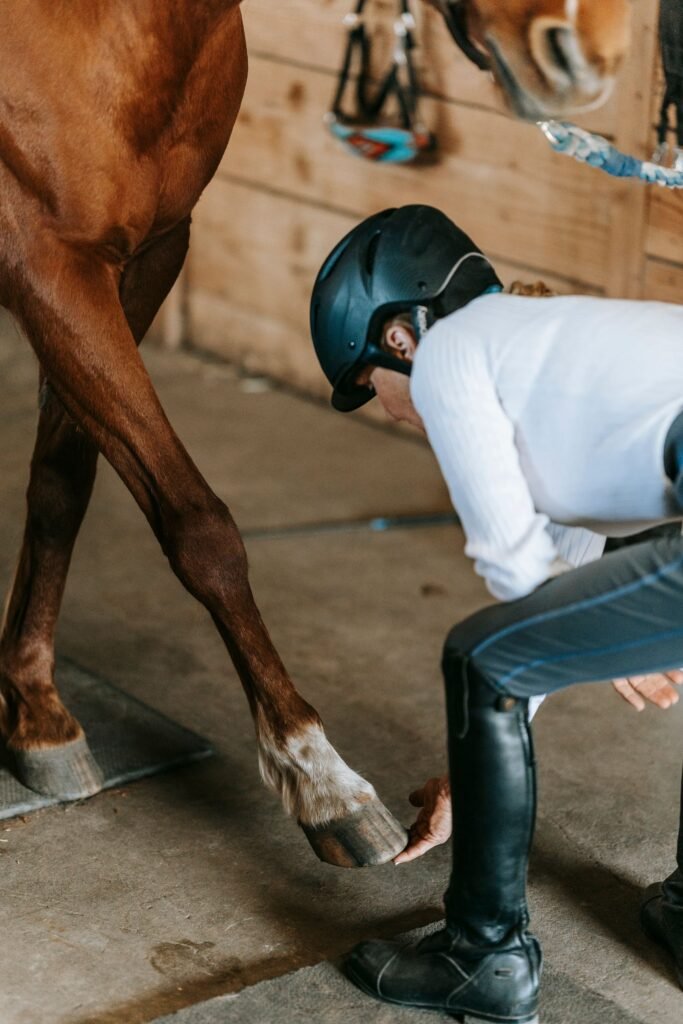
Stones can bruise the sole, and deep bruising may develop into an abscess over time. Dry ground tends to bring more stones to the surface, so picking out hooves before and after turnout matters.
Wet, dry and muddy conditions
Rapid changes between wet and dry conditions can weaken the hoof. Wet, muddy ground softens it and makes infection more likely, while very dry conditions can cause tiny cracks.
Hoof care and health conditions
Long gaps between farrier visits can allow flares or stretched white lines. In addition, World Horse Welfare lists thin soles, laminitis and Cushing's disease (PPID) as risk factors, and says horses with PPID may have recurrent abscesses and other infections.
Signs of a Hoof Abscess in Horses
The first sign most owners notice is a sudden, severe lameness in one leg. The horse may refuse to put weight on the foot, even if it looked sound a few hours earlier. Other signs include:
- Heat in the hoof or lower leg.
- A strong, bounding digital pulse near the fetlock or pastern. Your vet can show you how to check it.
- Swelling around the coronary band or pastern, which can sometimes spread up the leg.
- A foul smell or discharge at the sole or coronary band, or an open, pus-filled wound if it has burst.
- A horse that changes how it puts the foot down, or points the toe to avoid bearing weight.
- Signs of severe pain or distress, such as a raised temperature and loss of appetite.
However, please do not assume it is an abscess. Laminitis, cellulitis, tendon injury and fractures can look similar at first, and some need urgent veterinary care. See Laminitis in Horses and Why Is My Horse Lame? for more.
Emergency: Contact a Vet Immediately If…
- Your horse suddenly refuses to put weight on a foot.
- There is a nail or other object in the sole. Do not remove it, because that could cause more damage.
- You think the foot has been punctured. A vet should see all puncture wounds to the foot, because deep ones can infect the bone and need surgical attention.
- The lower leg is swelling, the swelling is spreading above the hoof, or your horse is dull, off its food or has a raised temperature.
Do not wait to see if it settles: call your vet or the nearest out-of-hours emergency vet straight away.
When to Contact Your Vet
- Any sudden lameness, so the cause can be diagnosed accurately.
- Lameness that does not improve dramatically after the abscess bursts, or that returns soon afterwards.
- Discharge that is yellow, greenish or blood-stained. Redwings says brown, dark grey or black discharge is normal but yellow, greenish or blood-stained pus is not, and that a vet should be told about any change.
- Abscesses that keep coming back, so underlying causes can be investigated.
Left untreated, an abscess can lead to deeper infections or even laminitis, so prompt treatment is essential.
While You Wait for the Vet
Call your vet first. Keep your horse quiet until they advise you.
Sources differ on whether to poultice before the vet arrives. Some UK guidance says a poultice can be applied while waiting. Blue Cross says to poultice or tub the hoof only if your vet has advised it, and to ask them to show you how. So ask your vet on the phone whether to poultice and how.
If you can see an object in the foot, do not use a poultice and do not remove the object. Likewise, if the problem may not be in the foot, or your horse hates having the leg picked up, keep the horse quiet and wait for the vet.
If the horse is shod, a vet or farrier may need to remove the shoe to inspect the hoof properly.
How Vets Find and Treat a Hoof Abscess in Horses
Your vet or farrier will ask about recent management, farrier visits and turnout. They will examine the hoof and leg, feel for heat and a raised digital pulse, and use hoof testers to find the painful spot. They may remove the shoe, and may explore the sole with a hoof knife to find a draining tract.
X-rays may be recommended in severe cases, especially if a puncture is suspected or the abscess is hard to find. If the abscess cannot be found, a horse is likely to be put on box rest with a hot, wet poultice to soften the hoof so material can drain.
The key to treatment is to relieve the pressure and establish drainage. The abscess may be opened with a hoof knife, which often brings immediate relief. Your vet can prescribe pain relief.
Antibiotics are a vet decision. Sources differ on when they help, so your vet will decide whether your horse needs them.
Tetanus protection is very important. If your horse has not had a recent tetanus booster, your vet can advise.
Recovery and Preventing a Hoof Abscess in Horses
Once the abscess drains, a horse is usually more comfortable straight away. In a simple case, the horse should be almost sound within a few days. Mild abscesses can resolve within days to a week, while deeper or higher ones can take several weeks or even months. Keep the area clean until it has fully healed, and ask your vet or farrier how.
Prevention comes down to good hoof care:
- Regular farrier visits to keep the hoof balanced.
- Picking out hooves daily, removing stones and checking for injury.
- Keeping the environment clean and dry. Brush mud off rather than rinsing it, and provide hardstanding areas or shelters in muddy fields.
- Treating cracks and injuries promptly.
- Working with your vet on diet if abscesses keep recurring.
Cracks can let bacteria in, so also see Cracked Hooves in Horses.
How Pet Med Direct Can Help
A sudden, severe lameness is a situation for your vet first. Please do not order anything instead of, or before, calling them.
Prescription-only medicines (POM-V) are supplied solely against a valid prescription from your horse's own vet. You can read how pet prescriptions work on our site, or browse our equine range.
In the UK, horses are considered food-producing animals, and the declaration in a horse's passport decides which medicines can be given. Some medicines a vet may prescribe, including some painkillers, mean the horse must be permanently excluded from the food chain, so ask your vet about this before treatment starts. If you compete, also check with your vet and governing body.
Some pet medicines require a valid veterinary prescription. Pet Med Direct can only supply prescription medicines after the prescription has been checked. Always follow your vet's advice and the directions on the medicine label.
Frequently Asked Questions
How long does a hoof abscess take to burst and heal?
Mild abscesses can resolve within a few days to a week. Deeper or higher abscesses can take several weeks or even months. Hind-foot abscesses can take longer.
Can I poultice a hoof abscess myself?
Call your vet first and ask whether to poultice and how. Sources differ on poulticing before the vet arrives, and it should not be done if an object is in the foot or if you are unsure the problem is in the foot.
Can a hoof abscess be treated at home without a vet?
No. Abscesses should be treated by a vet and/or farrier, because the lameness must be diagnosed accurately. Look-alike problems such as laminitis, tendon injury and fractures need veterinary care.
Why does my horse keep getting abscesses?
Recurrent abscesses are worth a vet visit. Possible underlying causes include PPID, laminitis, thin soles, poor hoof care or a pedal bone fracture. Your vet may suggest an X-ray.
Does a hoof abscess in horses always burst?
Treatment aims to establish drainage, and the abscess may burst at the sole, heels or coronary band. If it has not drained and your horse remains very lame, your vet can find and open it.
Does my horse need antibiotics?
Sources differ, so this is for your vet to decide. Some say antibiotics help with deeper or more complex infections, while others say they do not improve healing in simple abscesses.
Should my horse rest or move around?
Keep your horse quiet while you wait for the vet. After that, advice on exercise varies, and your vet will tell you what suits your horse. Whatever happens, the hoof must be kept clean.
Related Equine Health Guides
Sources and Further Reading
- British Horse Society — Hoof abscesses in horses
- World Horse Welfare — Hoof abscesses in horses
- Horse Health Programme — Hoof Abscesses
- Redwings Horse Sanctuary — Helping Hooves Heal
- Animal Friends — Horse hoof abscess: symptoms, treatment, and poultices
- Petplan Equine — Summer Hoof Care
- Blue Cross — Common problems for horses hoofs
- GOV.UK — Horse medicines and record keeping requirements
- GOV.UK — Marketing authorisations for veterinary medicines
- British Equestrian — Equine anti-doping
This article was researched from the sources listed above. It is general information for horse owners and is not a substitute for advice from your own vet.

Need pet products or prescription medicines? Visit the Pet Med Direct shop.
Shop Pet Med Direct