✓ Registered Vet Practice
🚚 Fast UK-Wide Delivery, Including Northern Ireland
℞ Prescription & Non-Prescription Products
→ Need to upload a prescription?

Rain Scald in Horses
What rain scald is, how it differs from mud fever, what the scabs look like and when to involve your vet.
Quick Answer
- Rain scald is a bacterial skin infection that causes scabs on the neck, back and hindquarters, usually where the coat has stayed wet.
- It can be caused by the same bacteria as mud fever, but mud fever affects the lower legs.
- The scabs come away with tufts of hair, like little paint brushes, and the skin is not usually itchy.
- Ringworm looks similar and is contagious, so ask your vet to confirm the cause before you start any treatment.
- Sources differ on whether rain scald spreads, so avoid sharing rugs, tack and brushes as a sensible precaution.
Rain scald in horses is a skin condition that can appear after long spells of wet weather. Despite the name, it is not caused by rain alone, but by moisture that becomes trapped in the coat and cannot escape.
A UK horse magazine describes it as one of the most common skin conditions in horses and not a serious disease, but says it may lead to more severe secondary skin infections if not treated. This guide covers the signs, what vets do and how to reduce the risk.
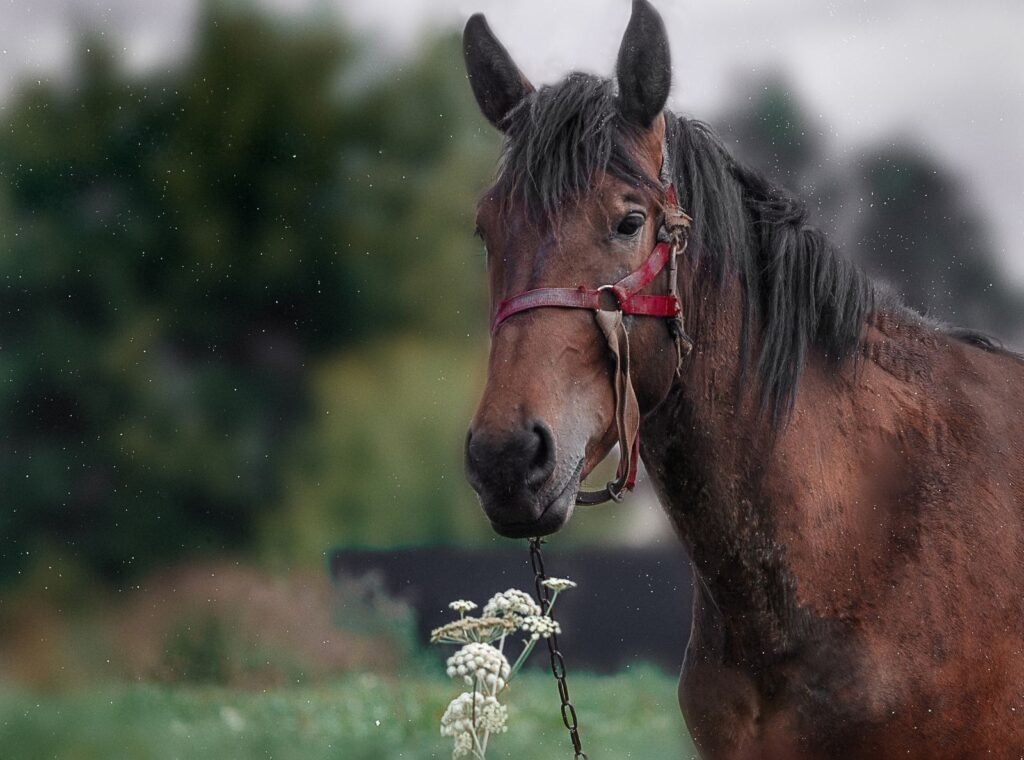
What causes rain scald in horses?
The condition is caused by a bacterium called Dermatophilus congolensis, which behaves both like a bacterium and like a fungus. The same bacteria can cause mud fever.
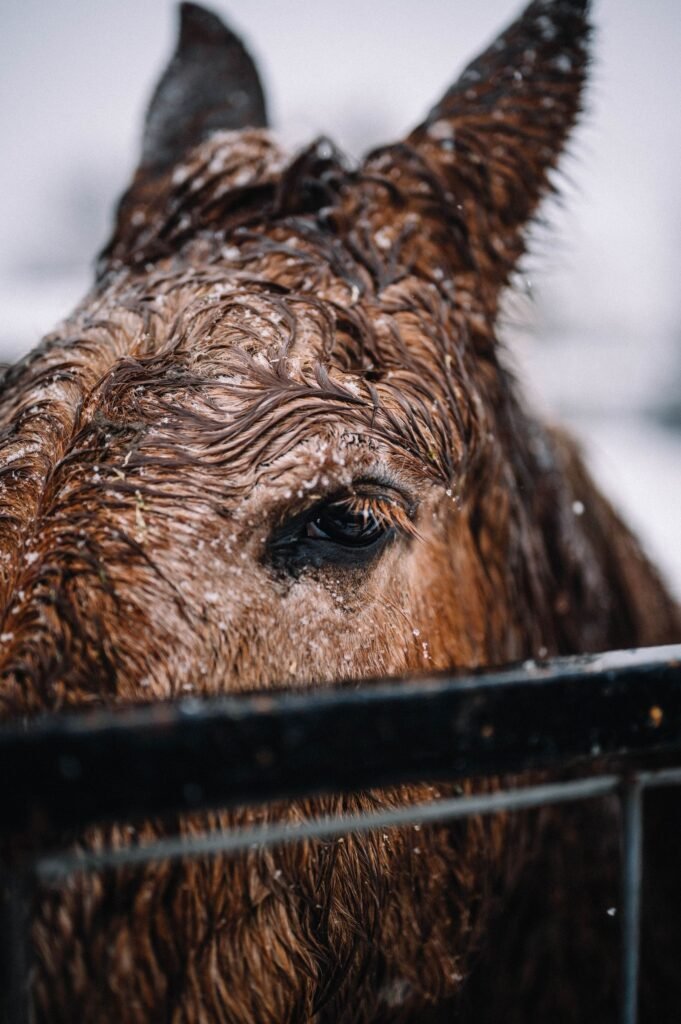
A coat that stays wet
Blue Cross says rain scald develops when the coat is consistently wet, which softens the skin. The British Horse Society (BHS) notes it is often diagnosed in autumn or winter, after long exposure to wet and muddy conditions.
Rugs and sweating
Leaking or non-breathable turnout rugs can keep the back wet from rain or sweat. Over-rugging can do the same, because the horse sweats under the rug.
A hot, sweaty ridden back that is not washed off, or not dried properly before the rug goes on, can also trap moisture.
Horses at higher risk
Blue Cross lists horses with weakened immunity, and those that lack the natural grease in their coat, as being at higher risk. Horses with reduced immune function, such as those with Cushing's disease, are particularly prone to skin infections.
See Cushing's Disease (PPID) in Horses. Over-grooming a field-kept horse can also strip away protective oils from the coat.
Rain scald or mud fever?
They can share the same bacterium, but they appear in different places. Rain scald affects the neck, back and hindquarters. Mud fever affects the lower legs and heels, causing soreness, matted hair and scabs.
For leg problems, see Mud Fever in Horses.
Signs of rain scald to look for
Look along the neck, back and hindquarters. A UK magazine also notes the top of the head can be affected.
- Small scabs that look as if the horse has been scalded by drops of water
- Scabs that come away with tufts of hair, like little paint brushes
- Hairless, pink and raw spots underneath, which can merge into larger areas
- Yellow pus on the skin under a scab, if one is removed
- A flaky coat, and sometimes a coarse, tufty coat in long-standing cases
- Soreness when scabs are pulled, although the skin is not usually itchy
Itching varies between sources, so do not rely on it to rule rain scald in or out. White-skinned areas may be more susceptible.
If the saddle area is affected, the horse may be unable to be ridden until it is successfully treated. Do not ride a horse with lesions there, because it may worsen the condition and be painful.
When to Contact Your Vet
- You think your horse has rain scald. Your vet needs to confirm it is not ringworm or another skin condition.
- The skin is raw, painful, oozing, widespread or spreading.
- Your horse is lame, off colour or losing condition.
- There is no improvement, it gets worse despite prevention, or it keeps coming back. Your vet may then check for an underlying condition such as Cushing's disease.
- The saddle area is affected.
Rain scald is not described as an emergency, but untreated cases may lead to more severe secondary skin infections. Check the skin regularly and ring your vet if you are concerned.
Is rain scald in horses contagious?
Advice differs. The BHS and Blue Cross describe it as non-contagious. However, a UK vet group fact sheet says it can pass between horses by direct contact or by sharing rugs, tack and brushes. A US veterinary reference advises isolating affected horses.
Because sources disagree, your vet will advise on your horse. In the meantime, a sensible precaution is to avoid sharing rugs, tack and brushes between horses.
The BHS says the bacteria in scabs can cause reinfection, so grooming kit and tack should be disinfected. Your Horse magazine also advises disinfecting rugs and saddlecloths and avoiding sharing equipment with other horses.
How vets confirm and treat rain scald
Confirming the cause
Your vet may take a scab sample or skin scraping to look at under a microscope. They may also test to rule out ringworm, and sometimes a swab or scab goes to a laboratory for culture.
What care usually involves
The first step is to move the horse out of the wet and muddy conditions, with shelter or stabling. Some cases settle once the horse is dry, and one UK magazine says hair may begin to regrow after about 10 days. Your vet should still confirm the cause.
The bacteria live under the scabs, so scabs are usually removed before treatment. This can be painful, so they are softened first, and sedation may be needed. Pulling them off roughly is not advised.
Your vet may recommend cleaning the area with an antibacterial solution, then drying it gently but thoroughly. This is usually needed daily until healed. Clipping thick hair can help.
In some cases the vet may recommend an antibiotic cream, and oral antibiotics in severe cases. Your vet decides the plan.
Medicines, passports and competition
In the UK, horses are food-producing animals. The passport declaration decides which medicines can be given and what records must be kept, so mention the passport if your vet prescribes anything. If you compete, ask your vet and check your sport's rules.
Preventing rain scald
- Provide shelter in the field, such as a field shelter, trees or hedges.
- Bring the horse in for a time so the skin can dry, if possible.
- Rug appropriately. Some horses need a rug in the wet, but over-rugged horses sweat, so remove or reduce rugs on mild days.
- Keep two rugs so one can dry, and never put a rug on a back that is still damp.
- Choose a light, breathable rug rather than a heavy one that traps moisture.
- Groom to remove clumped mud, but do not over-groom.
- Keep rugs, saddlecloths and tack clean.
Having rain scald once does not make a horse immune, and it can return every winter. XLVets says it is avoidable with good management, although the BHS notes that prevention can be difficult in UK weather.
How Pet Med Direct Can Help
Please have your vet confirm the cause of any skin problem first, because ringworm looks similar and needs different handling. Pet Med Direct does not replace a vet examination.
You can browse our equine range. If your vet prescribes a medicine, prescription-only medicines (POM-V) are supplied solely against a valid prescription from the horse's own vet. You can read how pet prescriptions work.
Some pet medicines require a valid veterinary prescription. Pet Med Direct can only supply prescription medicines after the prescription has been checked. Always follow your vet's advice and the directions on the medicine label.
Frequently Asked Questions
Is rain scald in horses the same as mud fever?
No, although the same bacterium can cause both. Rain scald affects the neck, back and hindquarters, whereas mud fever affects the lower legs. Your vet can tell you which your horse has.
Is rain scald contagious?
Sources differ. The BHS and Blue Cross say it is non-contagious, but a UK vet group fact sheet says it can spread by contact or shared kit. Your vet will advise, and avoiding shared rugs, tack and brushes is sensible.
Is rain scald itchy?
Not usually, according to a UK magazine and a UK vet fact sheet. A US reference says itching varies. The scabs can be painful if pulled off.
Can I ride a horse with rain scald?
Not if the lesions are in the saddle area. Riding there may worsen the condition and be painful. Ask your vet when your horse can return to work.
Will rain scald go away by itself?
It may settle once the horse is out of the wet, but untreated cases can lead to secondary skin infections. Ringworm can look similar, so ask your vet to confirm the cause.
Can rain scald come back?
Yes. A horse does not become immune and may get it again each winter. If it keeps returning, your vet may check for an underlying problem such as Cushing's disease.
Is rain scald an allergy?
No. The BHS, Blue Cross and a UK vet fact sheet all describe it as caused by bacteria, not as an allergic reaction.
Related Equine Health Guides
Sources and Further Reading
- British Horse Society — Rain Scald In Horses: Signs & Treatment
- Blue Cross — Skin Conditions in Horses
- Blue Cross — Caring for Your Horse in Wet Weather
- Your Horse — Rain scald in horses explained
- XLVets Equine — Rain Scald fact sheet
- MSD Veterinary Manual — Dermatophilosis (Rain Rot) in Horses
- GOV.UK — Horse medicines and record keeping requirements
- GOV.UK — Retail of veterinary medicines
This article was researched from the sources listed above. It is general information for horse owners and is not a substitute for advice from your own vet.

Need pet products or prescription medicines? Visit the Pet Med Direct shop.
Shop Pet Med Direct