✓ Registered Vet Practice
🚚 Fast UK-Wide Delivery, Including Northern Ireland
℞ Prescription & Non-Prescription Products
→ Need to upload a prescription?

Cushing's Disease (PPID) in Horses
Cushing's disease in horses (PPID) is a hormone condition that is managed for life. Learn the signs, how vets test for it and when to call.
Quick Answer
- PPID is the proper name for equine Cushing's disease, a hormonal condition linked to the pituitary gland that is mainly seen in older horses and ponies.
- PPID cannot be cured, but its signs can be controlled with treatment and careful management, and a well-managed horse can still live a long life.
- A long, curly coat that does not shed is the sign most people associate with PPID, but early signs are often subtle and not every horse has the coat.
- Laminitis is an emergency, so contact your vet immediately if you think your horse may have it.
- Only your vet can confirm PPID, usually with a blood test, and treatment is normally needed for the rest of the horse's life.
Cushing's disease in horses is more correctly known as pituitary pars intermedia dysfunction, or PPID. It is a hormonal (endocrine) condition linked to the pituitary gland, which sits at the base of the brain and makes hormones.
PPID is common in older horses and ponies. However, it can also affect middle-aged horses, so a change in your horse should not always be put down to "old age". Early signs are often subtle, which is why it helps to know what to look for.
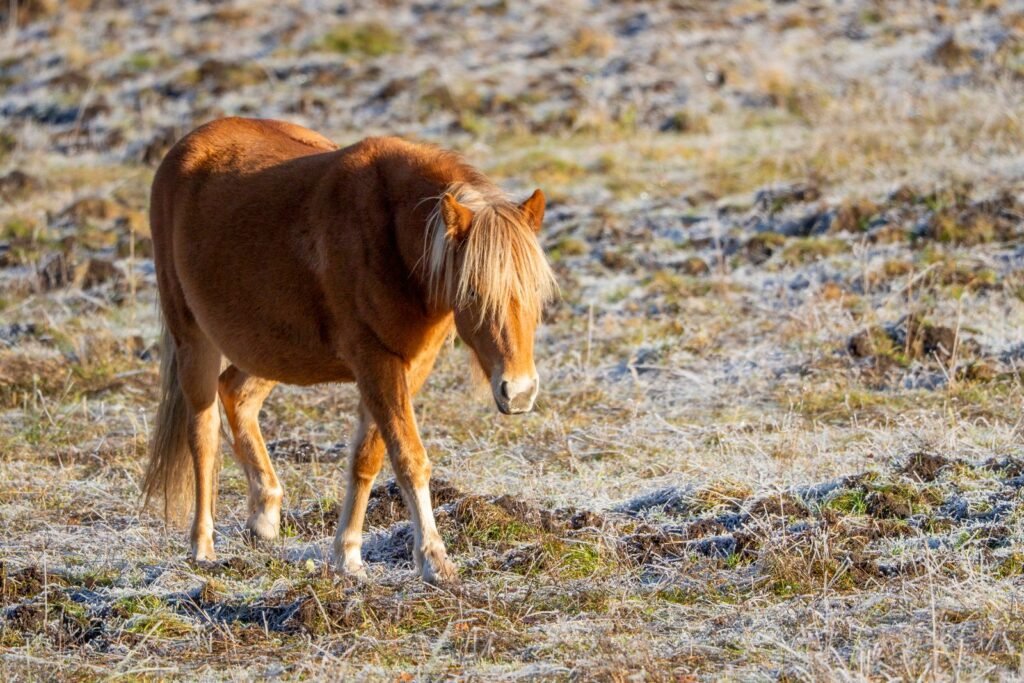
What Is Cushing's Disease in Horses?
A hormone imbalance in the pituitary gland
In PPID the brain does not make enough dopamine. As a result, the normal "brake" on part of the pituitary gland is lost. The gland becomes enlarged and makes too much of certain hormones, particularly ACTH, and these hormones then affect the whole body.
The exact cause is not fully understood. PPID is an endocrine disorder, as is equine metabolic syndrome (EMS).
Which horses are affected
PPID mainly affects older horses and ponies. The Royal Veterinary College (RVC) says it primarily affects animals over ten, and one vet group says it has been reported in occasional horses as young as six.
Sources differ on breed. The RVC says ponies are more likely to be affected than horses, whereas the British Horse Society (BHS) says PPID can occur in any breed or sex. Donkeys can get PPID too, and the BHS points donkey owners to The Donkey Sanctuary for tailored advice.
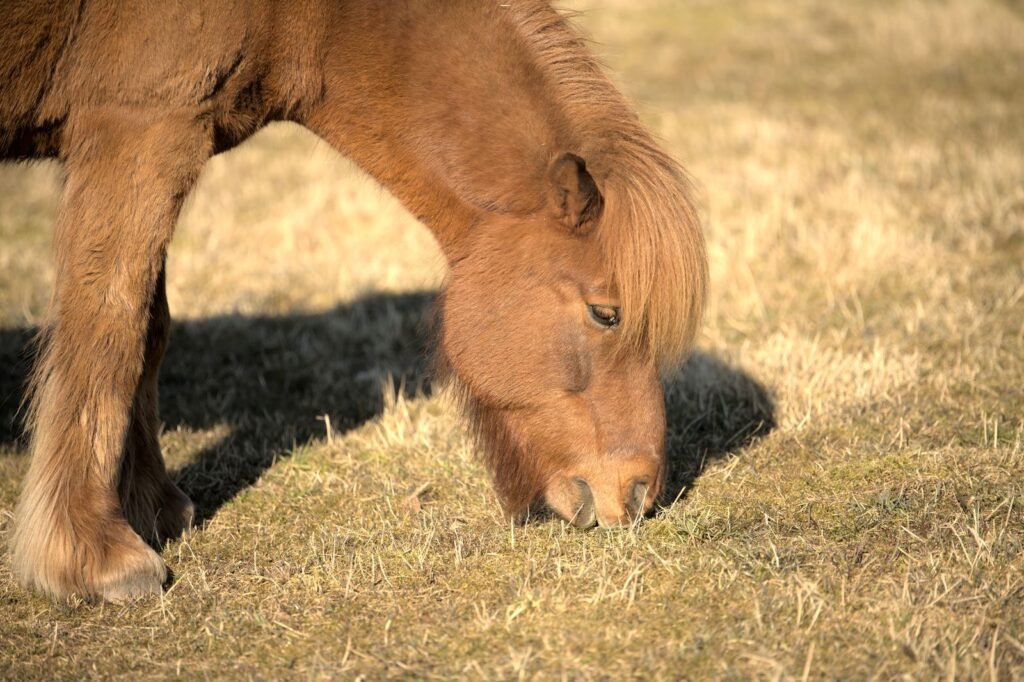
A progressive condition
PPID is progressive and cannot be cured. However, its signs can be controlled with treatment and careful management. Because it can keep progressing, ongoing monitoring is important.
Signs of Cushing's Disease in Horses
Signs vary from horse to horse. Some horses develop a full range of signs, while others show only one or two. In the early stages there may be no outward signs at all.
Early signs can be as simple as a delay in shedding the winter coat, mild weight loss or a single episode of laminitis. Common signs include:
- A long and/or curly coat, or difficulty shedding the winter coat (this is not present in every case)
- Unusual sweating that is not linked to exercise or weather
- Drinking and urinating more than usual
- Lethargy, or a quieter, sleepier manner
- Weight loss, or muscle loss along the topline, back and hindquarters
- Fatty deposits in unusual places, such as bulges above the eyes or a pot belly
- Laminitis, or recurrent hoof abscesses
- Infections that keep coming back, such as sinusitis or skin infections, or wounds that will not clear up
PPID can make a horse quieter than it used to be. Owners often put this down to old age, but PPID may be the underlying cause.
Cushing's Disease and Laminitis
Laminitis is probably the most serious complication of uncontrolled PPID. Not every horse with PPID develops it, but those that do need special care.
Some horses with PPID also develop insulin resistance, which can be managed similarly to EMS. Always follow your vet's advice. Our guides to Laminitis in Horses and Equine Metabolic Syndrome (EMS) in Horses explain these in more detail.
Emergency: Contact a Vet Immediately If…
- You think your horse may have laminitis. It is an emergency, and early treatment means pain resolves more quickly with less risk of long-term hoof changes.
Call your vet or the nearest out-of-hours emergency vet straight away rather than waiting to see if it improves.
When to Contact Your Vet
- You notice changes in your horse's behaviour or appearance, such as a coat that will not shed, sweating, or drinking and urinating more.
- An older horse is losing weight or has had even a single episode of laminitis. Your vet should see it straight away.
- Your horse has recurrent hoof abscesses, or infections or wounds that will not clear up.
- Your horse has nasal discharge. In a horse with PPID, even normally minor problems should be investigated as a matter of urgency.
Identifying PPID early means you can start managing it sooner. It is also worth asking your vet about testing before spring grass adds extra risk.
How Vets Test for PPID
Your vet will assess your horse's history and signs and may take a blood sample to check ACTH. The sample is analysed in a lab, and results usually take a few days.
The recommended tests are measuring ACTH or a TRH stimulation test. The TRH test is slightly more sensitive. It uses two blood samples, taken before and after a stimulation hormone is given.
Testing is not always straightforward. Stress, anxiety, pain and the time of year can all influence ACTH, so your vet will take these into account. False negative results are common early in the disease, and tests become more reliable as it progresses.
If your horse travels to the vet for testing, it may need to rest for at least 30 minutes before the sample is taken. Your vet may also measure insulin and glucose, which is a better indicator of laminitis risk. Vets use blood tests together with clinical signs to reach a diagnosis.
Managing Cushing's Disease in Horses Day to Day
Medication and monitoring
Your vet may recommend medication and regular monitoring to help control hormone levels and reduce signs. Any medicine for PPID is prescription-only, so it can only be supplied on a vet's prescription. Treatment manages the signs of the disease and does not cure it.
Once started, medication is usually needed for the rest of the horse's life. PPID is slowly progressive, so regular testing is needed to check the dose is right. Advice on how often varies: one university vet practice encourages annual testing, while the product information for one UK-licensed tablet recommends checks every 6 months once a horse is stable. Your vet will set the plan and may adjust the dose over time, so order refills in advance and monitor your horse's response.
Follow the directions on your horse's medicine label. Many horses take the tablet hidden in feed or a small treat, so watch your horse to check that it eats it. Tell your vet about any problems, as side effects can include diarrhoea, depression, reduced appetite and colic. Long-term medicine can also be a big financial commitment, so talk to your vet about costs.
Not every owner chooses to treat. In that case your vet may focus on managing laminitis, infections, coat and diet.
Passports and competition
In the UK, horses, ponies and donkeys are classed as food-producing animals. The passport declaration decides which medicines can be given and what records you must keep. The product information for a UK-licensed PPID tablet says the horse must have been declared as not intended for human consumption. Signing a horse out of the food chain is irreversible, so discuss it with your vet.
Your vet will usually need to check the passport before prescribing. If you compete, remember that most medicines are prohibited if detected in a horse at the time of competition. Keep dated records of treatment and ask your vet and governing body about your own situation.
Everyday care at home
- Clip the coat if your horse cannot shed it, especially the underbelly and upper limbs, and use a rug if the weather turns chilly.
- Keep a healthy fat score and use a weigh tape weekly to spot weight changes. Our guide to Is My Horse Overweight? explains hands-on scoring.
- Keep up regular dental care, risk-based worm control, farriery and vaccinations.
- Watch closely for signs of infection and investigate even small problems promptly.
- Always provide fresh, clean water, because horses with PPID may drink a lot.
- Ask your vet about diet and supplements before changing anything.
Outlook for Horses With PPID
Horses with well-managed PPID can still live a long and normal life and continue normal work. Redwings says affected horses can enjoy a good quality of life for many years after diagnosis.
How Pet Med Direct Can Help
Cushing's disease needs a diagnosis and a treatment plan from your vet. If your vet prescribes medication, you can read how our prescription service works on our pet prescriptions page.
Prescription-only medicines (POM-V) are supplied solely against a valid prescription from a vet who has your horse under their care. You can also browse our equine range.
Some pet medicines require a valid veterinary prescription. Pet Med Direct can only supply prescription medicines after the prescription has been checked. Always follow your vet's advice and the directions on the medicine label.
Frequently Asked Questions
Can Cushing's disease in horses be cured?
No. PPID is progressive and cannot be cured. However, its signs can be controlled with treatment and careful management, and many horses stay comfortable for years.
Is PPID only a disease of very old horses?
It is mainly seen in older horses and ponies, but it can occur in middle-aged horses. It has also been reported in occasional horses as young as six.
Does every horse with PPID have a curly coat?
No. A long, curly coat that does not shed is the sign most people associate with PPID, but it is not present in every case. Early signs are often subtle, so do not wait for a curly coat before speaking to your vet.
How do vets diagnose PPID?
Your vet will assess your horse's history and signs and usually takes a blood sample to measure ACTH. A TRH stimulation test is another option. Results usually take a few days.
How often will my horse need testing?
PPID is slowly progressive, so regular testing is needed to check the treatment dose is still right. Advice varies from annual testing to every 6 months once a horse is stable, so your vet will advise on the best plan for your horse.
Is PPID the same as EMS?
No, but both are endocrine disorders and they can overlap. Some horses with PPID also develop insulin resistance, which can be managed similarly to EMS. Your vet can tell them apart with tests.
Related Equine Health Guides
Sources and Further Reading
- British Horse Society — Cushing's Disease In Horses
- Redwings Horse Sanctuary — Equine Cushing's Disease (PPID): The facts
- Royal Veterinary College — Equine Cushing's disease
- University of Edinburgh Royal (Dick) School of Veterinary Studies — Cushing's Disease: clinical signs and diagnosis
- VetPartners Equine — Fact Sheet: Equine Cushing's Disease (PPID)
- World Horse Welfare — Laminitis in horses
- World Horse Welfare — Revealing the interconnectivity of hormones, insulin, and laminitis
- GOV.UK / Veterinary Medicines Directorate — Horse medicines and record keeping requirements
- Veterinary Medicines Directorate — Summary of Product Characteristics for a UK-licensed PPID tablet for horses
- British Equestrian — Equine anti-doping
- British Horse Society — Horse Passport FAQs
This article was researched from the sources listed above. It is general information for horse owners and is not a substitute for advice from your own vet.

Need pet products or prescription medicines? Visit the Pet Med Direct shop.
Shop Pet Med Direct