✓ Registered Vet Practice
🚚 Fast UK-Wide Delivery, Including Northern Ireland
℞ Prescription & Non-Prescription Products
→ Need to upload a prescription?

Dental Problems in Horses
Why horses hide mouth pain, the signs that a check is due and who should look inside your horse's mouth.
Quick Answer
- Dental problems in horses often show no outward signs, because horses are good at hiding mouth pain, so regular checks matter even when your horse seems fine.
- Signs include dropping chewed food (quidding), eating slowly, bad breath, head shaking, resisting the bit, weight loss and a one-sided yellow nasal discharge.
- Sources vary on how often to check, but the most commonly stated minimum is once a year, and your vet or a qualified equine dental technician will advise on what suits your horse.
- In the UK some dental procedures are restricted to vets, and sedation should be arranged through your vet, so use a vet or a suitably qualified technician.
- Choke and colic are emergencies, so call your vet immediately if you see their signs.
Dental problems in horses are common and easy to miss. A horse's teeth wear down as it eats, and they keep erupting (growing) throughout its life. A large reserve of tooth sits below the gum line.
The challenge is that horses mask pain. Many show no outward signs of dental pain, even with major problems. By the time symptoms appear, the problem has usually progressed.
Why Dental Problems in Horses Develop
Uneven wear
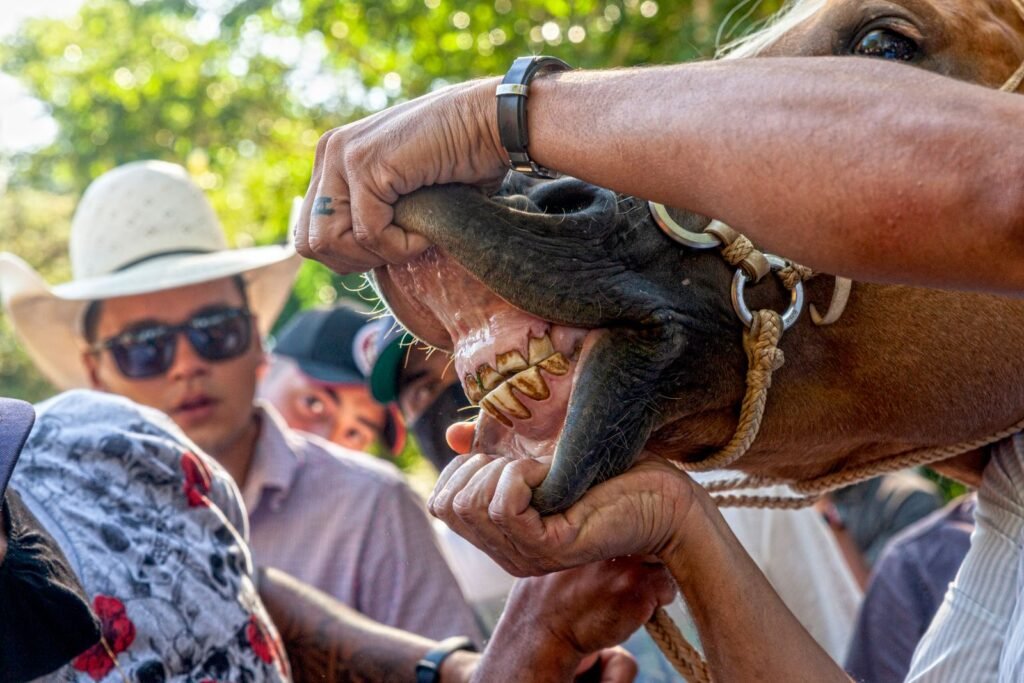
Teeth are designed for a lot of wear, because horses graze for about 16 hours a day. Domestication and the land we keep horses on mean that teeth often do not wear down evenly. Riding also places pressure points in and around the mouth.
Changes with age
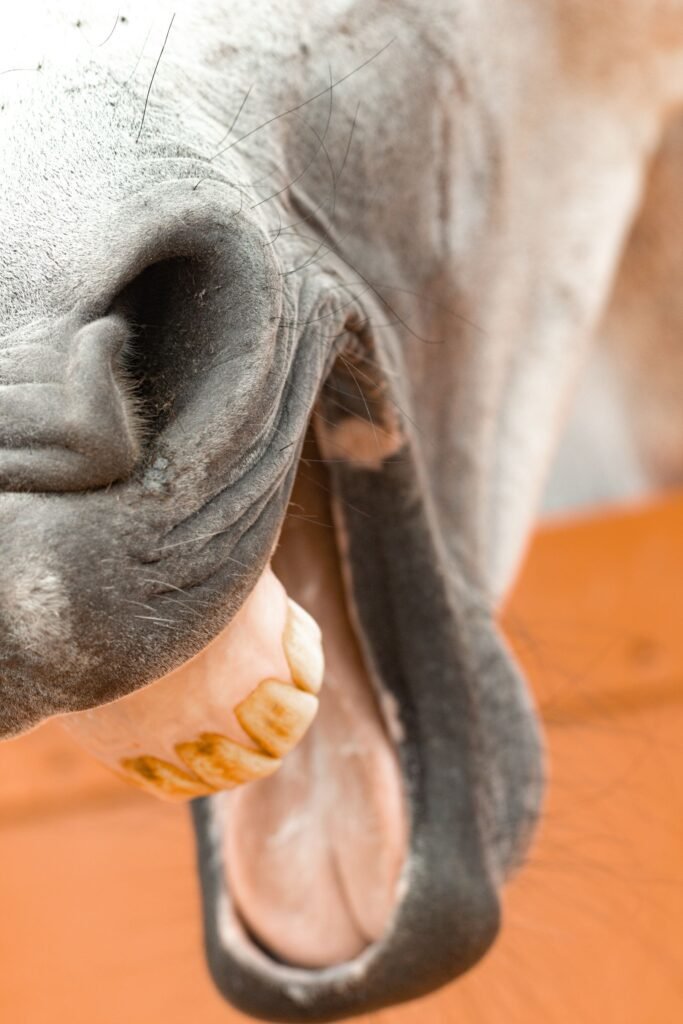
Horses do not have a full mouth of permanent teeth until around five years old. Between about 2.5 and 4.5 years they shed their baby teeth. This can be painful and cause quidding, sudden loss of appetite and ulcers.
At the other end of life, worn teeth can make it hard to chew long fibre such as hay or to pick up grass. Older horses need more regular attention.
Common Dental Problems
Dental problems in horses range from simple sharp points to gum disease and infection.
Sharp points and overgrowths
Disorders of wear include sharp enamel points, overgrowths, waves and steps, and displaced teeth. Sharp edges can cause soreness and ulcers on the cheeks and tongue. A horse may then spit out a half-chewed ball of hay.
Gum (periodontal) disease
World Horse Welfare describes gum disease as probably the most common and most painful equine dental disease. It is the main reason horses quid and lose weight in dental disease.
Gaps between teeth
If there are gaps (diastema), food can pack deeply between the teeth. Trapped food rots, which can lead to decay and gum damage, and may cause facial swelling and bad breath. Early food packing and gum disease are often easily correctable. More advanced cases need more invasive treatment and sometimes extraction.
Fractures, decay and abscesses
Tooth decay can lead to fractures, and fillings or root canal treatment can stop progression in some cases. A fractured tooth can cause large amounts of ulceration while the horse shows no obvious pain. A tooth abscess or dental infection can also cause a one-sided nasal discharge.
Wolf teeth
Wolf teeth are small teeth present from about six months in some horses. They can interfere with the bit. Your vet or qualified technician can tell you whether yours cause a problem.
Signs Your Horse Needs a Dental Check
Not every horse with a dental problem shows signs. However, these are all signs of pain, so get the teeth checked as soon as possible if you see them:
- Quidding, where chewed food is dropped or spat back out
- Eating slowly, chewing more slowly or favouring one side
- Weight loss, which is not a sign of old age but of an underlying problem
- Bad breath, or drooling
- Head shaking, being headshy, or reluctance to be touched around the head
- A change in behaviour when ridden, or resistance to the bit or bridle
- Long stems of fibre in the droppings
- Swelling of the jaw or face, or a nasal discharge, often yellow and on one side only
The bit or bridle is often blamed for behaviour changes, but dental problems can be the cause. Please do not rule out the teeth when behaviour changes under saddle.
Emergency: Contact a Vet Immediately If…
- You suspect choke. Signs include the head and neck extended, distress, coughing, dribbling, nasal discharge containing food or saliva, and an increased heart rate.
- You see signs of colic. Half-chewed food stuck in the gut is one possible cause.
Call your vet or the nearest out-of-hours emergency vet straight away. See Choke in Horses and Signs of Colic in Horses.
When to Contact Your Vet
- Your horse has a one-sided, yellow nasal discharge or a swelling of the jaw or face. A snotty nose could be a tooth abscess, but it can also be a respiratory sign, so a vet should diagnose it as soon as possible.
- Your horse will not eat, or has lost weight. See Why Won't My Horse Eat? and Why Is My Horse Losing Weight?
- Your horse is quidding, eating slowly, headshaking or resisting the bit.
Get in touch sooner rather than later. Preventive treatment can resolve many problems before they become major.
How Often Should Horses Have a Dental Check?
Sources vary. The RVC, RSPCA and Redwings all say at least once a year, while Blue Cross suggests every six to 12 months. Some sources suggest more frequent checks for young and older horses, and Redwings says older horses should be seen at least twice a year.
The most commonly stated minimum is a check at least once a year, even if your horse seems fine. Your vet or a qualified equine dental technician will advise what suits your horse.
Young horses benefit too. The RVC says oral exams can start from around two years of age, and it helps to get a young horse used to dental checks.
What Happens at a Dental Check
The practitioner first examines the head and takes a history, asking about comfort when ridden, diet, quidding and bad breath. They then check the incisors, place a speculum to hold the jaw open and feel every tooth. They look inside the mouth with a bright head torch and a mirror, and complete a chart of what was found and done.
Many horses need a light dose of sedation for a full oral exam. Vets also offer more advanced care, such as radiography, treating gaps and extracting teeth on the yard under standing sedation. Early treatment is usually straightforward, and invasive treatment often becomes necessary only when subtle signs are missed.
Who Should Work on a Horse's Teeth in the UK?
In the UK, some dental procedures may only be carried out by a vet. BEVA gives widening gaps between teeth and removing unerupted wolf teeth as examples of procedures restricted to vets. The rules can change, so check the current position with your vet or the British Association of Equine Dental Technicians (BAEDT).
Sedatives are prescription-only medicines. BEVA's guidance says equine dental technicians must not supply or stock them, and it names sedative gels as examples, so do not ask a technician to supply sedation. Your vet decides whether sedation is appropriate, and where a vet prescribes sedation for you to give, BEVA's guidance says only you or your employees may administer it.
Use a vet or a suitably qualified equine dental technician (EDT). Two groups are recognised by vets and equine governing bodies: BAEDT and the Worldwide Association of Equine Dentistry (WWAED). Check that your technician is a BAEDT member or a Category 2 member of WWAED. Untrained people can do a lot of damage and miss early signs.
Horses are food-producing animals in the UK, so the passport declaration decides which medicines can be used. If you compete under British Equestrian rules, most medicines and drugs are prohibited if detected in a horse at the time of competition. Keep dated records and ask your vet.
What You Can Do
- Book routine checks even when there are no signs.
- Get young horses used to having their teeth checked.
- Keep an eye on weight with a weigh tape and body condition scoring. Our guide to Is My Horse Overweight? explains how.
- Ask your vet about diet for older horses that struggle with long fibre.
- Regular checks help avoid major dental problems in horses and often save on dental costs in the long run.
How Pet Med Direct Can Help
Mouth and tooth problems need a hands-on check by your vet or a qualified technician. If your vet advises products as part of your horse's care, you can browse our equine range.
Please speak to your vet before giving your horse any medicine.
Some pet medicines require a valid veterinary prescription. Pet Med Direct can only supply prescription medicines after the prescription has been checked. Always follow your vet's advice and the directions on the medicine label.
Frequently Asked Questions
How do I know if my horse has dental problems?
Often you don't, because horses hide dental pain. That is why regular checks are recommended, even when your horse seems well.
How often should a horse's teeth be checked?
Sources vary, but the most commonly stated minimum is once a year. Your vet or a qualified equine dental technician will advise on what suits your horse.
Who can check and rasp my horse's teeth?
Some dental procedures may only be carried out by a vet in the UK. Use a vet or a suitably qualified equine dental technician, and check that they are on the BAEDT or WWAED register. The rules can change.
Why is my horse dropping food?
Quidding is a common sign of dental problems such as sharp points or gum disease. It is a sign of pain, so book a check as soon as possible. However, if your horse is also showing signs of choke, call your vet immediately.
Can dental problems in horses cause weight loss?
They can, because a sore mouth makes chewing hard. Weight loss is not a sign of old age, though, so mention it to your vet. Some horses with dental disease show no outward signs at all.
Is head shaking or bit resistance a dental sign?
It can be. The bit or bridle is often blamed, but dental pain may be the cause. Have the teeth checked as well as the tack.
Will my horse need sedation?
Many horses need a light dose of sedation for a full oral exam. If sedation is needed, it is arranged through your vet, who decides whether it is appropriate.
Related Equine Health Guides
Sources and Further Reading
- BEVA — Current regulations on equine dental procedures
- BEVA — Sedation for non-veterinary procedures: professional responsibilities guidance
- World Horse Welfare — Teeth
- Blue Cross — Horse Dental Care
- Redwings Horse Sanctuary — Teeth care: The daily grind
- Royal Veterinary College — Equine Dentistry
- British Association of Equine Dental Technicians — Equine dental issues
- RSPCA — Horse health and welfare checks
- GOV.UK / Veterinary Medicines Directorate — Horse medicines and record keeping requirements
- British Equestrian — Equine anti-doping
This article was researched from the sources listed above. It is general information for horse owners and is not a substitute for advice from your own vet.

Need pet products or prescription medicines? Visit the Pet Med Direct shop.
Shop Pet Med Direct