✓ Registered Vet Practice
🚚 Fast UK-Wide Delivery, Including Northern Ireland
℞ Prescription & Non-Prescription Products
→ Need to upload a prescription?

Why Does My Horse Have Nasal Discharge?
A guide to nasal discharge in horses: what the side and appearance can point to, what to check, and when to call your vet.
Quick Answer
- Nasal discharge is a common sign of respiratory disease, but it can also come from allergy, sinus or tooth problems, guttural pouch disease or feed material.
- Which nostril it comes from, how it looks and what else is happening give clues, but colour alone cannot prove the cause.
- Call your vet at the first sign of infection, because some infections can be serious or fatal.
- Phone straight away for heavy nosebleeds, feed coming from the nose, or trouble breathing or swallowing.
- If your horse also has a fever, isolate it and call your vet without waiting for a diagnosis.
Nasal discharge in horses is one of the most common signs of respiratory disease, along with coughing and reluctance to work. It can also point to problems in the sinuses, teeth, guttural pouches or gullet.
Early respiratory signs look alike, so your vet and often laboratory tests are needed to find the cause. This guide helps you describe what you see and know when to ring. For coughing, see Why Is My Horse Coughing?
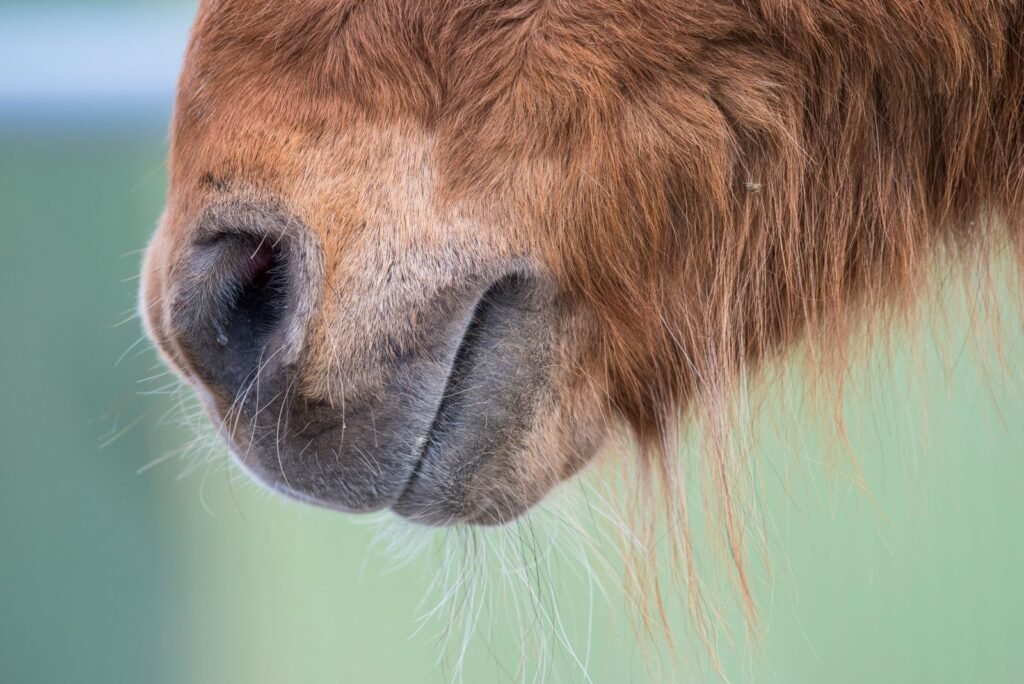
Common causes of nasal discharge in horses
This list is not a diagnosis. Several of these causes can look alike, so your vet needs to examine your horse.
Infections: strangles, flu and herpesvirus
The Royal Veterinary College (RVC) lists strangles, equine influenza and the equine herpesviruses as the common infectious respiratory diseases. Reliable diagnosis needs laboratory testing.
Strangles can cause thick, discoloured discharge with a temperature above 38.5°C, jaw swelling, lethargy and low appetite. Flu can cause clear, watery discharge that may turn thick and yellow or green a few days later, along with fever and a dry, harsh cough. Herpesviruses mostly cause mild respiratory disease.
For more, see Strangles in Horses, Equine Influenza (Horse Flu) and Equine Herpesvirus (EHV).
Sinus and tooth-root problems
Most sinus diseases cause pus-containing or bloody discharge from one nostril. It may smell foul. Other signs include swelling on one side of the face, one eye watering and noisy breathing in.
Sinusitis can follow an upper respiratory infection. It can also follow a tooth-root infection, a fracture or a sinus cyst. Secondary sinusitis is more common than primary, and tooth-related sinusitis is its most common form, even though the mouth often looks normal on examination. See Dental Problems in Horses.
Guttural pouch disease
The guttural pouches are air-filled spaces behind the throat. Pus in a pouch usually follows a bacterial respiratory infection and can cause intermittent pus-containing discharge and painful swelling, and in severe cases stiff head carriage and noisy breathing.
Vets treat this as strangles until proven otherwise, with isolation until culture results are back. A fungal infection of the pouch can cause severe bleeding from the nose and difficulty swallowing.
Nosebleeds and masses in the nasal passages
A progressive ethmoid haematoma is a mass in the nasal passages and sinuses, seen mainly in horses over six. Periodic bleeding from one nostril is its most common sign. Large masses can also reduce airflow and cause bad breath or facial deformity.
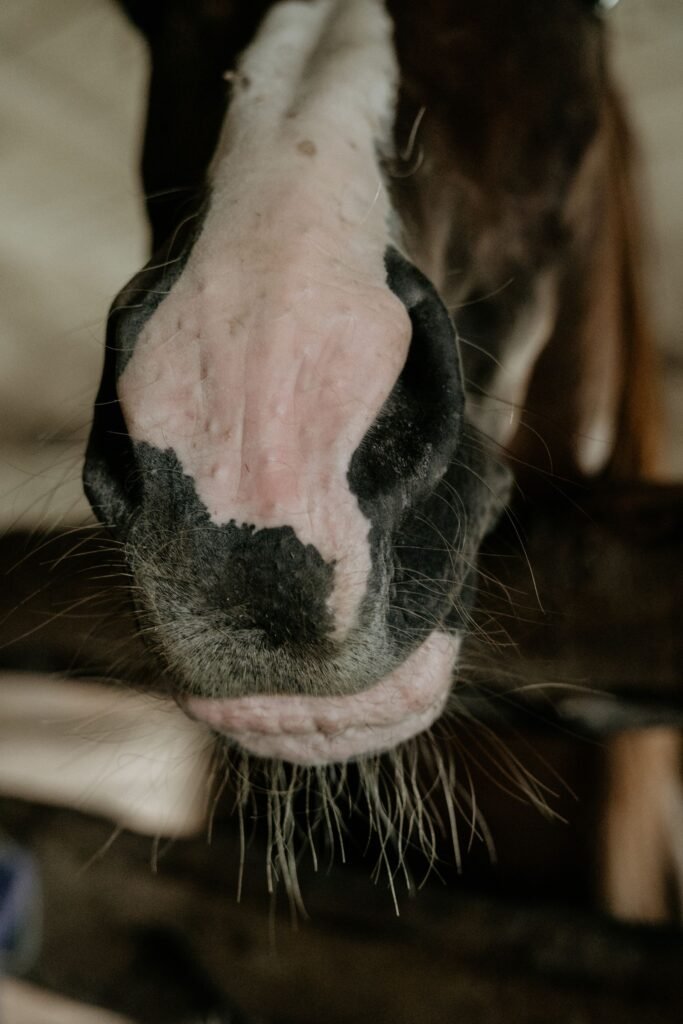
Allergy and equine asthma
Equine asthma can cause nasal discharge, from clear mucus to thick green or yellow. It usually comes with a chronic cough in a horse that is otherwise bright. The British Horse Society (BHS) also lists discharge among respiratory allergy reactions, alongside sneezing, wheezing and rubbing the nostrils.
Asthma is not contagious. See Equine Asthma in Horses.
Feed material (choke)
Choke can send feed out of the nostrils. It is often green and slimy and may come and go. Drooling, coughing, retching, a lump on the left of the neck or colic-like discomfort may also be seen.
World Horse Welfare calls choke an equine emergency. After choke, feed can reach the lungs, so tell your vet about any cough, fever, discharge or breathing difficulty. See Choke in Horses.
Lung infections
Inhaling foreign material can cause aspiration pneumonia, which brings laboured breathing, fever and sometimes red-brown or green discharge. The outlook is poor even with treatment. A common cause is giving a liquid medicine faster than the horse can swallow.
Other lower-airway infections can range from acute and life-threatening to long-term disease with weight loss and bloody discharge.
What to check about nasal discharge in horses
Write down what you see before you call. It helps your vet decide how urgent it is.
- Which nostril: one side, or both. One-sided discharge points towards the sinuses (for example a tooth-root problem), while disease further down the airway tends to affect both sides.
- What it looks like: clear and watery, thick and yellow or green, bloody, foul-smelling or containing feed.
- Temperature. In a healthy adult horse it is 37.5–38.5°C, pulse 36–42 beats per minute and breathing 8–12 breaths per minute.
- Other signs: cough, swollen glands under the jaw, loss of appetite, dullness, noisy breathing, facial swelling or one eye watering.
- Whether other horses on the yard are unwell.
A rise above your horse's normal temperature can be an early sign of infection. Fever can come and go, so check twice a day if infection is suspected.
Do not guess the cause from the colour. RVC says signs alone usually cannot make a definite diagnosis.
Emergency: Contact a Vet Immediately If…
- Your horse has heavy or repeated bleeding from a nostril, especially with trouble swallowing.
- Feed is coming out of the nose, with drooling, retching or coughing.
- Your horse is breathing fast or with effort, has bluish gums, a fast heart rate or a fever, or has inhaled something.
- There is a fever above 38.5°C with thick or discoloured discharge, swollen glands or difficulty swallowing. Isolate your horse as well.
Call your vet or the nearest out-of-hours emergency vet straight away.
When to Contact Your Vet
- At the first sign of infection, because some infections, including strangles and tetanus, can be fatal.
- Discharge from one nostril only, especially if foul-smelling, pus-like or bloody.
- Facial swelling, one eye watering or noise when your horse breathes in.
- Any discharge in a horse that is off its food, dull or not itself.
- Discharge that lasts, returns, or comes with a long-term cough.
If you are unsure, phone your vet and describe what you have noted.
How vets investigate nasal discharge
Vets treat nasal discharge as a reason to look at the whole airway. Endoscopy, with a camera passed through the nose, is used for discharge from one or both nostrils.
For suspected sinus disease, X-rays and CT scans can help, and a sample can be taken from the sinus in a standing, sedated horse. Swabs and other laboratory tests help identify infections.
Treatment depends on the cause. For example, sinusitis linked to a diseased tooth may need the affected tooth removed. Your vet decides any treatment.
Protecting other horses and what not to do
The BHS advises isolating an unwell horse and calling your vet. Infected horses may be contagious before obvious signs appear.
- Isolate an unwell horse, for example one with a fever, cough or thick discharge, and ask your vet when it is safe to mix it with others again.
- Give each horse its own equipment and wash your hands before and after handling other horses. After visiting other yards, disinfect your boots and change outer clothing.
- Do not wait for strangles to be confirmed before isolating, and stop horses moving on or off the yard.
- Do not take an unwell horse, or one from a yard with unwell horses, to an event.
- Do not guess at treatment. It depends on the cause, and your vet decides what is needed.
Reducing the risk
The BHS recommends flu and tetanus vaccination as a minimum. EHV vaccination can help prevent respiratory disease, and a strangles vaccine is available. Ask your vet what suits your horse, and see Horse Vaccinations: What to Discuss With Your Vet.
The BHS also advises quarantining new arrivals for a minimum of 21 days. A clean, low-dust environment helps horses with allergic airway disease.
How Pet Med Direct Can Help
Nasal discharge is a situation for your vet first, so please call them before anything else. Pet Med Direct cannot diagnose a cause and does not replace a vet examination.
If your vet prescribes a medicine, prescription-only medicines (POM-V) are supplied solely against a valid prescription from the horse's own vet. You can read how pet prescriptions work or browse our equine range.
Some pet medicines require a valid veterinary prescription. Pet Med Direct can only supply prescription medicines after the prescription has been checked. Always follow your vet's advice and the directions on the medicine label.
Frequently Asked Questions
Is clear nasal discharge in horses harmless?
Do not assume so. Clear, watery discharge can appear early in a flu-type illness, and allergy or asthma can also cause it. If it persists, or comes with other signs, call your vet.
Does thick yellow or green discharge always mean infection?
No. Flu discharge can turn thick and yellow or green after a few days, but asthma can also produce thick green or yellow discharge. Colour alone cannot prove the cause, so your vet will look at the whole picture.
Why is my horse's nasal discharge from one nostril only?
One-sided discharge often points to the sinuses, including a tooth-root problem. By contrast, disease starting further down the airway tends to cause discharge from both sides. Your vet needs to examine the head and may scope the airway.
Should I isolate a horse with nasal discharge?
If your horse is unwell, with a fever, cough or thick discharge, the BHS advises isolating it and calling your vet. Use separate equipment and wash your hands between horses.
Can allergies cause nasal discharge in horses?
Yes. The BHS lists nasal discharge among respiratory allergy reactions, together with sneezing, coughing and wheezing. Equine asthma can also cause it. Ask your vet to confirm the cause.
Can feed come out of a horse's nose?
Yes. It can be a sign of choke, which is an emergency. The discharge is often green and slimy and may come and go. Call your vet straight away.
What is a normal temperature for a horse?
For a healthy adult horse, World Horse Welfare gives 37.5–38.5°C. Learn your own horse's normal reading, because a rise above it can be an early sign of infection.
Related Equine Health Guides
Sources and Further Reading
- Royal Veterinary College — Respiratory diseases fact file
- British Horse Society — Strangles
- British Horse Society — Equine influenza
- World Horse Welfare — Signs of infection in horses
- World Horse Welfare — Choke in horses
- British Horse Society — Equine allergies
- VetPartners Equine — Equine Asthma fact sheet
- MSD Veterinary Manual — Disorders of the Paranasal Sinuses in Horses
- MSD Veterinary Manual — Diseases of the Paranasal Sinuses in Horses
- MSD Veterinary Manual — Guttural Pouch Disease in Horses
- MSD Veterinary Manual — Aspiration Pneumonia in Horses
- MSD Veterinary Manual — Overview of Respiratory Diseases of Horses
- British Horse Society — Equine disease prevention
- British Horse Society — Equine disease prevention at events
- Blue Cross — Equine Asthma
- British Horse Society — Respiratory Health, Equine Asthma
This article was researched from the sources listed above. It is general information for horse owners and is not a substitute for advice from your own vet.

Need pet products or prescription medicines? Visit the Pet Med Direct shop.
Shop Pet Med Direct