✓ Registered Vet Practice
🚚 Fast UK-Wide Delivery, Including Northern Ireland
℞ Prescription & Non-Prescription Products
→ Need to upload a prescription?

Thrush in Horses' Hooves
How to spot a smelly frog, why daily hoof care matters and when to call your farrier or vet.
Quick Answer
- Thrush is a common infection of the soft frog tissues, and a strong, foul smell when you pick out the hoof is often the first sign.
- Many horses with thrush are not lame, but lameness, a bleeding frog or swelling in the lower leg means you should call your vet.
- Daily picking out, somewhere dry to stand and regular farrier visits are the main ways to reduce the risk.
- Thrush usually takes two to three weeks to clear, and sometimes longer, but it can usually be treated successfully with prompt care.
- Your farrier or vet can trim away diseased frog tissue and advise on treatment, so ask them before trying any product, and avoid highly acidic solutions.
Thrush in horses' hooves is a common bacterial infection of the soft frog tissues, and sometimes the heel. It can affect one hoof or all four.
It often starts as a mild problem. However, if it is left untreated it can spread deeper into the hoof and cause pain and lameness. It is more common in autumn and winter, when fields are wet and horses may spend more time stabled.
What Causes Thrush in Horses' Hooves?
Thrush develops when the foot is exposed to conditions in which bacteria can grow without oxygen. Vets describe a number of things that can raise the risk. Importantly, it is not always down to poor care. Some horses in foul conditions are unaffected, while others in excellent accommodation get it.
Wet, dirty conditions
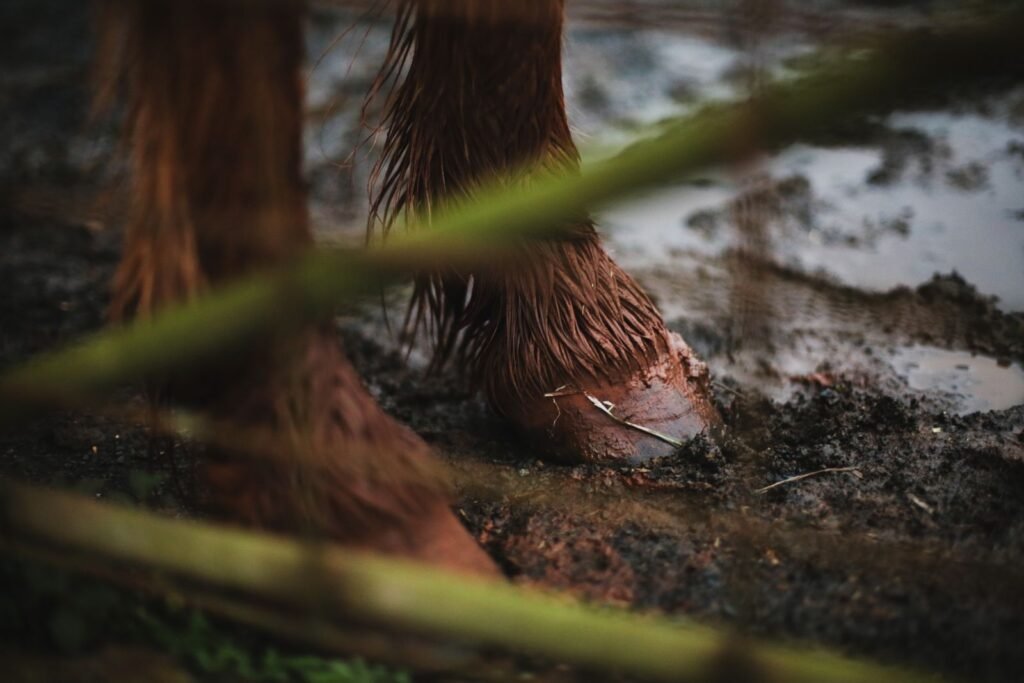
Very wet, muddy pastures and deep-litter bedding trap moisture and dirt in the hoof. Wet conditions also soften the hoof, which makes infection more likely. Blue Cross points to long periods stabled on soiled bedding, or constantly damp pasture.
Debris packed into the frog
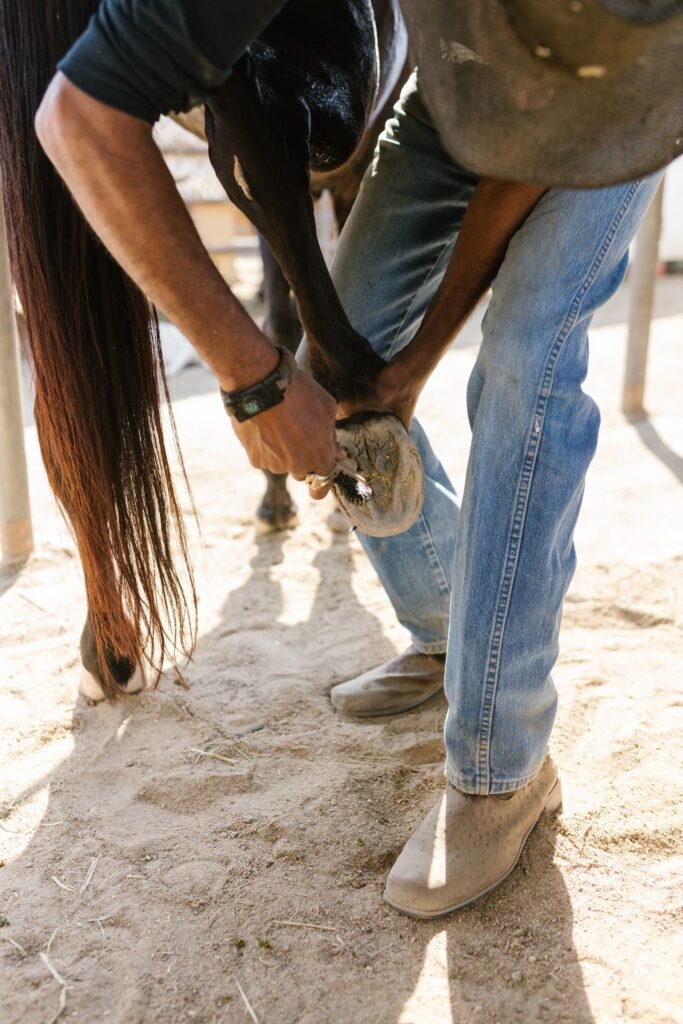
If hooves are not picked out daily, manure and debris can pack into the frog clefts. That makes a good breeding ground for bacteria.
Hoof shape
Deep, narrow frog clefts or contracted heels make a horse more at risk, because the hoof cannot clean itself as well. Sand packed into a deep cleft after arena work is another example.
Trimming, shoeing and shoe type
Poor or incorrect trimming or shoeing can play a part. A vet also notes that it is difficult to clean under and around bar shoes, and impossible under sole pads, so horses wearing them are at increased risk.
Individual susceptibility
Some horses just seem more prone. For that reason, please do not blame yourself if your horse gets thrush despite good care.
Signs of Thrush in Horses' Hooves
A strong, foul smell when you pick out the hoof is often the first sign. Other things you may notice include:
- Black, oily or tar-like discharge from the frog grooves.
- A frog that feels soft or spongy, or shows dead tissue.
- A frog with softer spots, an irregular shape, or loose rubbery flaps.
- A horse that flinches when you press the frog.
- In severe cases, swelling and lameness.
Thrush sometimes only becomes obvious when the hoof pick goes deep into an affected cleft. Also, many horses with thrush show no obvious discomfort, so the smell may be your only clue. A horse may or may not be lame, but lameness suggests a deeper infection.
Most cases are superficial and limited to the frog. In severe cases the infection can reach the digital cushion, hoof wall and heel bulb, and swelling can occasionally extend up the lower leg.
When to Contact Your Vet
- Your horse is lame.
- The frog tissue is bleeding.
- There is swelling in the lower limb.
- Thrush does not respond to treatment.
- There is a deep cut or puncture to the frog or foot. A vet should see all puncture wounds to the foot.
Your farrier can advise on the best action for mild cases, but in more severe cases you may need your vet. Without treatment, thrush can progress and cause serious frog distortion and ongoing lameness.
Telling Thrush From Other Foot Problems
A vet or farrier can usually recognise thrush from the signs alone. Sometimes a sample of frog tissue is taken to confirm it.
Other foot problems can look or smell similar. A cut or puncture to the frog can become infected and cause lameness. Canker is more serious: the horse is lame and the frog becomes very soft, smelly and stringy. Ask your vet to tell the two apart.
If your horse is suddenly very lame, it may be something else. See Hoof Abscess in Horses and Why Is My Horse Lame?
Treating Thrush in Horses' Hooves
There is no one-size-fits-all treatment, and different vets and farriers recommend different things. Treatment can be time consuming. Usually all dead or damaged tissue is trimmed away until healthy tissue is reached, so that air can reach the infection. Bar shoes and pads may need to be removed. Bandaging may be needed after extensive trimming.
Your farrier or vet will then advise on a suitable topical treatment. The British Horse Society (BHS) suggests an antibacterial solution as part of daily care, but it says to avoid highly acidic solutions, which can kill healthy tissue as well as the thrush. It also says to avoid treatments that coat or seal the sole, because they stop air reaching the foot.
Antibiotics are usually unnecessary, according to some vet sources, but your vet will decide. If your horse is lame, your vet may also give pain relief.
Throughout treatment, keep your horse in a clean, dry stable with good hygiene. Thrush will not resolve unless hoof hygiene is good. It usually takes two to three weeks to clear up, but may take longer in more serious cases.
Tetanus and a Damaged Frog
A damaged frog can be an entry point for the bacteria that cause tetanus. A vet writing in Your Horse magazine says an unvaccinated horse must be given tetanus cover, and in severe cases the BHS says your vet might recommend a tetanus injection.
Ask your vet about your own horse's protection. For more, see Horse Vaccinations: What to Discuss With Your Vet.
Preventing Thrush in Horses' Hooves
Preventing thrush is much easier than treating it. The BHS and Blue Cross suggest:
- Pick out the hooves daily, ideally twice a day, and check the frog.
- Give your horse somewhere dry to stand for part of the day. If the horse is out all the time, a dry area such as hardstanding helps.
- Improve drainage in muddy areas, for example with gravel or hardcore.
- Use clean, absorbent bedding such as shavings, avoid deep-litter beds and muck out regularly.
- Book regular farrier visits, usually every four to six weeks or as advised, to keep hooves balanced and frogs healthy.
- Exercise on a clean, dry surface, which helps the hoof's natural cleaning.
- Feed a balanced diet to support strong hooves.
For mud-related skin problems on the legs, see Mud Fever in Horses.
How Pet Med Direct Can Help
If your horse is lame or the frog is bleeding, speak to your vet or farrier first. Please do not order anything instead of, or before, getting that advice.
You can browse our equine range or our non-prescription equine range. Prescription-only medicines (POM-V) are supplied solely against a valid prescription from your horse's own vet.
If you compete, remember that British Equestrian advises that no horse should compete while on medication and that veterinary treatment should be documented. Check with your vet and governing body.
Some pet medicines require a valid veterinary prescription. Pet Med Direct can only supply prescription medicines after the prescription has been checked. Always follow your vet's advice and the directions on the medicine label.
Frequently Asked Questions
How long does thrush take to clear?
It usually takes two to three weeks to clear up, but it may take longer for more serious cases. Good hoof hygiene needs to continue until the feet are back to normal.
Does thrush make a horse lame?
Often not. Many horses with thrush show no obvious discomfort. Lameness suggests the infection has gone deeper, so call your vet.
What causes thrush in horses' hooves?
It is linked to wet, dirty conditions, hooves that are not picked out regularly, and hoof shape such as deep, narrow clefts or contracted heels. Sources differ slightly on the germs involved, with some vets saying both bacteria and fungi can be involved. Some horses are simply more prone.
Is thrush my fault?
Not necessarily. Thrush has traditionally been blamed on poor management, but vets say that is not always the case. Even so, good hoof hygiene is essential for it to clear.
How do I prevent thrush?
Pick out the hooves daily, ideally twice a day, and give your horse somewhere dry to stand. Keep bedding clean and dry, and book regular farrier visits as advised.
What is the difference between thrush and canker?
Canker is a more serious condition in which the horse is lame and the frog becomes very soft, smelly and stringy. Ask your vet to tell the two apart.
Should I call the vet or the farrier?
Your farrier can advise on mild cases. Call your vet if your horse is lame, the frog is bleeding, the lower leg is swollen or the thrush does not respond to treatment.
Related Equine Health Guides
Sources and Further Reading
- British Horse Society — Thrush
- Your Horse magazine — Equine vet advises how to prevent and treat thrush in horses
- Horse & Hound — Thrush in horses' hooves
- Blue Cross — Common problems for horses hoofs
- British Horse Society — Essential care for your horse's hooves
- GOV.UK — Marketing authorisations for veterinary medicines
- British Equestrian — Equine anti-doping
This article was researched from the sources listed above. It is general information for horse owners and is not a substitute for advice from your own vet.

Need pet products or prescription medicines? Visit the Pet Med Direct shop.
Shop Pet Med Direct