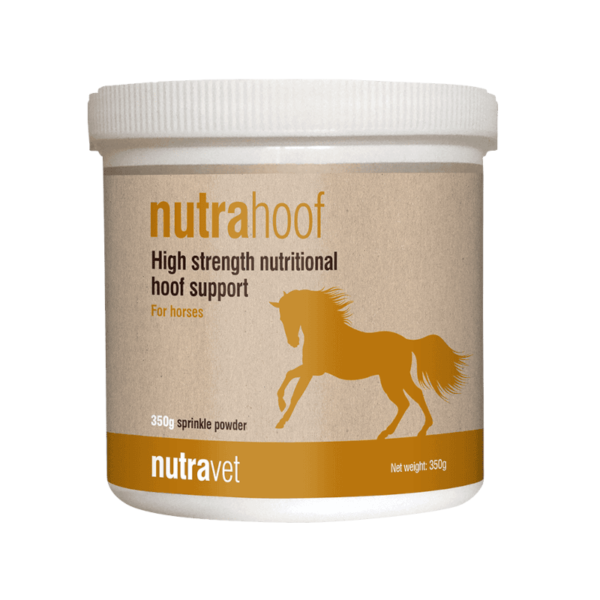
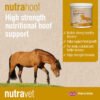
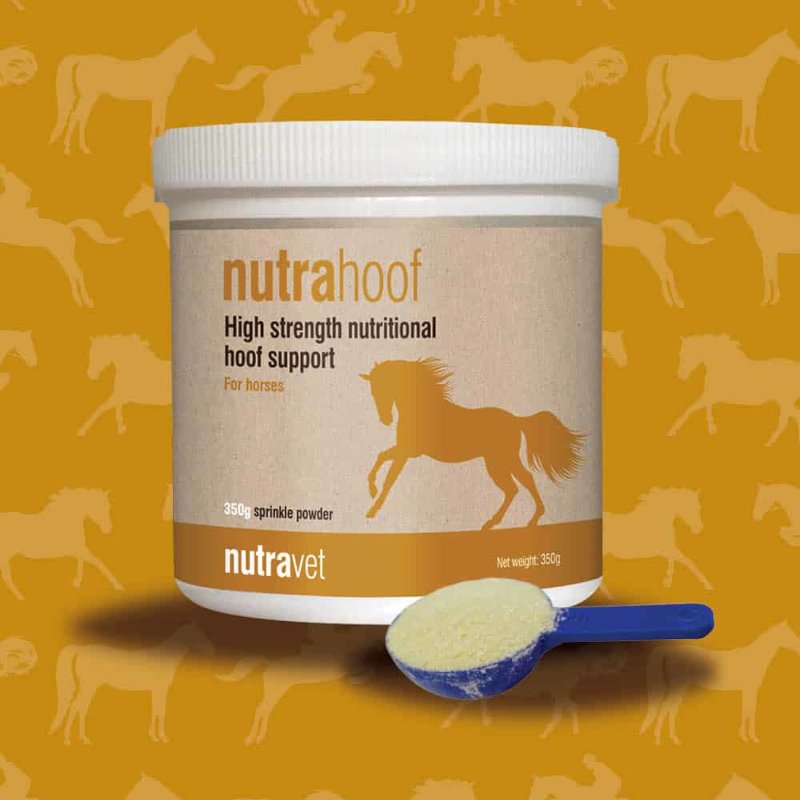
Nutrahoof hoof supplement is Nutravet’s high-strength 350g powder for horses and ponies with weak, brittle or cracked hooves. Biotin, zinc, methionine, vitamin E and echinacea support strong horn and steady hoof growth. Stir it into the daily feed and keep it going – new horn takes months to grow down. Equine use only, alongside regular farriery.
All orders require review by a licensed veterinarian.Please allow 1–2 working days for processing.
Nutrahoof hoof supplement is a high-strength complementary feed from Nutravet, formulated to support healthy hoof growth and strong horn in horses and ponies. Poor hoof quality has many causes. Nutrition, workload, ground conditions, wet-to-dry cycles and breeding all play a part. This 350g powder tackles the nutritional side, feeding the hoof from the inside while your farrier works on it from the outside.
What Nutrahoof hoof supplement does
Hoof horn grows slowly, roughly the width of a coin each month. Any nutritional gap therefore shows up months later as cracks, crumbling walls or lost shoes. Because the horn you can see today was formed weeks ago, consistent daily feeding matters far more than a short burst.
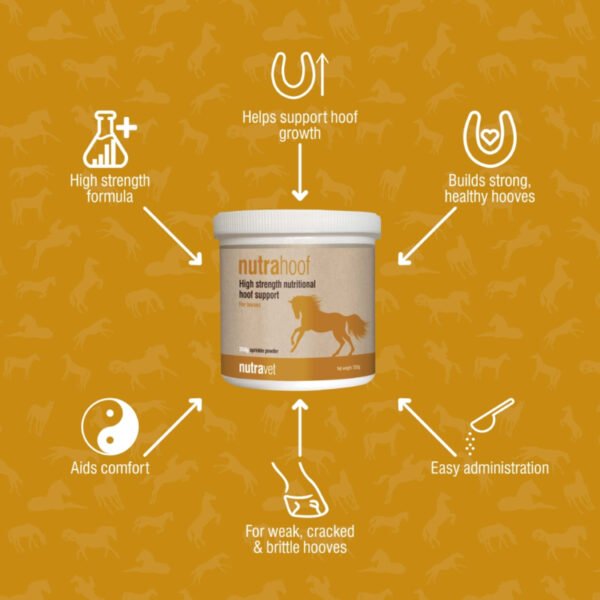
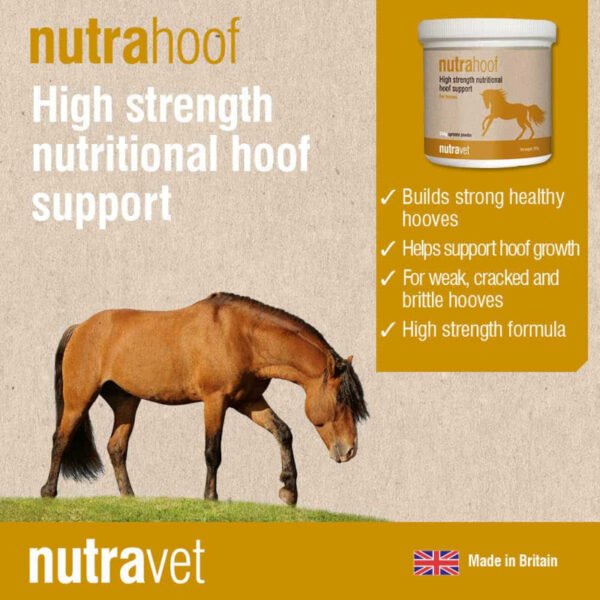
Supports the growth of strong, well-formed hoof horn
Helps horses with brittle, cracked or crumbling hooves
Supports horn elasticity, so the hoof flexes instead of splitting
Useful for horses that struggle to hold a shoe
Supports hoof condition through heavy workload and seasonal changes
Powder format, easy to stir into the daily feed
Key ingredients
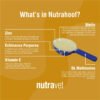
Nutravet formulates Nutrahoof around five nutrients with recognised roles in hoof and skin health:
Biotin – a B vitamin widely used to support hoof horn quality and growth. It is the nutrient most owners associate with hoof supplements, and it needs to be fed daily rather than occasionally.
Zinc – involved in keratin formation and skin integrity.
Methionine – a sulphur-containing amino acid used in building keratin.
Vitamin E – an antioxidant that supports tissue health.
Echinacea – included in the Nutravet blend alongside the core hoof nutrients.
How to feed
Always follow the feeding rate printed on the tub, or your vet’s instructions. General guidance:
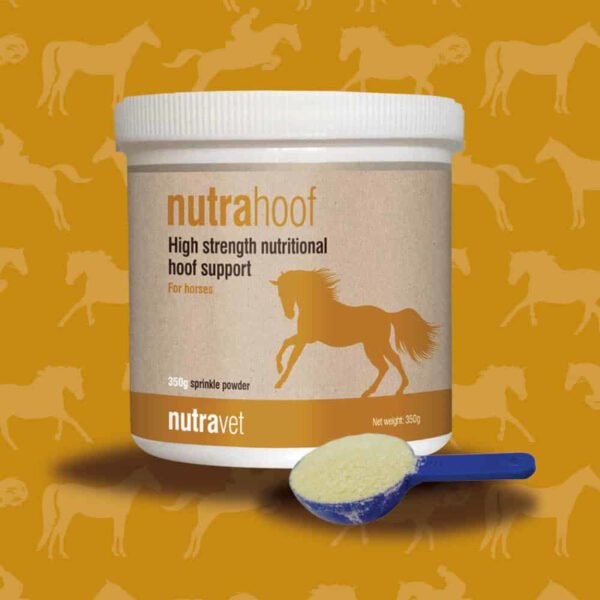
Measure the recommended amount with the scoop supplied.
Mix it thoroughly into the daily feed so none is left in the bottom of the bucket.
Introduce it over a few days if your horse is fussy.
Feed continuously, because hoof supplements need months rather than weeks to show.
Keep fresh water available at all times.
Do not exceed the stated feeding rate. Similarly, do not double up with another biotin supplement without asking your vet, since several balancers and hoof feeds already contain it.
What to expect, and when
Realistic expectations save a lot of frustration. New horn appears at the coronet band and then takes months to grow down to ground level, so nothing visible happens quickly. For that reason, most owners judge a hoof supplement over at least one full growth cycle rather than a few weeks.
A practical approach is to photograph each foot from the side and the front before you start. Your farrier is often the first to notice a change, because he or she is the one feeling how the horn takes a nail.
Who it suits
Equine use only. Most horses and ponies can be fed it, including working, competition and retired animals. It is a complementary feed, not a medicine. It does not replace regular farriery, and it does not treat laminitis, abscesses, white line disease or any other diagnosed hoof condition. Those need your vet and farrier. Check with your vet before feeding to pregnant mares or horses on medication.
What else affects hoof quality
Nutrition is one lever among several. Horses with poor feet usually need the whole picture addressed:
A regular farriery cycle, kept to rather than stretched out.
Dry, clean standing where possible, since constant wet-to-dry cycles weaken horn.
Daily picking out, so stones and packed mud do not sit against the sole.
Sensible workload and surfaces, especially for horses in hard work.
A balanced base ration, because no supplement fixes poor forage.
Hoof care through the seasons
British weather puts hooves through a lot, and the challenges change as the year turns. Winter mud keeps the horn permanently damp, which softens it and makes shoes harder to hold. Standing on clean, dry bedding for part of the day helps, even if turnout is unavoidably wet.
Summer brings the opposite problem. Baked, hard ground dries horn out and encourages cracks, particularly in feet that were soft and waterlogged only weeks earlier. As a result, spring and autumn transitions are often when weak feet fall apart.
Fitting it into the yard routine
Hoof supplements fail more often through inconsistency than formulation. Feed it in the same bucket at the same time each day, and make sure anyone else on the feed rota knows it goes in. Keep the scoop in the tub and the lid firmly on, since damp powder clumps and is harder to measure accurately. If your horse goes away to a competition or a training yard, send the tub with him rather than skipping days.
When to speak to your vet or farrier
A supplement supports normal hoof growth. However, some signs need professional attention rather than patience:
Sudden lameness, heat in the foot, or a bounding digital pulse.
Foul-smelling discharge, or a black, crumbly area in the sole or frog.
Deep cracks that reach the coronet band, or a wall that separates from the sole.
A horse that has become footsore on hard ground since the last trim.
Repeated shoe loss despite a sensible farriery cycle.
In addition, tell your vet about every supplement your horse receives. That way, the whole ration can be reviewed together rather than piece by piece.
Product information
Format: powder for mixing into feed
Pack size: 350g
Species: horses and ponies
Manufacturer: Nutravet
Store in a cool, dry place, away from direct sunlight. Keep the lid sealed to protect the powder from moisture, and keep out of reach of children and animals.
Nutrahoof FAQs
How long before I see a difference? New horn grows down from the coronet band, so most owners judge results over three to six months of continuous feeding.
Does it replace my farrier? No. It works alongside regular trimming and shoeing, never instead of it.
Can I feed it all year round? Yes, it is designed for long-term use. Horses with a history of weak hooves usually stay on it.
Will it help a horse that keeps losing shoes? It supports horn strength, which can help the hoof hold a nail better. Farriery and ground conditions still matter most.
Is it suitable for ponies and small horses? Yes, but feed to the rate stated on the label for your horse’s bodyweight.
Can I feed it alongside Nutracalm Equine? The two products target different things and are often used together, but check the combined ration with your vet or a nutritionist first.
Should I keep feeding once the hooves look better? Most owners do. Horn quality tends to slip back if the support stops, particularly through a wet winter.
My horse is already on a balancer. Is that a problem? Possibly, because many balancers include biotin and zinc already. Check the labels together with your vet before feeding both.



 Prescription Required
 Prescription Required
 Prescription Required
 Prescription Required
 Prescription Required
 Prescription Required
 Prescription Required