✓ Registered Vet Practice
🚚 Fast UK-Wide Delivery, Including Northern Ireland
℞ Prescription & Non-Prescription Products
→ Need to upload a prescription?

Mites in Horses
What feather mites are, why they make heels so itchy, and why your vet should confirm the cause.
Quick Answer
- Feather mites are tiny skin-surface mites that cause chorioptic mange, which owners often call itchy heels, leg mange or heel mange.
- The main signs are itchy lower legs, with stamping (especially of the hind feet), rubbing, biting at the legs, scurf and scabs.
- Heavily feathered horses and ponies are most often affected, but any horse can get feather mites.
- Many other problems, including mud fever, can look similar, so ask your vet to confirm the cause before anything is put on the legs.
- Contact your vet at the first signs of persistent itching, and sooner if the legs are bleeding, swollen, very sore or your horse is lame.
When owners talk about mites in horses, they most often mean feather mites, which live on the skin of the lower legs. They cause a very itchy skin disease called chorioptic mange. "Mange" is the term for a skin disease caused by mites.
The mites are about 0.3 mm long, so you cannot see them with the naked eye. They live on the surface of the skin and feed on dead skin flakes. They do not burrow into the skin.
The itch can be intense, and the right treatment depends on a correct diagnosis. This guide explains what to look for and when to ring your vet.
Why Mites in Horses Are Most Common on Feathered Legs
Feathers give mites a sheltered home
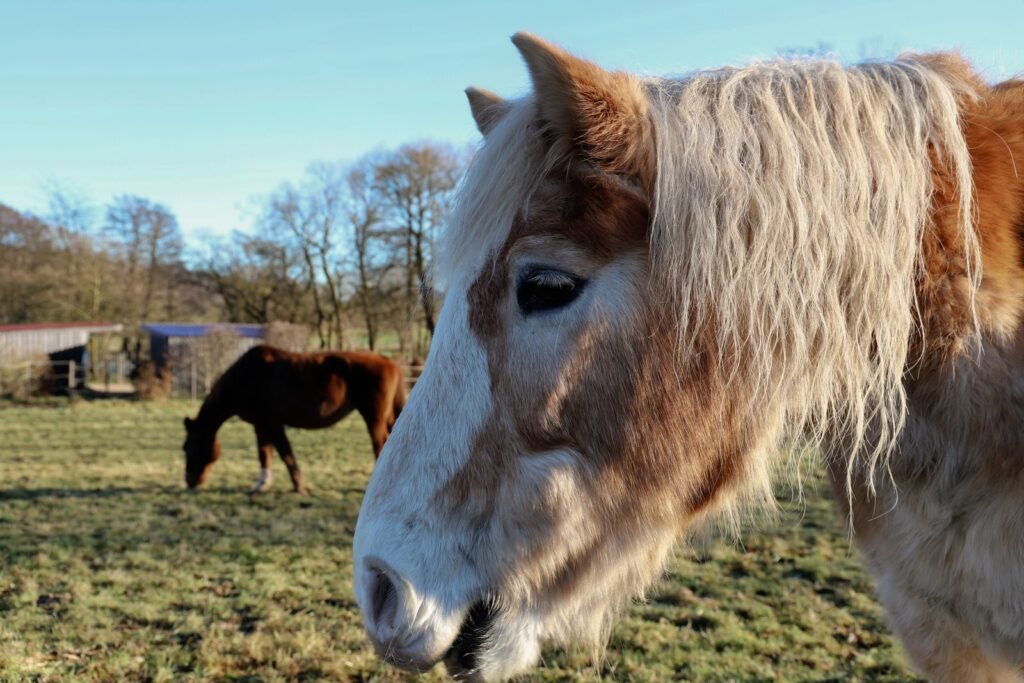
Thick feathers make an ideal environment for mites. The dense hair traps dirt and dead skin cells, and it also protects the mites from extremes of temperature. As a result, cobs, Shires, Clydesdales, Friesians and some native breeds are most commonly affected.
However, any horse can be affected, so do not rule mites out just because your horse has fine legs.
How feather mites spread
Mites spread mostly by direct contact between horses. They also pass on contaminated bedding and equipment. In addition, mites and their eggs can survive off the horse for up to about 70 days, so the stable and kit can keep the problem going.

A life cycle of around three weeks
The mite life cycle takes around three weeks. Because of this, treatment is usually repeated after a gap, and your vet will plan it around that cycle.
Some horses show very little
Some horses carry plenty of mites and show few signs. In a Dutch survey of 42 Friesians cited by Horse & Hound, mites were found on 26 horses, but only four had visible lesions.
Other horses react strongly to only a few mites, and they may be allergic to them. That is one reason a horse on your yard can seem fine while another is miserable.
Signs of Feather Mites to Look For
Itching of the lower legs is the main sign. Hind legs are affected more often than front legs. The problem is typically worse in winter, when horses spend more time stabled, and it often improves in summer.
- Stamping, especially with the hind feet.
- Rubbing the legs against each other or against objects, or biting and chewing at the lower legs.
- Fidgeting, or reluctance to have the feet picked up.
- Scruffy, flaky skin, sometimes called "walking dandruff".
- Scabs and small bleeding wounds on the pastern or lower leg, caused by the horse scratching itself.
- Skin that thickens and folds over time, especially at the back of the pastern.
Frequent stamping in a feathered horse is highly suggestive of mites. Even so, it is not proof, because other conditions can cause stamping and scabs too.
Over time, thickened skin can also pick up a bacterial or yeast infection. Badly affected horses can be very sore, and handling or washing the legs may need sedation by the vet.
Other types of mite exist, such as harvest mites in late summer and autumn. This guide focuses on feather mites. If you are worried about ticks, see our guide to Ticks on Horses.
Mites or Mud Fever? Why the Cause Needs Confirming
Pastern dermatitis is a description, not a diagnosis. Its causes include mud fever, leg mites, harvest mites, ringworm and several other conditions. The skin can look much the same whatever the cause.
Mite scabs can look like mud fever. However, marked irritation points towards mites, with rubbing, biting and stamping. Mud fever is described as non-contagious and linked with wet, muddy conditions and bacteria. It brings painful, crusty scabs and sometimes heat or swelling in the lower leg.
Identifying the underlying cause is the key to successful treatment, and diagnosis is easier if your vet sees the legs early. For mud fever, see Mud Fever in Horses. For lice, see Lice in Horses.
When to Contact Your Vet
- Your horse has persistent leg itching, stamping or scabs on the feathered legs, even if it seems mild.
- The legs are bleeding, swollen or very sore.
- Your horse is lame.
- The skin is thickening, or you suspect infection on top of the itch.
- Other horses on the yard are stamping or rubbing too.
Severe cases may need other medicines to deal with the damage caused by the intense itching, and sedation for safe handling. Early advice makes treatment more likely to work, so do not wait for the legs to get worse.
How Vets Investigate Mites in Horses
Your vet can take skin scrapes, lift mites off with sticky tape, or brush debris from the coat and look at it under a microscope. Scrapes can be hard to take on hairy legs.
These tests are not very sensitive. As a result, the diagnosis is often made from the horse's appearance, history and signs.
Treatment and Management Under Your Vet's Direction
Treatment can be tricky, because mites are often widespread in the horse's surroundings and on other horses. Your vet decides which products to use and when. Nothing in this guide replaces that advice.
In general terms, vets may combine treatment on the skin, treatment for the whole horse, and thorough cleaning of the environment. No single product kills every mite, so several steps may be needed.
Clipping the feathers
If mites are caught early, clipping may be avoidable. Once they are established, removing the feathers lets treatment reach the skin. A UK vet advice article says clipping drastically improves the chance of treatment success, but UK vet sources also say clipping alone is unlikely to cure the problem.
Washing the legs
Treatment often starts with washing the legs with a shampoo chosen by the vet. It is then repeated after a gap to catch mites that hatch in between. Your vet will set the timing.
Cleaning the stable and kit
Remove bedding and disinfect the stable at each stage of treatment. Grooming kit, clippers and rugs also need cleaning, and clipped hair and skin debris should be disposed of carefully. Shavings or rubber matting may suit better than straw or deep litter.
Other horses on the yard
Horses in contact can carry mites without showing signs. Ask your vet whether they need checking or treating. Treating every horse on a yard is rarely feasible, so your vet can help you decide.
What Not to Do
- Do not put engine oil or other home remedies on the legs. One UK equine practice warns that engine oil may be useless and harmful.
- Do not pick or force off the large crusty areas that can form at the back of the knees and front of the hocks. One UK equine practice warns that removing them may do more harm than good.
- Do not assume every itchy leg is caused by mites, because other conditions look similar.
- Do not choose medicines yourself. A UK equine vet warns that some medicines used against mites raise resistance concerns, so the choice is your vet's decision.
Outlook, Prevention and Medicine Records
Treated mites usually clear. However, re-infection is frustratingly common, and regular treatments are needed for many horses. Scurf may linger after the mites have gone, but if your horse is not itchy there is no need to worry too much about it.
Check feathered legs regularly, keep bedding and equipment clean, and ask your vet whether quarantine measures are sensible to avoid re-exposure to untreated horses. Early detection makes treatment more likely to succeed.
Horses must have a passport, and whether it declares the horse as intended for human consumption decides which medicines can be used. Keep the passport to hand, because your vet may need to see it before treating. If you compete, document every treatment and its dates, and talk to your vet about detection and withdrawal times before you compete.
How Pet Med Direct Can Help
Mites need a vet's diagnosis and a treatment plan, so start there. Once you have that advice, you can browse our equine care and grooming range for everyday horse care items.
If your vet prescribes a medicine, you can read how pet prescriptions work with us.
Some pet medicines require a valid veterinary prescription. Pet Med Direct can only supply prescription medicines after the prescription has been checked. Always follow your vet's advice and the directions on the medicine label.
Frequently Asked Questions
Can I see mites on my horse?
No. Feather mites are about 0.3 mm long, so you cannot see them with the naked eye. Your vet may find them by scraping the skin or lifting them with sticky tape, or may diagnose from the signs.
Why is my feathered horse stamping?
Stamping, especially of the hind feet, is a common sign of itch from feather mites. However, other causes are possible, including mud fever. Ask your vet to take a look.
Are feather mites the same as mud fever?
No. Mud fever is a bacterial skin condition linked with wet and muddy conditions. Mite scabs can look similar, but marked itching points towards mites. Only a vet can tell them apart with confidence.
Can I treat mites in horses myself?
It is best not to. Treatment is directed by your vet, and some home remedies, such as engine oil, may be useless and harmful. Contact your vet when the first signs appear, because early treatment matters.
Does clipping the feathers cure feather mites?
No. Clipping helps treatment reach the skin, but on its own it is unlikely to cure the problem. Your vet will explain whether clipping is needed for your horse.
Do other horses on the yard need checking?
Possibly. Horses can carry mites without showing signs, and mites spread by contact and shared equipment. Talk to your vet about whether in-contact horses should be checked or treated.
Will feather mites come back?
They often do. Susceptible horses easily become re-infected, so many need ongoing management. A UK vet source says sustained treatment beyond the three-week life cycle, followed by measures to prevent re-exposure, is often curative. Your vet will plan this for your horse.
Do lice and mites need the same approach?
Both are common causes of itching, and with either one the environment and equipment need thorough disinfecting. They are different parasites, though, so see Lice in Horses and ask your vet which applies.
Related Equine Health Guides
Sources and Further Reading
- World Horse Welfare — Mites: how to treat them in horses
- Leahurst Equine Practice, University of Liverpool — Chorioptic mange - 'feather mites'
- Horse & Hound — Feather mites in horses (heel/chorioptic mange) vet advice
- Clyde Vet Group in The Scottish Farmer — Feather mites and how to control their bite!
- Blue Cross — Skin conditions in horses
- XLVets Equine — Pastern Dermatitis fact sheet
- MSD Veterinary Manual — Mange (Acariasis, Mange Mites) in Horses
- GOV.UK — Horse medicines and record keeping requirements
- GOV.UK — Marketing authorisations for veterinary medicines
- British Equestrian — Equine anti-doping
This article was researched from the sources listed above. It is general information for horse owners and is not a substitute for advice from your own vet.

Need pet products or prescription medicines? Visit the Pet Med Direct shop.
Shop Pet Med Direct