✓ Registered Vet Practice
🚚 Fast UK-Wide Delivery, Including Northern Ireland
℞ Prescription & Non-Prescription Products
→ Need to upload a prescription?

Tendon Injuries in Horses
Signs to look for, why a vet scan matters, and what recovery involves.
Quick Answer
- Heat, swelling and lameness at the back of the lower leg may mean a tendon injury, so stop work and call your vet promptly.
- If your horse suddenly cannot put weight on a leg, or the fetlock sinks towards the ground, call your vet immediately.
- A horse can have a serious tendon injury and be only mildly lame, so never assume it has healed because the lameness has gone.
- Vets usually diagnose tendon injuries with an ultrasound scan, then guide a slow, step-by-step return to work.
- Recovery is typically long and varies from horse to horse, so your vet will set the plan.
Tendon injuries in horses are common, and the lower leg is a frequent place for them. Healing is slow, and a healed tendon is not as strong as the original.
This guide explains what tendons do, how injuries happen, the signs to look for and what treatment and rehabilitation usually involve. It cannot diagnose your horse. If you suspect a problem, your vet needs to see the leg.
What are tendon injuries in horses?
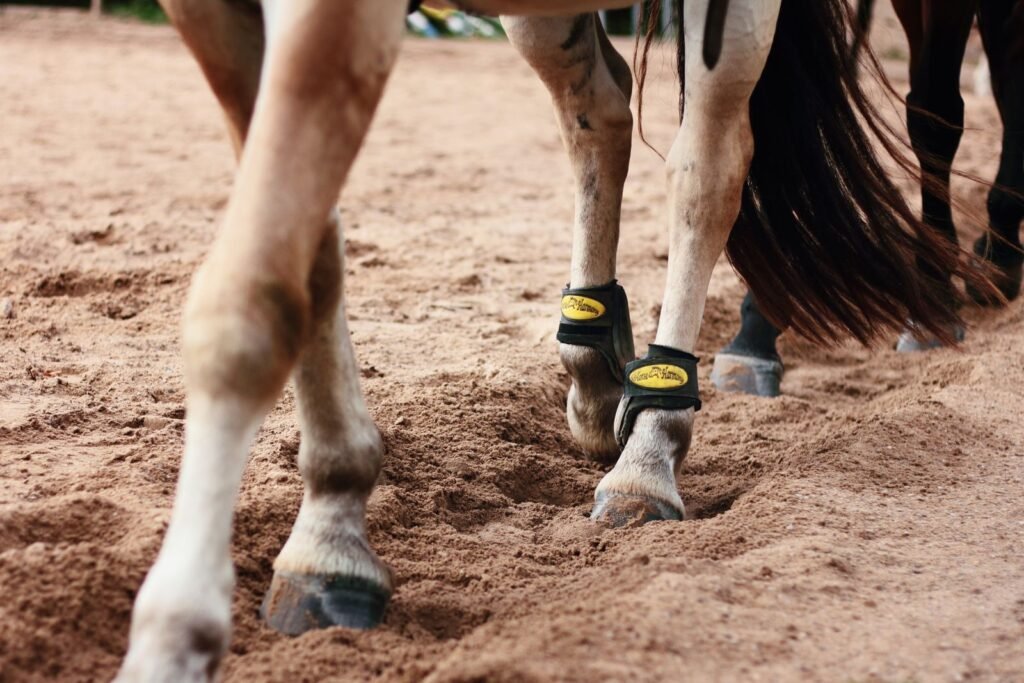
Tendons attach muscle to bone, and ligaments attach bone to bone. Both are made of collagen. The lower limb is a common place for injury, and horses have no muscles below the knees and hocks.
The main tendons at risk are the superficial digital flexor tendon and the deep digital flexor tendon at the back of the leg, and the extensor tendon at the front. The superficial flexor tendon is the one injured most often, usually in the cannon region.
Causes and risk factors
Overload and strain
Tendons and ligaments can be over-stretched in one episode, or by repeated small strains without time to heal. Damage ranges from minor tearing of fibres to complete rupture.
Horse & Rider says a serious injury is rarely a single event. It is usually repeated, low-grade overload that causes mild damage which then leads to a major injury.
Knocks and cuts
A knock can cause bruising or severe damage. A cut through the skin can damage the tendon beneath. If a tendon sheath is involved, this can lead to a potentially life-threatening infection if it is not dealt with promptly.
Risk factors
UK sources name unfit horses doing strenuous work, fast work that over-stretches the tendons, uneven ground and jumping at speed. Older horses are also affected through age-related changes.
World Horse Welfare says a long toe and low heel raise the risk of deep digital flexor tendon injury, but Horse & Rider says this link is not supported by current research. World Horse Welfare adds that the risk increases if hooves are not trimmed, and shod if needed, regularly.
Signs of tendon injuries in horses
With a flexor tendon injury, heat, pain and swelling can usually be felt over the back of the cannon bone. The swelling often shows because the tendon sits just under the skin. In severe cases the leg looks "bowed".
- Heat in the back of the lower leg, often warmer than the same area on the other leg.
- Swelling or a change in the shape of the back of the leg.
- Lameness, which can be mild, severe or sometimes absent.
- Extra fluid in a tendon sheath, sometimes called tendinous windgalls.
- In severe damage, a very painful limb, a tipped-up toe or a fetlock that sinks at the walk.
Lameness does not match the amount of damage. Horse & Hound says some horses have extensive damage without being very lame. Horse & Rider adds that horses sometimes come sound after one or two days, and some stay sound even with a significant injury.
A hot, swollen leg can also have other causes. Our guide to Why Is My Horse's Leg Swollen? covers them.
Emergency: Contact a Vet Immediately If…
- Your horse suddenly becomes very lame or cannot put weight on a leg.
- The fetlock drops towards the ground. Sources link this to a full tendon rupture.
- There is a wound over a tendon or tendon sheath. Infection of a sheath can be life-threatening.
- Your horse is reluctant to move, in obvious pain, or has a large wound close to a joint.
Call your vet or the nearest out-of-hours emergency vet straight away. Do not wait to see whether the lameness settles.
When to Contact Your Vet
- Any heat, swelling or lameness at the back of the lower leg, even if it seems mild.
- A horse that was lame but "came sound" while swelling or thickening remains.
- A leg that looks bowed or has changed shape.
Stop work and ring your vet for advice and an appointment. Do not wait for the lameness to disappear. Your Horse says early intervention by your vet more often than not leads to successful treatment.
While you wait for the vet
Ask your vet on the phone what to do until they arrive. Some UK sources suggest cold hosing and a support bandage in the first days, but they give different timings.
A bandage must go on evenly and not too tightly, because uneven or tight wraps can damage tendons.
- Do not keep working a horse with heat, swelling or lameness in a tendon area.
- Do not turn your horse out unless your vet says so. Horse & Rider says horses that are turned out tend to recover less well than those kept on box rest.
- Do not start any exercise programme unless your vet agrees.
How vets diagnose tendon injuries
Your vet will feel the leg for heat and pain, but judging the damage by look and feel is difficult. Tendons are soft tissue, so vets usually use an ultrasound scan rather than X-rays. Your horse may need light sedation.
Swelling needs to settle first, so the first scan is usually done around four to seven days, or about a week, after the injury. Edinburgh's equine hospital says ultrasound grades the injury, tracks healing and helps decide when it is safe to return to ridden work.
Injuries to the deep flexor tendon inside the foot do not show on X-ray, and MRI is often needed.
Treatment and recovery
Treatment depends on how severe the injury is. World Horse Welfare lists box rest, pain relief and anti-inflammatory medication, cold hosing, supportive bandaging, shoeing changes and controlled exercise. Your vet may recommend some or all of these.
In the UK, horses are considered food-producing animals, and some medicines mean a horse must be permanently excluded from the food chain, with a declaration signed in its passport (GOV.UK). Ask your vet about this when a medicine is prescribed. If you compete, talk to your vet and check your sport's anti-doping rules about any medicine your horse has had.
Therapies such as stem cells, platelet-rich plasma, laser and shock wave may be offered. World Horse Welfare says there is little good evidence for several of them, and it is wise to ask your vet about the documented success rate. Horse Health Programme says none reduces the lay-off period, but some aim to improve the quality of repair.
Rehabilitation is slow and step by step. It usually starts with walking in hand, then moves on to ridden work, with follow-up scans before each increase. Surgery is sometimes used for lacerations, sheath infection or certain tears.
Outlook and preventing re-injury
Healed tendon is scar tissue, which is prone to reinjury. Time off work is typically long. Horse Health Programme says horses are often out of work for six to 12 months, while Horse & Hound quotes nine to 12 months after a serious injury.
Many horses do return to work and competition, though sometimes at a lower level. In severe cases, tendon injuries in horses can be career-ending.
You can lower the risk by:
- Building fitness gradually and varying the workload, with rest days.
- Turning out on varied terrain, and riding on a variety of surfaces.
- Keeping hooves regularly trimmed or shod, as hoof balance affects risk.
- Checking the legs regularly for heat, swelling and pain.
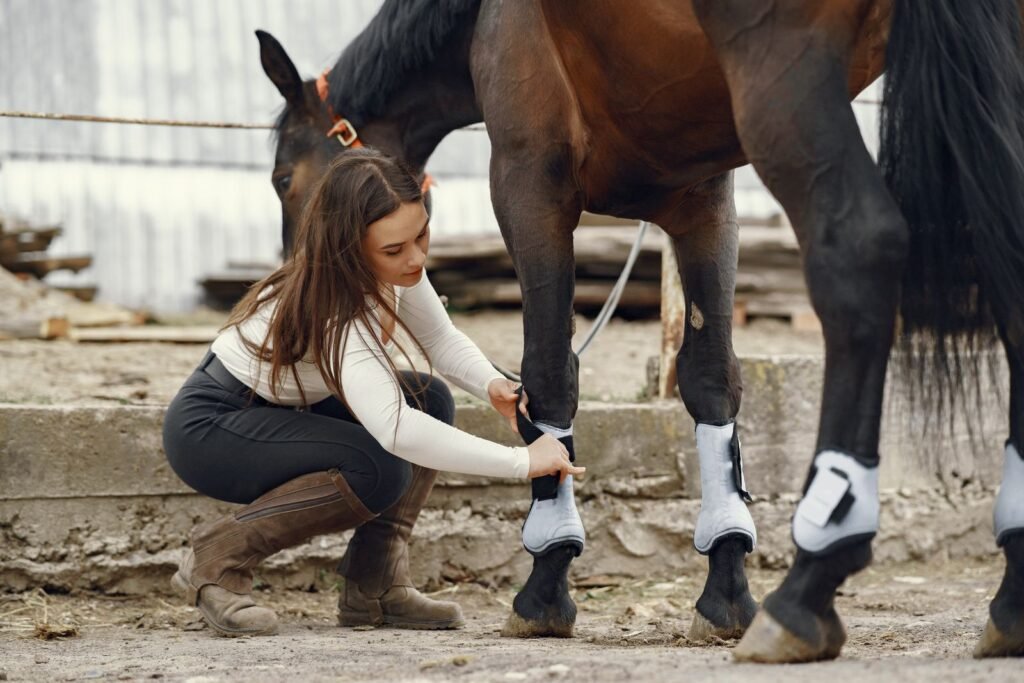
World Horse Welfare notes that no boot or bandage will protect a tendon from over-stretch. Cold therapy after hard work can also hide early heat and swelling, so check legs closely.
How Pet Med Direct Can Help
A suspected tendon injury is a situation for your vet first. Please call them before ordering anything.
If your vet has prescribed medicine, our guide to how pet prescriptions work explains the process. You can also browse our equine range for everyday horse care.
Some pet medicines require a valid veterinary prescription. Pet Med Direct can only supply prescription medicines after the prescription has been checked. Always follow your vet's advice and the directions on the medicine label.
Frequently Asked Questions
What does a bowed tendon look like?
It shows as a swelling at the back of the leg, between the knee or hock and the fetlock, usually with heat. In severe cases the back of the leg looks curved, or "bowed". Your vet needs to examine and scan it.
Can a tendon injury heal on its own?
Not safely. The injury needs a vet assessment and scan, because the extent of damage is hard to judge. Scar tissue forms as it heals, and re-injury is a risk.
How long will my horse be off work?
Sources quote several months to a year. Horse Health Programme says six to 12 months is common, but the length depends on the damage. Your vet sets the plan from repeat scans.
Does my horse need a scan?
Yes. Ultrasound grades the injury, monitors healing and helps your vet decide when work can increase. The first scan is usually done around four to seven days, or about a week, after injury, once swelling has settled.
Is cold hosing okay for a tendon injury?
Some UK sources include cold therapy in early care, but they give different timings. Ask your vet what to do, and follow their instructions.
Do tendon injuries in horses always cause lameness?
No. Mild tendon sprains often do not cause lameness, and some horses with significant damage are only mildly lame. Heat and swelling at the back of the leg are reasons to call your vet even if your horse looks sound.
Related Equine Health Guides
Sources and Further Reading
- World Horse Welfare — Tendon and ligament injuries in horses
- University of Edinburgh, Royal (Dick) School of Veterinary Studies — Ultrasonography
- Your Horse — Common Leg Problems: Tendonitis
- Horse & Rider — Tackling tendon injuries
- Horse & Hound — Tendon injuries in horses: causes, signs, treatment and prognosis
- Horse Health Programme — Tendon injuries
- Your Horse — Equine vet explains common causes of swollen legs in horses and tips to manage it
- British Horse Society — Horse emergencies and emergency care planning
- gov.scot — Health and veterinary care: Welfare of equids guidance
- GOV.UK — Horse medicines and record keeping requirements
This article was researched from the sources listed above. It is general information for horse owners and is not a substitute for advice from your own vet.

Need pet products or prescription medicines? Visit the Pet Med Direct shop.
Shop Pet Med Direct