✓ Registered Vet Practice
🚚 Fast UK-Wide Delivery, Including Northern Ireland
℞ Prescription & Non-Prescription Products
→ Need to upload a prescription?

Fireworks and Noise Phobia in Dogs: How to Keep Your Dog Calm
Bonfire Night, New Year's Eve, Diwali and thunderstorms can be frightening for dogs. Here is how to spot the signs, prepare in advance and get the right help.
Quick Answer
- Dogs hear far better than we do, and fireworks are sudden, unpredictable and come with flashes and smells, so fear is very common.
- Signs range from subtle (yawning, lip licking, panting, clinginess) to severe (trembling, trying to escape, toileting indoors or refusing food).
- On the night, walk in daylight, keep your dog indoors with the curtains closed, mask the noise with the TV or radio, and let your dog hide in a safe den.
- Never punish a frightened dog, and do not force it out of hiding or try to make it face the noise.
- If your dog is badly affected, speak to your vet weeks ahead of Bonfire Night. Your vet can check for medical causes and discuss options, including medicine and a referral to a qualified behaviourist.
Fireworks are not just a 5 November problem in the UK. Displays also happen around New Year's Eve and Diwali, and thunderstorms can cause the same reaction at any time of year.
This guide explains why dogs are so affected, what the signs look like, and what you can do before, during and after fireworks. It also covers when to involve your vet and how to start long-term training.
Why Are Dogs Scared of Fireworks?
Fireworks combine sudden loud bangs, bright flashes and strong smells. The Kennel Club points out that dogs hear much better than people, so noises that seem bearable to us can be unpleasant or frightening for them.
Fireworks are also unpredictable. A dog cannot tell when the next bang is coming or understand where it comes from, and that lack of control adds to the fear.
How a dog reacts depends on its personality and past experiences. A single frightening experience can be remembered, which is why fear often gets worse each year if it is not dealt with. Dogs also pick up on their owner's mood, so staying relaxed helps.

What Are the Signs of Noise Anxiety in Dogs?
Some dogs make their fear obvious. Others show only small changes, so it pays to watch your dog closely. The table below groups common signs from mild to severe.
| Level | What you might see |
|---|---|
| Mild | Yawning, lip licking, ear twitching, panting, restlessness, staying close to you, whining or barking. |
| Moderate | Pacing, trembling, drooling, a low tucked tail, dilated pupils, hiding behind furniture, clinging to you, refusing food. |
| Severe | Freezing, trying to bolt or escape, charging at doors or fences, chewing furniture, toileting indoors, extreme panic. |
Some of these signs can also point to pain or illness. If your dog has become frightened of noises quite suddenly, speak to your vet, because PDSA notes that a sudden change can be a sign of pain or illness.
Our guides on why a dog is suddenly anxious, shaking or trembling and panting explain what else can cause these signs.
How Do I Prepare My Home Before Fireworks?
A little planning makes a big difference. Charities including Dogs Trust, Blue Cross and the RSPCA all advise preparing before the evening begins.
- Find out when local displays are likely, and plan around key dates such as Bonfire Night. Fireworks can be set off on other nights too.
- Be home and settled well before it gets dark.
- Close the curtains or blinds before dusk and turn the lights on to soften the flashes.
- Play the TV, radio or music to mask the bangs, and keep it at a comfortable volume rather than loud.
- Close windows and doors, block cat flaps, and check that fences and gates are secure so your dog cannot bolt.
- Make sure your dog has fresh water, and set out long-lasting chews or puzzle toys in case your dog wants to use them.
How Do I Make a Safe Space or Den?
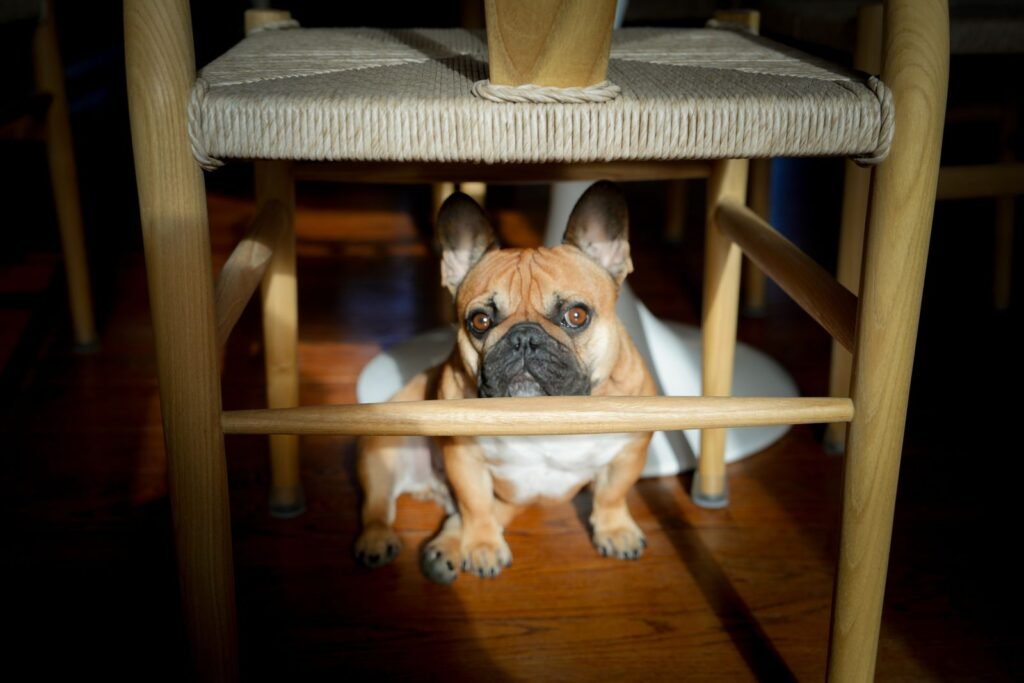
Choose a spot your dog already likes to retreat to, such as under a table, behind a sofa or in a crate. Introduce it a few weeks before fireworks season so it feels familiar, and make it cosy with bedding, a few favourite toys and a blanket over the top to muffle sound and light.
Let your dog decide whether to use it. Never lock a dog in, and do not shut it in a room or crate against its will, because a panicking dog can hurt itself trying to escape. If your dog picks a different hiding place, let it.
When Should I Walk and Feed My Dog?
Walk your dog in daylight, before the fireworks are likely to start. A longer walk with plenty of sniffing can help your dog feel tired and settled when it gets home.
Dogs Trust suggests considering feeding earlier in the evening, so your dog is not trying to eat during the loudest part of the night. If you change routines, do it gradually over a few days.
Keep your dog on a lead whenever you go out, because fireworks can go off at any time. If you need to go out after dark, be quick and stay with your dog. Never leave a dog tied up outside or in a car during fireworks, and never take a dog to a display, even if it seems unbothered.
What Should I Do During the Fireworks?
- Stay calm and act as normally as you can. Your dog watches how you behave.
- Stay with your dog if you can. Avoid leaving a frightened dog alone.
- Comfort your dog if it comes to you for reassurance, but do not fuss over it excessively or follow it around.
- Let your dog hide, pace or choose where to settle. Do not coax it out.
- Offer a toy, a chew or a game, but do not push it on a dog that would rather hide.
- Keep doors and windows shut, and make sure your dog cannot slip out when you open the front door.
What Should I Not Do?
- Do not shout at or punish your dog, including for toileting indoors or chewing when frightened. Punishment increases fear.
- Do not force your dog to face the noise or "get used to it" on the night.
- Do not force a frightened dog outside, or into its den.
- Do not give your dog any medicine, including human medicines, that your vet has not prescribed for it.
If a calming product or accessory seems to distress your dog, stop using it and ask your vet for advice.
How Can I Keep My Dog Safe and Easy to Find?
Frightened dogs may try to run, and a dog can clear a garden fence or push through a door when it panics. Startled dogs often run from gardens, so it pays to plan for this.
- Check that your dog's microchip details are up to date. Microchipping is a legal requirement for dogs in the UK, and current details make reuniting you much easier.
- Make sure your dog wears a collar with an ID tag, and that the collar or harness fits snugly.
- Secure the garden before dark, and go out with your dog on a lead for toilet breaks.
- Do not leave your dog alone in the garden.
Emergency: Contact a Vet Immediately If…
- Your dog has injured itself trying to escape, for example bleeding, a limp, a broken claw or tooth, or a wound from a fence or window.
- Your dog has collapsed, is struggling to breathe, or is panting hard and cannot settle.
- Your dog may have eaten something poisonous or harmful while panicking, such as chewed furniture or a discarded firework.
Call your vet or the nearest emergency vet straight away. If your dog has run off, contact your microchip database, your local council dog warden and local vets to report it missing.
When to Contact Your Vet About Fireworks Fear
- Your dog is badly frightened by fireworks or other loud noises, or has been before.
- Your dog's fear has appeared suddenly, or seems to be getting worse each year.
- Your dog is also showing signs of pain, or other changes in behaviour, eating or toileting.
- You would like to talk through ways to prepare, including whether medicine could be appropriate for your dog.
Book this appointment weeks before Bonfire Night, not on the day. Your vet needs time to check your dog and, if appropriate, to find what suits it.
How Can My Vet Help a Severely Frightened Dog?
Dogs Trust and the RSPCA both advise speaking to your vet early if your dog is scared. Your vet can check for medical causes, including pain, and discuss the options for your dog. These may include medicine, which should be used alongside a behaviour plan rather than on its own. Some medicines need to be given before the fireworks start, so follow your vet's directions and the label.
Non-prescription calming products and pheromone diffusers also exist. Evidence for them varies between products and between dogs, so discuss suitability with your vet before relying on them. Never use a medicine your vet has not recommended.
For dogs with severe noise phobia, your vet can refer you to a qualified clinical animal behaviourist. Choose one who is registered with a recognised body, such as the Animal Behaviour and Training Council (ABTC). The Kennel Club also warns that for severely phobic dogs, playing firework recordings at home can make things worse, so take advice from a behaviourist before starting.
Can I Train My Dog to Cope Better Next Year?
Often, yes, but it takes time. Sound desensitisation and counter-conditioning should start several months before the season, not in the weeks beforehand. Blue Cross advises starting several months before the season.
- Play firework sounds at a very low volume while your dog does something enjoyable, such as eating or playing.
- Watch for stress signs like yawning, lip licking or ear twitching. If you see them, stop and try a lower volume another day.
- Raise the volume slowly, and only when your dog is fully relaxed.
- Pair the sounds with treats or play so they come to mean something good.
Dogs Trust offers sound recordings, including its Sounds Scary track, and the RSPCA recommends a Sounds Scary pack, to help dogs get used to loud noises gradually. Puppies can benefit most, but adult dogs can learn too. For a dog that is already severely afraid, work with a qualified behaviourist.
How Pet Med Direct Can Help
Pet Med Direct is an online pet pharmacy. If your vet recommends medicine for your dog, you can find out how pet prescriptions work.
We also list non-prescription products in our dog calming and stress category. They are not a substitute for planning, training and advice from your vet, so speak to your vet about what is suitable for your dog.
Some pet medicines require a valid veterinary prescription. Pet Med Direct can only supply prescription medicines after the prescription has been checked. Always follow your vet's advice and the directions on the medicine label.
Frequently Asked Questions
Why is my dog scared of fireworks?
Fireworks are sudden, loud and unpredictable, with flashes and smells too, and dogs hear much better than people do. A frightening experience can be remembered, so fear often builds over time.
How do I know if my dog is scared of fireworks?
Look for panting, yawning, lip licking, whining, pacing, trembling, hiding, clinginess or refusing food. In severe cases dogs may try to escape or toilet indoors.
Should I comfort my dog during fireworks?
Yes, if your dog seeks you out, stay calm and let it settle with you. Avoid fussing excessively, and do not force your dog out of hiding.
Should I walk my dog on Bonfire Night?
Walk it in daylight, before fireworks are likely to start, and keep it on a lead. Avoid taking a frightened dog out after dark.
When should I speak to my vet about fireworks fear?
As early as possible, ideally weeks before Bonfire Night. Your vet can check for medical causes and discuss options for your dog, including medicine and referral to a behaviourist.
Can I treat noise phobia with training alone?
Gradual sound desensitisation can help many dogs, but it needs to start months ahead. Severely affected dogs usually need advice from a vet and a qualified behaviourist.
What should I do if my dog runs away during fireworks?
Contact your microchip database, your local council dog warden and local vets as soon as possible. Keeping microchip details current makes reuniting much easier.
Related Dog Health Guides
Sources and Further Reading
- Dogs Trust - Supporting your dog during fireworks
- Dogs Trust - Fireworks are coming, prepare ahead
- RSPCA - Keeping dogs, cats and other small pets safe during fireworks
- PDSA - Dogs and Fireworks
- Blue Cross - Dogs and fireworks
- Battersea - Help my dog through fireworks
- The Kennel Club - Fireworks and dogs
This article was researched from the sources listed above. It is general information for dog owners and is not a substitute for advice from your own vet.

Need pet products or prescription medicines? Visit the Pet Med Direct shop.
Shop Dog Products