✓ Registered Vet Practice
🚚 Fast UK-Wide Delivery, Including Northern Ireland
℞ Prescription & Non-Prescription Products
→ Need to upload a prescription?

Are Hairballs Normal in Cats?
Hairballs in cats are normal from time to time, but frequent ones or signs of a blockage need your vet. Here is how to tell the difference.
Quick Answer
- Hairballs are a normal occurrence for cats, and it is normal for a cat to bring one up from time to time, with every few weeks being common.
- A hairball is a clump of hair picked up while grooming, which usually passes in the poo, although a cat sometimes vomits it instead.
- Contact your vet if your cat brings up hairballs more often than usual, has difficulty coughing one up, or becomes constipated, lethargic or loses its appetite.
- A hairball can occasionally block the gut, so repeated vomiting, pain, low energy, not eating or pooing less need urgent veterinary advice.
- Retching or coughing is not always a hairball, so ask your vet to check if your cat keeps coughing or retching.
Hairballs in cats are common, and an occasional one is normal. It is still worth knowing what is typical, because a few signs mean something more serious may be going on.
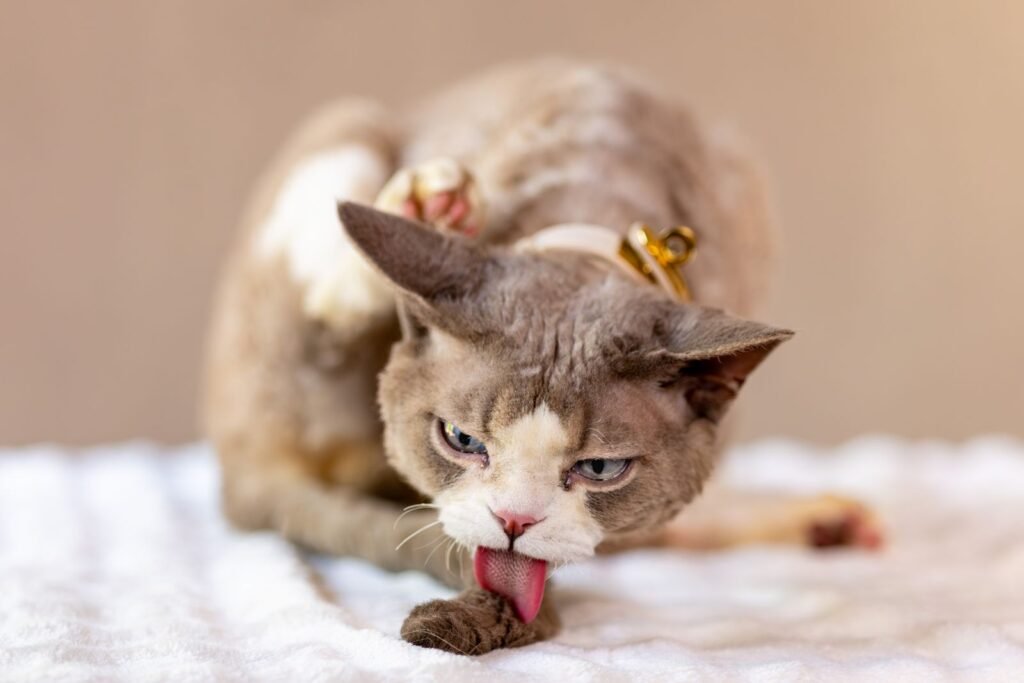
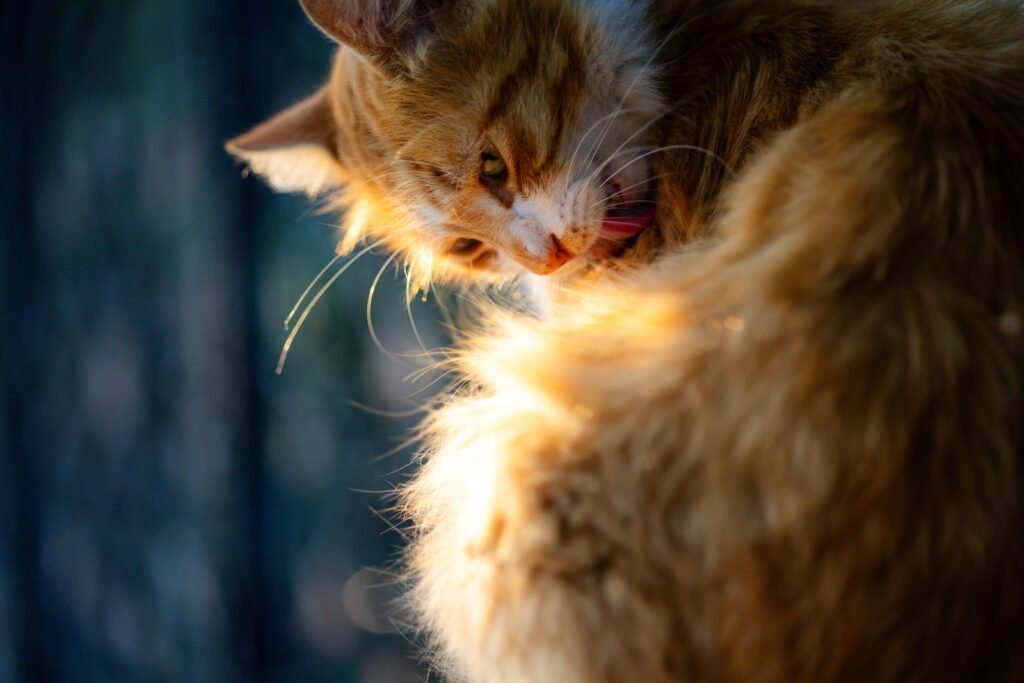
Cats groom themselves using barbs on their tongues, and they spend about a quarter of their waking hours doing it. As a result, they swallow a lot of hair.
This guide explains how hairballs form, what is normal, when to call your vet and how to spot a blockage.
What Is Normal With Hairballs in Cats?
How a hairball forms
A hairball is a clump of hair swallowed during grooming. Hair is made of keratin, which the body cannot break down, so it either passes through the gut or comes back up.
The hair usually passes out in the poo. Sometimes, though, a cat vomits the hairball instead. Blue Cross says nobody knows exactly why hairballs sometimes cause vomiting.
How often is normal?
Blue Cross says it is normal for cats to bring up hairballs from time to time, and that every few weeks is common. PDSA adds that hairballs are a common problem, especially for long-haired cats.
If your cat brings them up more often than usual, contact your vet.
What a hairball looks and sounds like
Before a hairball comes up, your cat may retch, gag or make a loud yacking noise. It can look uncomfortable and be distressing to watch, but there is generally no harm. Most cats cough it up without much delay.
Despite the name, a hairball is often tube-shaped, covered in mucus, foam or stomach liquid. Cats Protection says hairballs are generally about an inch long and a similar colour to the fur or slightly darker.
When Hairballs in Cats Point to a Problem
More often than usual, or harder to bring up
Speak to your vet if your cat starts to have difficulty coughing up hairballs, takes longer than usual, or produces them more often. Also speak to your vet if there is a lot of fur in the poo, or if your cat becomes constipated, lethargic or loses its appetite.
Regularly bringing up furballs can be a sign of other diseases in the stomach or intestines, or of skin disease making your cat groom more. Furballs are most likely to be normal, but any kind of vomiting can point to an underlying illness.
Grooming more than usual
Cats that groom more swallow more hair. This can happen if a cat is itchy because of skin allergies or fleas, or if it is in pain or anxious.
Too much grooming, to the point of hair loss or sore skin, could point to an underlying problem. See our guides on why a cat licks itself so much and why a cat is losing fur.
Frequent vomiting
Hairballs are not usually life-threatening. However, your cat may need veterinary care if it vomits often, goes off its food, loses weight or seems unwell in any way.
See your vet if your cat vomits frequently in a single day, or a couple of times over a few days. Do the same if vomiting or diarrhoea lasts longer than 24 hours, or comes with lethargy or blood. Our guide on why a cat is vomiting covers the other causes.
Is it a hairball or a cough?
Coughing can look like a cat trying to be sick, and it may be mistaken for hairballs. A coughing cat may retch or gag afterwards, with its neck stretched out and its body crouched low.
If you can, take a video to show your vet. Signs of cat asthma or bronchitis include persistent coughing, fast or open-mouthed breathing, noisy breathing and wheezing. Read more in our guides on why a cat is coughing and how to know if your cat has asthma.
Signs a Hairball May Be Blocking the Gut
A hairball blockage is relatively uncommon. When it does happen, though, it is a serious risk to your cat's health and can be life-threatening if it is not treated. The signs of a gut blockage are much the same whatever the cause, and include:
- Vomiting, either more or less often than usual.
- Being subdued, lethargic or low in energy.
- Not wanting to eat or drink.
- Pooing less often.
- Signs of pain, such as growling, hiding or not wanting to be handled.
- Weight loss.
- Drooling, lip smacking and swallowing.
These signs can have other causes too, so contact your vet for advice if you notice them. Cats Protection says a cat that cannot keep food and water down needs an urgent vet examination.
Emergency: Contact a Vet Immediately If…
- You think your cat may have a gut blockage, for example it is vomiting and also seems in pain, has low energy, shows little interest in food or drink, or is pooing less.
- Your cat cannot keep food or water down.
- You think your cat has swallowed string, thread, a hair bobble or another object that could block its gut.
- String is hanging from your cat's mouth. Never pull it.
- Your cat is struggling to breathe, breathing with its mouth open or wheezing. If you think it may be having an asthma attack, this is an emergency.
Call your vet or the nearest out-of-hours emergency vet straight away. Never wait to see what happens, and never try to make your cat sick.
When to Contact Your Vet
- Your cat brings up hairballs more often than usual, or has difficulty coughing them up.
- There are large amounts of fur in the poo.
- Your cat becomes constipated or lethargic, or loses its appetite.
- Your cat is vomiting frequently, losing weight or seems unwell in any way.
- Vomiting or diarrhoea lasts more than 24 hours, or comes with lethargy or blood.
- Your cat is grooming so much that it has hair loss or sore skin.
If in doubt, ring your vet. It is better to have a hairball problem checked than to assume it is nothing.
What Your Vet May Do
Your vet will ask about your cat's history and examine it. If they suspect a blockage, they may use blood tests, X-rays or an ultrasound scan. For frequent hairballs, they may check for underlying causes such as skin disease or gut disease.
Treatment depends on what they find. FirstVet says a blockage that is found usually needs surgery under general anaesthetic. PDSA says large hairballs can cause a blockage, but they do not usually need surgery and can often be loosened with a medicine given by mouth. Your vet will decide which is right for your cat.
PDSA says cats with a gut blockage are likely to recover well if they get prompt veterinary care and have no complications. Sadly, some cats do not recover even with prompt treatment.
Helping to Reduce Hairballs in Cats
- Groom your cat daily to remove loose hair before it is swallowed. Cats usually moult all year round, to varying degrees.
- Groom long-haired cats at least daily, but only for as long as your cat is comfortable.
- If your cat is not used to being brushed, start with a couple of strokes and build up slowly.
- Have itchy skin and fleas dealt with, because itchy cats groom more.
- Reduce stress by giving your cat eating and toilet areas away from other cats, and by offering hiding places.
- Keep string, thread, wool, hair bobbles and decorations out of reach.
Talk to your vet before trying hairball products or special diets. Blue Cross says there is no scientific proof that such products are effective, and that long-term use may risk the loss of vitamins and minerals.
What Not to Do
Never try to make your cat sick at home. Do not pull a string hanging from its mouth. Do not assume repeated retching is just a hairball, because it can be a cough or something more serious.
How Pet Med Direct Can Help
Pet Med Direct supplies a cat grooming range. If your vet recommends a diet change, we also stock cat food, including veterinary diets.
If your vet prescribes a medicine, you can find out how pet prescriptions work or browse our cat medication range.
Some pet medicines require a valid veterinary prescription. Pet Med Direct can only supply prescription medicines after the prescription has been checked. Always follow your vet's advice and the directions on the medicine label.
Frequently Asked Questions
How often is it normal for a cat to bring up a hairball?
Every few weeks is common. If your cat brings them up more often than usual, contact your vet.
Do hairballs in cats mean my cat is ill?
Occasional ones do not. Frequent ones can signal gut or skin disease, so they are worth a vet check.
Can a hairball kill a cat?
A hairball blockage is relatively uncommon, but it is a serious risk and can be life-threatening without treatment. That is why repeated vomiting, pain, not eating or not passing poo needs urgent veterinary advice.
Why does my long-haired cat get more hairballs?
Long-haired cats are more prone to them. They need grooming at least daily, for as long as they are comfortable.
Is retching always a hairball?
No. Coughing can look like retching, so take a video if you can and show your vet. A cat that is struggling to breathe needs a vet immediately.
Should I give my cat a hairball remedy?
Ask your vet first. Blue Cross says there is no scientific proof that such products are effective.
Related Cat Health Guides
Sources and Further Reading
- Blue Cross — Cat hairballs
- Cats Protection — What is a cat hairball and why do cats get them?
- Cats Protection — How can I reduce hairballs? and other veterinary FAQs
- Cats Protection — Vomiting in cats
- Blue Cross — Vomiting and diarrhoea in cats
- PDSA — Bowel Obstruction/Intestinal Blockage in cats
- Vets Now — Why is my cat being sick?
- International Cat Care — Grooming your cat
- International Cat Care — Asthma and chronic bronchitis in cats
- FirstVet — Hairballs in cats
- International Cat Care — Over-grooming in cats
This article was researched from the sources listed above. It is general information for cat owners and is not a substitute for advice from your own vet.

Need pet products or prescription medicines? Visit the Pet Med Direct shop.
Shop Pet Med Direct