✓ Registered Vet Practice
🚚 Fast UK-Wide Delivery, Including Northern Ireland
℞ Prescription & Non-Prescription Products
→ Need to upload a prescription?

What Should I Do If My Cat Has an Abscess?
A cat abscess is a painful pocket of pus, usually from a bite or scratch. Here is how to spot one and why your vet needs to treat it.
Quick Answer
- An abscess is a swelling filled with pus, and a cat abscess is usually caused by a bite or scratch, most often from a fight with another cat.
- It can take two to four days to develop, so limping, tiredness, a reduced appetite or a high temperature can appear before any swelling shows.
- Abscesses are usually very painful, so contact your vet if you suspect one and do not wait for it to get better.
- Your vet may need to open and drain an abscess, and sedation or local anaesthetic is sometimes needed.
- Your vet decides on treatment, and you should never give human painkillers, because some are highly toxic to cats.
A cat abscess is a swelling filled with pus. It is usually caused by a bite or scratch, and cat bite abscesses are common after fights.
You may not see the fight at all. Some owners worry that their cat has been hit by a car or has a broken leg, when the real problem is an abscess forming.
This guide explains how abscesses form, what to look for, what to do and what your vet may do. If you have found a lump and are not sure what it is, see our guide on what to do if you find a lump on your cat.
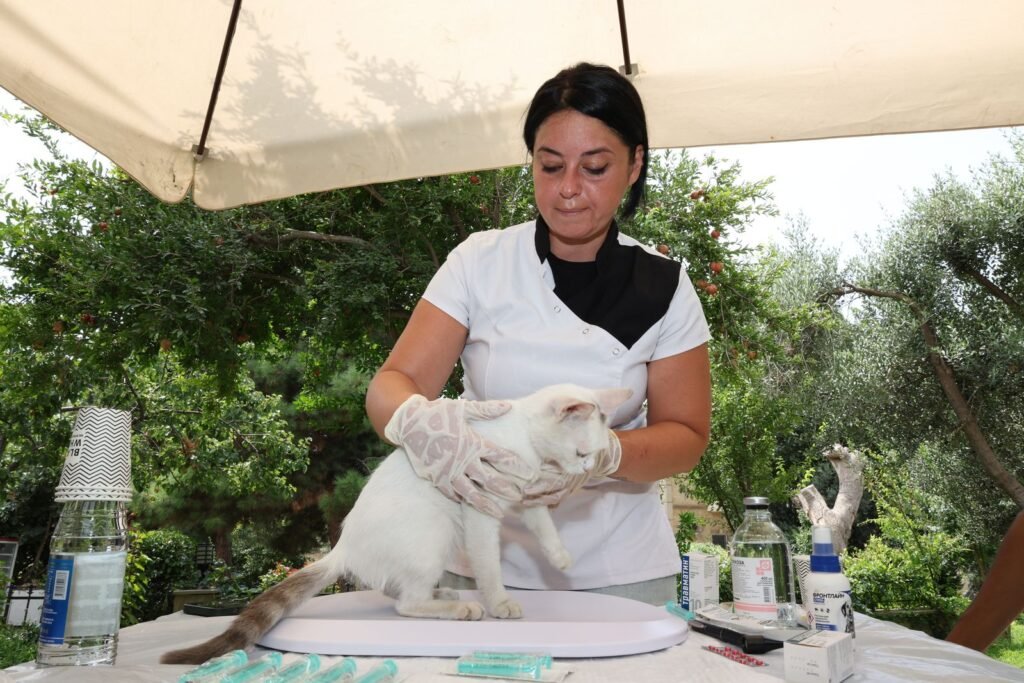
How a Cat Abscess Forms
A bite or scratch carries in bacteria
Cats have bacteria in their mouths and on their claws. These can be injected into another cat's skin during a bite or scratch.
Cats fight mainly over territory. Male cats that have not been neutered are particularly territorial, and they are more likely to roam and fight.
The wound seals over
Bite and scratch wounds are often deep but narrow, and they heal over very quickly. This traps bacteria inside.
The pus is the body's response. White blood cells and dead tissue build up in a pocket under the skin.
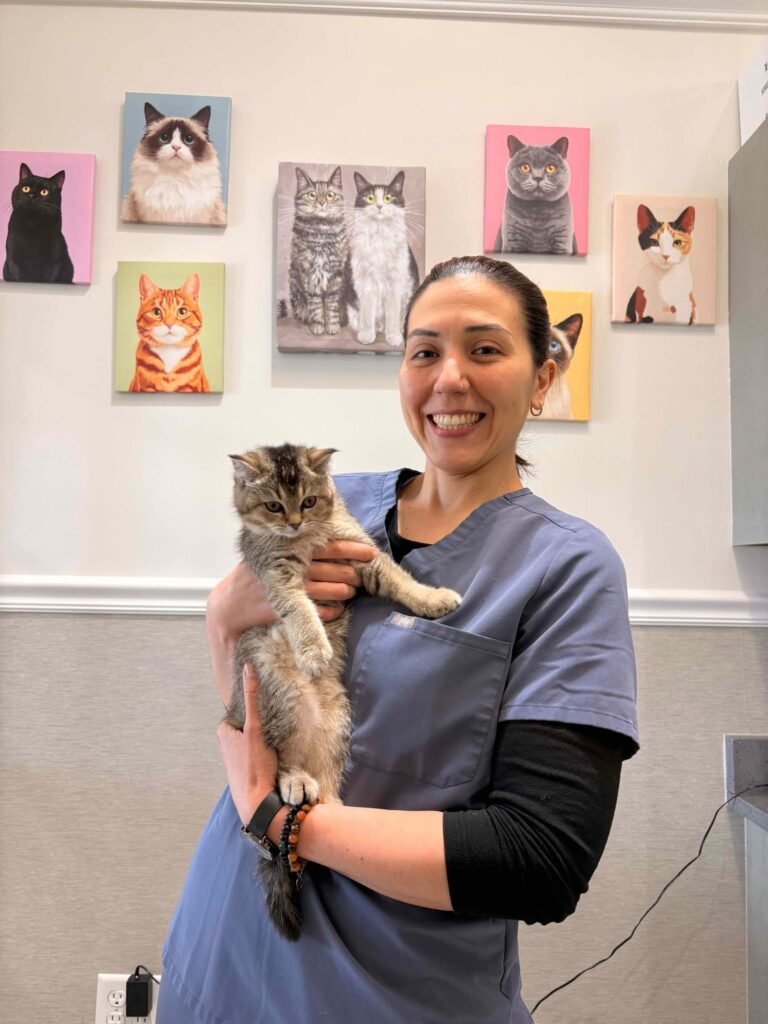
Why it hurts
Abscesses are usually very painful, because they are under high pressure. Your cat may be reluctant to be touched.
Where abscesses appear
Abscesses are most common on the tail, top of the head, legs, face and neck. Fights are the main cause, but other wounds that break the skin can also become infected, especially deep punctures.
A tooth root abscess is a separate dental infection. It usually causes swelling on one side of the face, just under the eye. Our guide to the signs of dental disease in cats covers it.
Signs of a Cat Abscess
An abscess can take two to four days to develop, so the first signs may not be a swelling. Before the swelling shows, you may notice:
- Limping, if a leg was bitten.
- Tiredness.
- A reduced appetite.
- A high temperature.
- An area that feels hot to the touch and painful.
Once the abscess has developed, signs can include swelling, redness, a wound, pain, and a floppy tail if the base of the tail was bitten. If an abscess bursts, you will see pus and may notice a bad smell. You may also see hair loss at the site.
Pain can show as being quiet or aggressive, repeatedly licking one area, growling, twitching or not letting you near. Our guide on how to tell if your cat is in pain has more.
Superficial cuts and scratches are easy to see, but bite wounds are often hard to detect. Sometimes there is no obvious wound at all, only limping, a lack of appetite or lethargy.
After a Cat Fight
If you know your cat has been in a fight, keep it indoors and give it time to calm down. Do not interact directly with it to start with.
If your cat hides, appears listless or withdrawn, is lame, or does not want to eat after a fight, contact your vet. It may have a bite abscess.
If a fight is still going on, the Royal Veterinary College advises against separating the animals physically, because you may be bitten. A loud noise or cold water can distract them instead.
Emergency: Contact a Vet Immediately If…
- A wound has continuous heavy bleeding, or the bleeding has not stopped after 10 minutes.
- Your cat has a large or deep wound.
- Your cat's tail is limp and it cannot move it, or the tail has a wound or is bleeding.
- Your cat has a puncture wound over the chest or abdomen, however small. Do not wash it.
For heavy bleeding, the Royal Veterinary College says to put firm pressure over an obvious wound with a clean towel while you get help. Call your vet or the nearest out-of-hours emergency vet straight away.
When to Contact Your Vet
- You suspect an abscess or an infected wound. Signs of infection include redness, swelling, heat, pus, bleeding easily and pain.
- Your cat hides, seems listless or withdrawn, is lame or is not eating after a fight.
- A swelling feels hot or painful, or your cat has a fever or seems low in energy.
- An abscess has burst, or there is a bad smell or ooze.
- An abscess is not healing as expected, or your cat seems unwell during recovery.
Contact your vet the same day if your cat is very painful, very lame, off its food, hiding or seems unwell. One vet source describes abscesses as typically not emergencies, but PDSA lists bite wounds among wounds that need urgent vet treatment, so do not wait.
What to Do If You Think Your Cat Has an Abscess
Step 1: Contact your vet
Always contact your vet for advice if your cat has signs of an abscess or seems unwell. PDSA says bite wounds should always be checked by a vet, because they are often more serious than they look.
An abscess over a joint can lead to septic arthritis, which is very painful and can be very difficult to treat. That is another reason not to wait.
Step 2: Handle your cat with care
A cat in pain may bite, even a very loving one. Keep your cat calm and indoors until you can get it to the vet.
Step 3: Your vet may need to open and drain it
If an abscess needs lancing, your vet does it. They use a sharp blade to open the skin over the abscess and then flush the area thoroughly. Local anaesthetic or sedation may be needed.
Step 4: Do not give human painkillers
Never give your cat human medicines without veterinary advice, because some, such as paracetamol, are highly toxic to cats. Give only pain relief that your vet has prescribed. Our guide on human painkillers and cats explains why.
What Your Vet May Do
Your vet will diagnose a cat abscess from the history of a fight, the signs, and an examination of your cat and its wounds. They may clip the fur to find the entry wound. If there is a swelling, they may take a sample with a needle to check for pus.
Treatment may include lancing the abscess, draining it and flushing it out until clean. If the abscess is large or deep, a drain tube may be stitched in for a few days. Pain relief and anti-inflammatories are usually given for a few days.
Whether your cat needs antibiotics is your vet's decision. If they prescribe a course, give the whole course.
Although it is rare, bites can pass on FIV and FeLV, so your vet may suggest testing. It can take a while for a test to turn positive after a bite.
Looking After Your Cat Afterwards
Follow your vet's aftercare instructions closely. They may ask you to clean the wound at home, and they will tell you how.
Stop your cat licking or scratching the wound. Your vet may advise a buster collar or a body suit. The idea that a cat's saliva is antiseptic is a myth, because saliva is full of bacteria that can cause infection.
Once an abscess has been drained, your cat should feel more comfortable straight away. Sources give healing times from a few days to one or two weeks, and larger abscesses and older or unwell cats may take longer. Your vet will tell you what to expect.
Contact your vet if the abscess does not seem to be healing. Occasionally, a large wound left after a burst abscess needs surgery to close.
If a Bite or Scratch Breaks Your Skin
A cat bite or scratch that breaks your own skin needs medical attention. A doctor will clean the wound and may give you a course of antibiotics.
Preventing Fights and Abscesses
PDSA says neutering is the best way to prevent fights and cat bite abscesses. International Cat Care adds that neutering lowers the chance of fighting, but a risk remains.
Unless a cat lives purely indoors and is the only cat in the home, preventing bite abscesses entirely is nearly impossible. Cats that fight are also more at risk of catching FIV, an incurable disease spread through bite wounds.
If your cat goes outside, check it regularly for bites and scratches.
How Pet Med Direct Can Help
An abscess needs to be seen by your vet first. Pet Med Direct does not replace that examination, and we cannot tell you which treatment your cat needs.
If your vet prescribes a medicine, you can find out how pet prescriptions work or browse our cat medication range.
Some pet medicines require a valid veterinary prescription. Pet Med Direct can only supply prescription medicines after the prescription has been checked. Always follow your vet's advice and the directions on the medicine label.
Frequently Asked Questions
How long does a cat abscess take to appear?
It usually takes two to four days. Before the swelling shows, your cat may be quiet, off its food or have a high temperature.
Can I treat an abscess at home?
A vet should check it first. Home care means following your vet's instructions after treatment, giving only prescribed pain relief and stopping your cat licking the wound.
Does my cat need antibiotics?
That is for your vet to decide after examining your cat. If antibiotics are prescribed, give the whole course.
Is an abscess an emergency?
One vet source describes abscesses as typically not emergencies, but PDSA lists bite wounds among wounds that need urgent vet treatment. Contact your vet the same day if your cat is very painful or unwell, and straight away for heavy bleeding, a large or deep wound, or a limp tail.
How long does an abscess take to heal?
Sources give a range, from a few days to one or two weeks, and larger abscesses take longer. Your vet will tell you what to expect for your cat.
Can a cat abscess be prevented?
Neutering is the best way to reduce fighting, but it does not remove the risk. Checking an outdoor cat regularly for bites and scratches helps you spot problems early.
Related Cat Health Guides
Sources and Further Reading
- PDSA — Cat bite abscesses
- International Cat Care — Cat bites and abscesses
- International Cat Care — Conflict between cats
- Vet Help Direct — Infected cat wounds – everything you need to know
- Vet Help Direct — How is a cat bite abscess treated?
- Animal Trust Vets — Abscesses in Cats
- Blue Cross — Emergencies in cats
- Cats Protection — Lumps and bumps on cats
- PDSA — Wounds and skin injuries
- Vets Now — Bleeding wounds in cats and dogs
- Blue Cross — Neutering your cat
- Royal Veterinary College — First Aid Guide for Your Pet
- PDSA — First aid for bite wounds
- PDSA — Dental Disease in Cats
This article was researched from the sources listed above. It is general information for cat owners and is not a substitute for advice from your own vet.

Need pet products or prescription medicines? Visit the Pet Med Direct shop.
Shop Pet Med Direct