✓ Registered Vet Practice
🚚 Fast UK-Wide Delivery, Including Northern Ireland
℞ Prescription & Non-Prescription Products
→ Need to upload a prescription?

Why Does My Cat Have Bad Breath?
Some cat bad breath is just food, but a new or worse smell can point to dental disease or illness elsewhere in the body.
Quick Answer
- Bad breath (halitosis) is not normal in cats, even older cats, and it usually points to a problem, so a vet check-up is advised.
- A mild meaty or fishy smell after eating can be normal, but breath that suddenly smells different or worse is a reason to speak to your vet.
- Dental disease is a very common cause, but kidney disease, diabetes, liver disease, airway infections, something stuck in the mouth and other problems can also be behind it.
- Certain smells give hints, such as an ammonia or bleach-like smell or a sickly sweet smell like pear drops, but only a vet can find the cause.
- Sweet breath, like pear drops or nail polish remover, in a cat that is very poorly, weak, vomiting or collapsed can be a sign of diabetic ketoacidosis, which is life threatening, so contact your vet immediately.
Cat bad breath is more than an unpleasant smell. It can be a clue that something is wrong in the mouth or elsewhere in the body.
At the same time, no cat has minty-fresh breath, so some odour is normal. A meat-based diet and teeth that are not cleaned both contribute. What matters is a change from your own cat's usual smell.
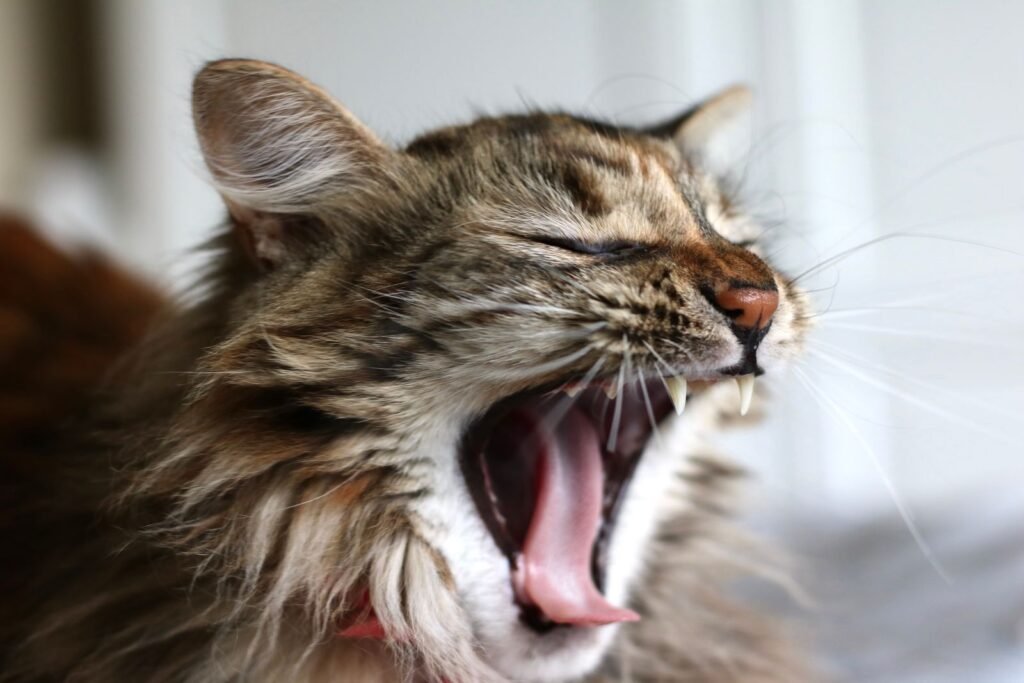
What Can Cause Cat Bad Breath?
Wet food leaves a meaty or fishy smell on the breath for a short while after eating. If that is normal for your cat, there is nothing to worry about. Breath that smells different or worse than usual is a different matter.
Cats can also have significant dental disease without any change in their breath, so a smell is only one possible clue.
Dental disease
Dental disease is a very common cause of bad breath in cats. Tartar build-up can cause it, and red, sore or bleeding gums can come with it.
Bad breath is one of several signs, along with drooling, pawing at the mouth, difficulty eating and loose teeth. Our guide to the signs of dental disease in cats explains each condition and what vet dental care involves.
Kidney disease
Kidney disease can make breath smell like ammonia, which is similar to bleach. Bad breath appears in the symptom lists for kidney disease from several UK charities, and mouth ulcers can be a sign too.
Other signs include drinking a lot, urinating more, weight loss, vomiting, a poor appetite and tiredness. Vets diagnose it with blood and urine tests. Our guide on how to know if your cat has kidney disease has more detail.
Diabetes and ketoacidosis
Diabetes can cause breath that smells sweet, similar to pear drops or nail polish remover. Cats Protection explains this as a complication called ketoacidosis, which releases chemicals called ketones.
Diabetic ketoacidosis is life threatening. Signs include reduced appetite, weakness and low energy, collapse and vomiting. An affected cat becomes very poorly and is likely to need admitting to a veterinary hospital.
Typical signs of diabetes itself are weight loss, drinking more, peeing more and an untidy coat. See how to know if your cat has diabetes for more.
Liver, gut and airway problems
Liver disease can cause foul, sweet, musty breath. A gut infection or blockage can also make breath smell bad, but you are likely to notice diarrhoea, vomiting or stomach pain first. Airway infections often cause bad breath too.
Something stuck, ulcers, wounds and growths
If something is stuck in the mouth or throat, such as a bone, it will start to smell after a while. You may notice your cat pawing at the mouth or face.
Mouth ulcers, wounds, burns and lumps in the mouth are all listed as causes of mouth pain, and cancers in the mouth can become infected and smelly. Mouth ulcers can have many causes, including kidney disease, and cat flu is also listed as a cause of mouth pain.
Checking a cat's mouth can be tricky, so do not force it. Your vet can examine the mouth fully and safely, which may not be easy to do at home.
Food, and kittens with new teeth
Certain smelly cat foods can cause bad breath. Cat bad breath after a meal can linger for a short while, but see your vet if the smell is different or worse than usual.
Kittens around five months old quite commonly get juvenile gingivitis as their adult teeth come through, and you may notice an obvious smell on the breath. This usually settles in four to six weeks, but check with your vet if you notice anything abnormal.
What to Check at Home
Try to sniff your cat's breath when they are healthy, so you know what is normal for them. Then speak to your vet about any change. Smell clues are only hints, so please do not try to diagnose the cause yourself.
- A sudden change in smell, or breath that is simply worse than normal.
- Drooling, pawing at the mouth or face, or not wanting the face touched.
- Eating less, preferring soft food, chewing on one side or dropping food.
- Weight loss, tiredness, vomiting, diarrhoea, or drinking and peeing more.
- Gums that look red or swollen rather than salmon pink, and teeth that look yellow or brown.
Cats hide pain well, so a cat can have severe dental disease and show few signs. Many cats keep eating through the pain, so a good appetite does not mean the mouth is fine.
Emergency: Contact a Vet Immediately If…
- Your cat has sweet breath, like pear drops or nail polish remover, and is very poorly, weak, vomiting, off their food or collapsed.
- Your cat has stopped eating, cannot close their mouth, or has a broken tooth.
- Your cat is pawing at their mouth or face, drooling or struggling to swallow, and something may be stuck.
Call your vet or the nearest out-of-hours emergency vet straight away.
When to Contact Your Vet
- Your cat's breath suddenly smells different or worse than normal.
- You notice any problem with your cat's mouth. Contact your vet as soon as you notice it.
- Bad breath comes with drinking more, peeing more, weight loss, vomiting or tiredness.
- You are worried about your cat's teeth, even if the breath seems fine. Cats should see a vet at least once a year.
Cat bad breath is worth a check-up even if your cat is still eating normally.
How Vets Find the Cause
Your vet will examine the mouth thoroughly. Some cats need sedation or anaesthesia for this. They may also probe the teeth, take dental X-rays and sometimes run blood tests.
Treatment depends on the cause. For dental disease it can include pain relief, antibiotics if there is infection, a scale and polish under general anaesthetic, and tooth removal if the disease is severe. If an underlying illness is behind it, that is treated alongside the mouth.
Cats adapt very well to having teeth removed, even all of them.
What Not to Do
Please do not expect a product alone to fix cat bad breath, because a change in smell can have a medical cause. Cats Protection points out that a cat's breath will never smell minty-fresh, so there is no fix or cure for bad breath as such. The focus should be healthy teeth and regular vet checks.
Never use human toothpaste on a cat, and never force the mouth open. Brushing with a cat toothpaste is the best way to keep teeth and gums healthy, but it should never become a battle, and you should stop and ask your vet if the gums look sore or bleed.
How Pet Med Direct Can Help
Pet Med Direct stocks a range of non-prescription cat dental care products. Ask your vet which, if any, suit your cat. Speak to your vet before changing your cat's diet, including to any veterinary diet from our cat food range.
If your vet prescribes a medicine after finding the cause, you can see how pet prescriptions work.
Some pet medicines require a valid veterinary prescription. Pet Med Direct can only supply prescription medicines after the prescription has been checked. Always follow your vet's advice and the directions on the medicine label.
Frequently Asked Questions
Is it normal for cats to have smelly breath?
A mild meaty or fishy smell can be normal, because no cat has minty-fresh breath. However, a sudden change, or breath that smells different or worse than usual, is not normal and is worth a vet check.
Does fishy breath mean dental disease?
Not necessarily. Dental disease is a very common cause of cat bad breath, but many other causes are listed, so your vet needs to check.
Can bad breath mean kidney disease or diabetes?
Yes. A smell like ammonia or bleach can point to kidney disease, and a sickly sweet smell like pear drops can point to diabetes or its complication, ketoacidosis. Smell alone cannot confirm either, so your vet will use an examination and tests.
My cat is still eating. Can I wait and see?
It is best not to. Many cats keep eating through dental pain, and cats can have significant dental disease without a change in their breath. A yearly vet check matters either way.
Can I use my own toothpaste to freshen my cat's breath?
No. Human toothpaste contains high levels of fluoride, is too frothy and can cause stomach irritation. If you want to start brushing, use a toothpaste made for cats and check with your vet first if there are any signs of dental disease.
Why does my kitten's breath smell?
Kittens around five months old commonly get a mild gingivitis, sometimes with a noticeable smell, as adult teeth emerge. This usually settles quickly and does not usually affect a healthy kitten's appetite or behaviour, but ask your vet if you are unsure.
Related Cat Health Guides
Sources and Further Reading
- PDSA — Bad breath in cats
- Cats Protection — Why does my cat have bad breath?
- International Cat Care — Dental Disease in Cats
- PDSA — Mouth pain in cats
- PDSA — Dental Disease in Cats
- Blue Cross — Kidney Disease in Cats
- International Cat Care — Chronic kidney disease (CKD) in cats
- Cats Protection — Kidney Disease in Cats
- PDSA — Diabetes in cats
- Cats Protection — Gingivitis in Cats
- International Cat Care — How to brush your cat's teeth
- Blue Cross — Cat dental care
- Cats Protection — Teeth and oral health (Veterinary Guide 14)
- PDSA — Vet Q&A: Am I doing enough for my cat's dental care?
This article was researched from the sources listed above. It is general information for cat owners and is not a substitute for advice from your own vet.

Need pet products or prescription medicines? Visit the Pet Med Direct shop.
Shop Pet Med Direct