✓ Registered Vet Practice
🚚 Fast UK-Wide Delivery, Including Northern Ireland
℞ Prescription & Non-Prescription Products
→ Need to upload a prescription?

Why Is My Cat Peeing Outside the Litter Tray?
A cat peeing outside the litter tray is not being spiteful, so start with a vet check.
Quick Answer
- A cat that starts peeing outside the litter tray may be unwell, in pain or stressed; it is not acting out of spite or revenge.
- Make a vet appointment for any sudden change in toileting, because medical causes such as urinary problems need to be ruled out first.
- If your cat is trying to pee and nothing comes out, or only small amounts, it is an emergency: call your vet or the nearest emergency vet straight away.
- Stress, household changes, tray problems and scent marking can also be behind it, and the tray checklist below covers the common fixes.
- Never punish your cat, and clean soiled areas thoroughly with an enzymatic cleaner made for pet urine.
Emergency: Contact a Vet Immediately If…
- Your cat is trying to pee but nothing comes out, or only small amounts, particularly if it is a male cat.
- Your cat is crying out, or seems to be in pain and distress, when it tries to pee.
- Your cat has not peed for more than 24 hours.
This could be a blocked bladder. Phone your vet, or the nearest emergency vet, now and do not wait to see if it improves. Our guide Why Is My Cat Straining to Urinate? explains more.
A cat peeing outside the litter tray is a common problem for owners. With the right information, it is usually relatively easy to solve. Cats are normally fastidious about their toilet habits, so a change often means something has gone wrong.
It is not revenge or a protest. This guide covers the main reasons, how to tell peeing from spraying, a litter-tray checklist, how to clean up, and why a vet check comes first.
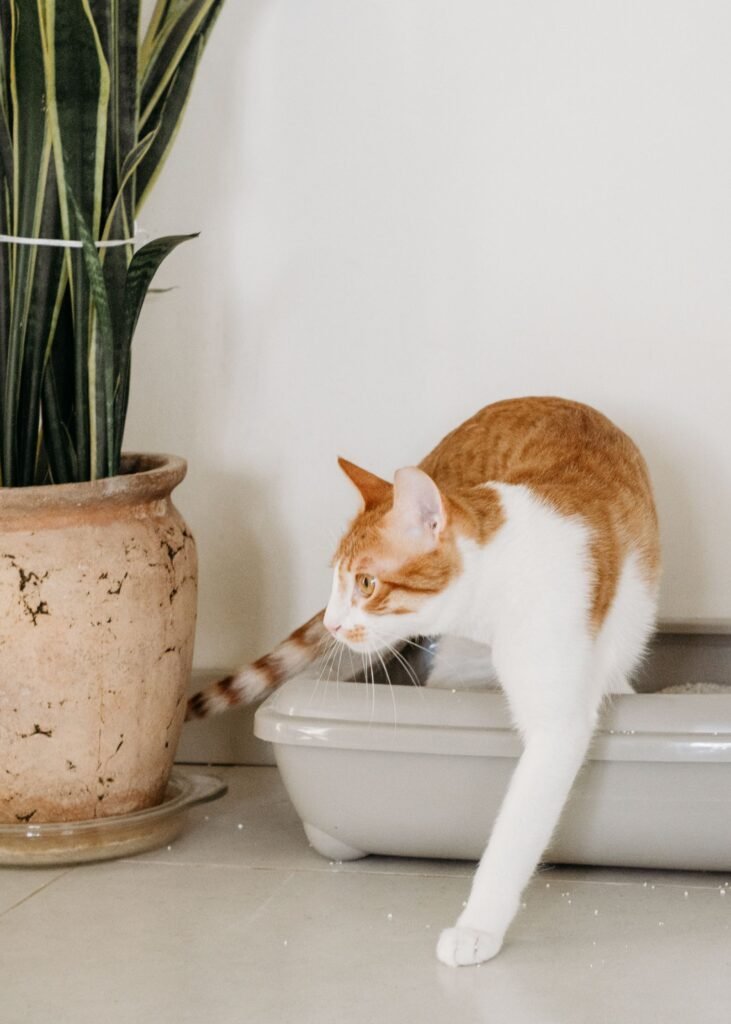
Reasons for a cat peeing outside the litter tray
Battersea describes four broad reasons: a medical condition, feline idiopathic cystitis, stress and territory marking. Tray problems often sit alongside these.
A urinary or bowel problem
Peeing in the wrong places, or peeing more often, is one of the first and most common signs of a urinary problem. A cat with urinary disease or diarrhoea may be uncomfortable, or unable to reach the tray in time. Cystitis can also make a cat need to pee more often and more urgently.
Pain can create a bad link with the tray. A cat that was in pain when using it, perhaps from a urinary problem, constipation or diarrhoea, may start to avoid it.
Illness that increases thirst
Kidney disease and diabetes can increase thirst, and therefore urination. If the tray is constantly wet, your cat may not want to use it. An overactive thyroid can also lead to house soiling.
See Why Is My Cat Drinking More Water Than Usual? for more on thirst.
Older cats
Older cats with osteoarthritis or cognitive decline may also toilet outside the tray. Painful joints can make a cat flap or bad weather harder to cope with.
If an older cat seems to have forgotten its toilet training, take it to the vet first. Always speak to your vet if an older cat starts toileting indoors, because it is often caused by a health condition. See How Do I Know If My Cat Has Arthritis?
Stress-related bladder inflammation
Feline idiopathic cystitis (FIC) is stress-related, and peeing outside the tray is one of its most common signs. Cats often choose the bath, the sink or cold, hard floors.
Blood in the urine is not always visible to the naked eye.
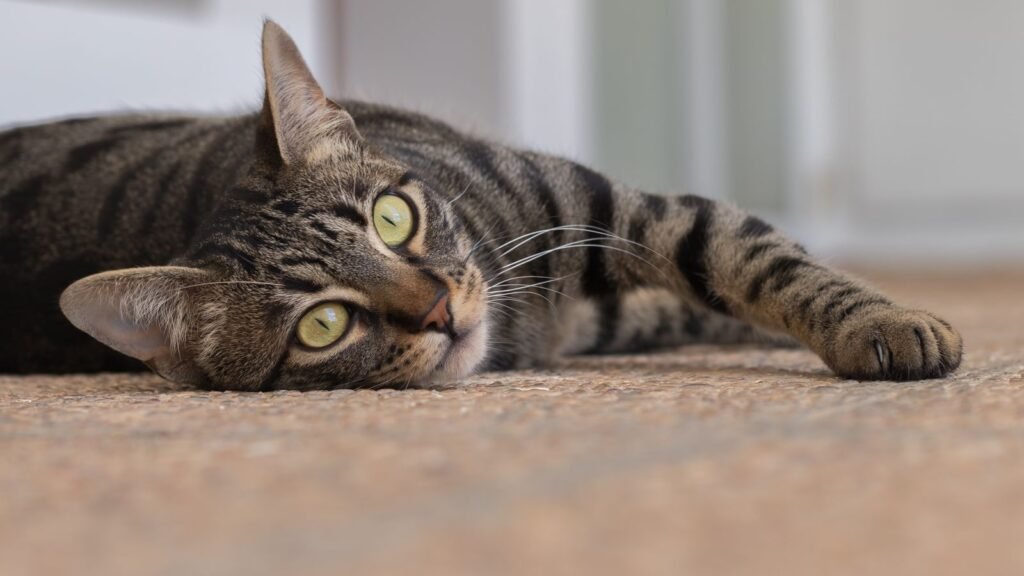
Stress and household changes
Stress can come from something as simple as a change of litter or an unclean tray. Conflict with another cat, unfamiliar cats outside and unpredictable activity at home can also cause it.
A cat that usually toilets outdoors may start going inside because something spooked it, such as a neighbouring cat, or because the weather is bad. Cats are at their most vulnerable when toileting outside, so feeling threatened can stop them.
Spraying and scent marking
Spraying is a way of leaving a chemical message, and it is different from emptying a full bladder. It is usually caused by feeling threatened or stressed, for example by a new cat, a new baby, building work or a change of routine. Both male and female cats spray.
How to tell peeing from spraying
To pee, a cat squats and passes urine on a horizontal surface. Carpets, sofas, duvets, baths and sinks are common spots.
To spray, a cat stands up, usually treads with its back feet and quivers its tail. It sprays a small amount of urine backwards onto a vertical surface, such as a wall, curtain or door.
If your cat toilets right next to the tray, it probably wants to use the tray but something is putting it off.
Litter tray checklist
- Clean: scoop out poo and pee at least twice a day, and wash the whole tray in hot, soapy water at least once a week.
- Number: provide one tray per cat plus an extra, so a single cat needs two. Trays in a row count as one tray to your cat.
- Position: choose quiet spots away from noisy appliances, doorways, corridors and cat flaps, and away from food, water and bed.
- Litter: many cats prefer fine, unscented, sand-like litter, about 3 cm deep. Change litter type gradually.
- Tray type: use a full-sized tray your cat can turn around in. Older cats need low sides. If you use a hooded tray, remove the flap.
- Avoid: litter liners, scented litter and strong-smelling disinfectants. Cats find them off-putting.
When you swap trays or litter, add the new one first and leave the old one in place, so your cat can choose. Giving medication or touching your cat while it uses the tray can create a bad association.
Even if your cat usually goes outdoors, provide an indoor tray, particularly in autumn and winter.
How to clean up so your cat does not return
If you have a cat peeing outside the tray, clean soiled areas thoroughly and promptly. Once your cat has soiled a spot, its sensitive nose will encourage it to use that place again. Keep your cat away from the area if you can.
- Use an enzymatic cleaner made for removing the stain and odour of pet urine.
- Avoid ammonia-based products, because they smell similar to urine.
- Avoid disinfectants that turn cloudy in water. They usually contain phenols, which are toxic to cats.
- Test any cleaning product on a small area first, as it may affect colour.
Some UK charities also describe blotting up the urine, washing with a warm solution of biological washing powder at about 10%, and rinsing. Test a small area first.
When to Contact Your Vet
- You have a cat peeing outside the tray all of a sudden. Book an appointment to rule out a medical cause, and note any other changes in behaviour.
- Your cat is peeing more often than normal, or there is blood in the tray.
- Your cat seems to have pain or difficulty when it pees, or cries out.
- Your cat shows a change in behaviour or aggression.
- An older cat starts toileting indoors, or your cat is also drinking more, eating less or seems unwell.
- The soiling is regular, even after you have changed the tray set-up.
Take a urine sample if you can. Your vet can give you a sample pot. If your vet finds no medical reason, they may recommend a qualified cat behaviourist.
What your vet may do
Your vet will take a thorough history and examine your cat. They may collect a urine sample, and they often start treatment based on the results. If your vet identifies the problem, treatment is likely to resolve the issue.
Keep a diary of what happens, where and when. It helps your vet or a behaviourist, and it lets you track progress. If the problem continues after you make changes, go back to your vet and ask about a qualified cat behaviourist.
Once the reason is found, the problem can often be put right. FIC can flare up again, but most cats with it live long, happy lives with the right care.
What not to do
- Do not punish your cat or tell it off. It makes the problem worse, and your cat cannot link the telling-off to the event.
- Do not hope it will resolve itself. Your cat may be in pain, discomfort or stress.
- Do not start with behaviour fixes if the change was sudden. See your vet first.
How Pet Med Direct Can Help
If your vet suggests urinary support for your cat, you can browse our non-prescription cat urinary support range. Please speak to your vet first, particularly while your cat is unwell.
If your vet prescribes a medicine, our page on how pet prescriptions work explains how we can help.
Some pet medicines require a valid veterinary prescription. Pet Med Direct can only supply prescription medicines after the prescription has been checked. Always follow your vet's advice and the directions on the medicine label.
Frequently Asked Questions
Is my cat peeing outside the litter tray out of spite?
No. Your cat is not seeking revenge or making a point. Something has gone wrong in its world, such as illness, pain, stress or a problem with the tray.
Why does my cat pee in the bath or sink?
It is often a sign of pain or a urinary problem. The bath, sink and cold, hard floors are typical spots. Check whether your cat has passed any urine at all, and contact your vet.
How many litter trays do I need?
Provide one tray per cat plus one extra. A single cat therefore needs two trays. Trays placed in a row count as one tray from your cat's point of view.
Should I tell my cat off?
No. Telling your cat off makes it feel more threatened, and it cannot link the telling-off to the mess. Punishment only makes the problem worse.
Why is my older cat suddenly toileting indoors?
It is often caused by a health condition, such as painful joints or cognitive decline, so always speak to your vet. Low-sided trays, a few extra trays around the home and a night light by the tray can help.
What should I do if my cat is trying to pee and nothing comes out?
This is an emergency, particularly in a male cat. Phone your vet or the nearest emergency vet straight away, and do not wait to see if it improves.
Related Cat Health Guides
Sources and Further Reading
- International Cat Care — Soiling indoors
- Cats Protection — Cats & Toileting
- Battersea — Why is my cat going to the toilet around the house?
- Blue Cross — Stop your cat spraying and soiling in the house
- Cats Protection — Urinary problems in cats
- PDSA — Urine problems in cats
- PDSA — Feline Idiopathic Cystitis (FIC)
- PDSA — What to do if your cat/dog can't pee
- Cats Protection — How often should cats poo and pee?
This article was researched from the sources listed above. It is general information for cat owners and is not a substitute for advice from your own vet.

Need pet products or prescription medicines? Visit the Pet Med Direct shop.
Shop Pet Med Direct