✓ Registered Vet Practice
🚚 Fast UK-Wide Delivery, Including Northern Ireland
℞ Prescription & Non-Prescription Products
→ Need to upload a prescription?

Why Is My Cat Straining to Urinate?
A cat straining to urinate and passing little or nothing is an emergency, so check the tray and call your vet now.
Quick Answer
- Treat a cat that is straining and passing little or no urine as an emergency, particularly a male cat, and phone your vet or the nearest emergency vet immediately.
- Do not wait to see if it improves and never try to treat a possible blocked bladder at home. Left untreated, a blocked bladder can cause kidney damage, a burst bladder and death.
- Straining in the tray can look like constipation, so check whether any urine has come out at all.
- Straining is most often caused by a painful cystitis, but a blocked bladder is the danger; it is far more common in male cats, although females can be affected.
- If your cat is passing urine and has none of the emergency signs but shows other urinary signs, contact your vet as soon as possible, because the problem is likely to get worse.
Emergency: Contact a Vet Immediately If…
- Your cat keeps going to the tray, or keeps straining, and passes only spots of urine or nothing at all.
- Your cat cries out when it tries to pee.
- Your cat also vomits, hides, seems weak or low in energy, has a swollen, tense or painful tummy, or collapses.
- Your cat has not peed in more than 24 hours.
Phone your vet, or the nearest emergency vet if your vet is closed, straight away. This is not a condition to be left until the morning, and you should never wait to see if it improves.
A cat straining to urinate is most often suffering from a painful bladder problem. However, it can also mean a blocked bladder, which is life-threatening. The first job is therefore to check whether any urine is coming out.
This guide explains how to check, what may be behind it and what your vet will do.
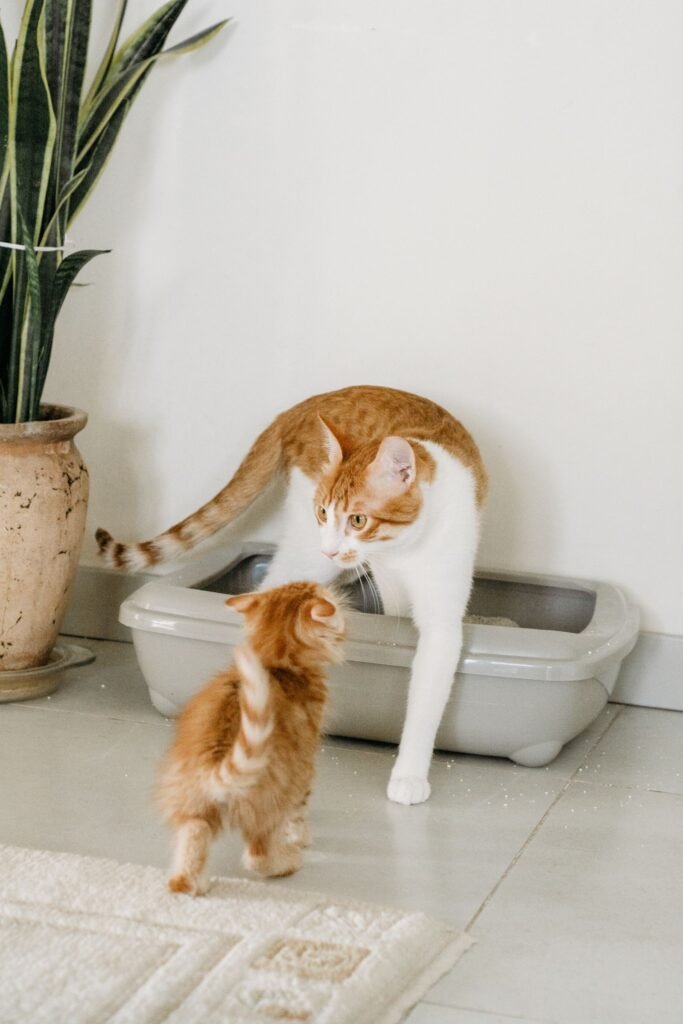
What to check if you see a cat straining to urinate
Do these checks while you phone your vet, not instead of phoning:
- Look in the litter tray to see whether your cat has passed anything at all.
- Check around the home, especially the bath, sink, cold or hard floors, behind furniture and on beds. Many cats pee in strange places when they are in pain.
- Make a note of any other symptoms, such as repeated straining, crying out, vomiting, a swollen or painful tummy, licking the genitals or collapse. Tell your vet.
A cat straining to urinate can look as if it is constipated, so it is not always easy to tell what is happening. If you are unsure whether anything is coming out, call your vet straight away. Our guide Why Is My Cat Constipated? covers the other possibility.
If your cat is passing urine and has none of the emergency signs above, it may have a urine infection, feline idiopathic cystitis or another bladder problem. Contact your vet anyway, and collect some urine if possible. However, a cat that is passing only very small amounts or spots of urine should be treated as an emergency.
Causes of a cat straining to urinate
Vets use the term FLUTD (feline lower urinary tract disease) for a group of conditions that affect the bladder or the urethra, the tube between the bladder and the outside. It is not a single diagnosis, and it has several causes.
Cystitis and feline idiopathic cystitis
In most cases, straining to urinate is caused by a straightforward but painful cystitis, which means irritation of the bladder. Feline idiopathic cystitis (FIC) is the most common cause of FLUTD. It means bladder inflammation with no identified cause, and it is usually triggered by stress.
Stress triggers include moving house, DIY, a new pet or person, a change of food and not enough resources for each cat. The most common cause of stress in cats with FIC is conflict with another cat in the home, which may be hard to spot.
FIC is painful and can come back. If the inflammation is severe, it can lead to a blocked urinary tract.
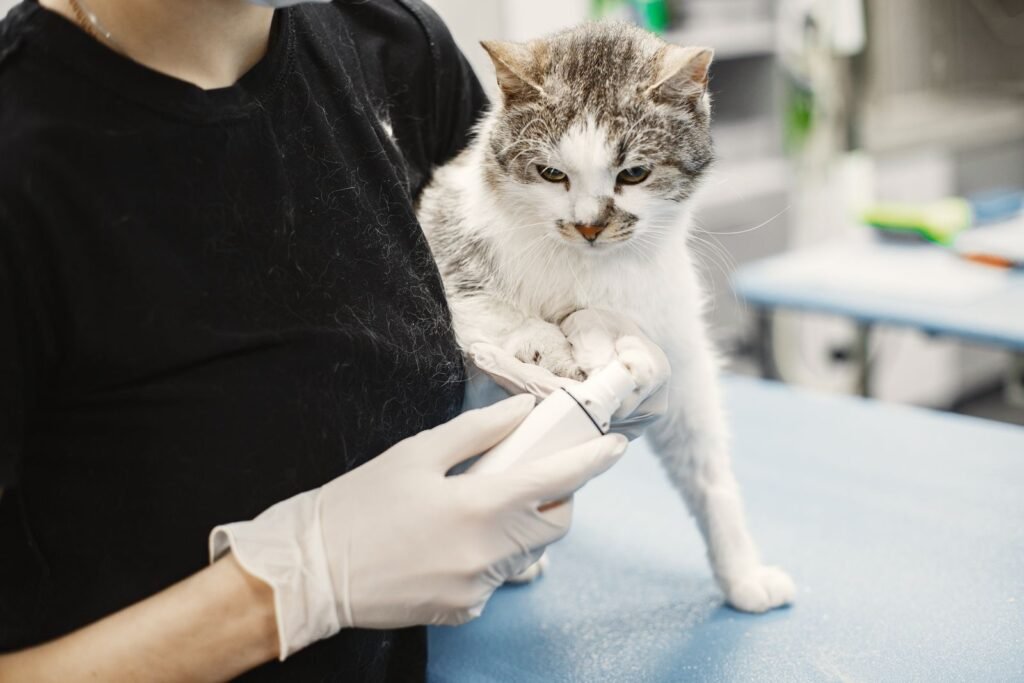
Crystals and bladder stones
Crystals in the urine and stones in the bladder are other possible causes of straining. Bladder stones can cause irritation and pain, and they may become lodged in the urethra and block it.
A urethral plug or swelling
In male cats, a build-up of proteins, cells, crystals and debris can form a plug that the cat cannot pass. Swelling and spasm of the urethra can also block it.
Bladder infection
Bacterial cystitis is relatively uncommon in cats. It tends to be diagnosed in older cats and in those with other conditions, such as kidney disease or diabetes.
Less common causes
These include a narrow urethra, abnormalities present from birth and nerve problems after an injury. Tumours of the bladder or urethra are uncommon and more likely in older cats.
Which cats are most at risk
A blocked bladder is far more common in male cats, because the male urethra is longer and narrower. Female cats can be affected too, although they are less likely to be.
PDSA says blocked bladders are most common in male, neutered, overweight and stressed cats, and in cats that eat a dry diet. FLUTD overall can affect cats of any age, breed and sex, but it is seen more often in middle-aged, overweight, neutered, indoor cats.
Vets Now advises that a female cat should be seen within 24 hours, or sooner if she is vomiting or lethargic. However, if she is straining and passing little or nothing, treat it as an emergency, as for any cat.
Signs to look for
A cat with a blocked bladder may show:
- Repeated attempts to pee with little or nothing coming out
- Crying out or discomfort when straining
- Peeing outside the litter tray
- Agitation, or licking around the back end
- Refusing food and seeming depressed, hiding, or low energy
- Vomiting
- A painful, tense tummy
In the days before a blockage, you may notice your cat peeing more often, straining, seeming uncomfortable and possibly passing blood. Blood in the urine is not always visible.
If your cat is shy or pees outdoors, the signs are harder to notice. If your cat is peeing in odd places, see Why Is My Cat Peeing Outside the Litter Tray?
When to Contact Your Vet
- As soon as possible, if your cat can pass urine but has other signs such as peeing more often or blood in the urine.
- Within 24 hours at the latest, or sooner if she is vomiting or lethargic, if your female cat is straining. Phone straight away if she is passing little or no urine.
- Straight away, if you think your cat may be blocked or you are unsure whether anything is coming out.
Never give your cat anything that has not been prescribed by your vet, even if it was prescribed before for similar symptoms.
What your vet may do
A blocked cat is usually diagnosed from the signs and an examination, particularly a very full, painful bladder. Your vet may also need blood and urine tests, X-rays or an ultrasound scan. For FIC there is no single test, so vets rule out other causes.
A blocked cat is admitted to hospital. Most need sedation or an anaesthetic so a thin tube called a urinary catheter can be passed to clear the blockage and empty the bladder. Some cats need an operation to remove stones.
Blocked cats usually need intensive care and several days in hospital, with a drip, pain relief and tests to find the cause. The outlook for many blocked cats is good if they receive treatment quickly.
A cat with simple cystitis is likely to be given pain relief and possibly antibiotics, and sent home. Cats with FIC do not have a bacterial infection, so they should not be given antibiotics.
Your vet may ask for a urine sample. It is collected using non-absorbable litter in the tray, a pipette or syringe, and a labelled pot.
Helping to stop it coming back
After a blockage, a cat may block again. Care for life can include a special food, encouraging drinking, reducing stress and weight loss if the cat is overweight.
- Wet food, rather than dry, is important in FIC, along with other ways to increase water intake.
- Offer free access to fresh water in several places, or use a fountain.
- Provide at least one litter tray per cat plus one extra, in different quiet places. Scoop twice a day and wash the whole tray at least weekly.
- Reduce stress where you can, and keep your cat at a healthy weight.
- Do not change your cat's diet during an episode. Wait until it is feeling better and eating well, and discuss changes with your vet first.
How Pet Med Direct Can Help
A cat straining to urinate needs a vet first. Once your vet has seen your cat, you can browse our non-prescription cat urinary support range. There is no scientific proof that bladder supplements help every cat with FIC, so speak to your vet before starting them.
If your vet recommends a particular diet, see our cat food range, including veterinary diets. If your vet prescribes a medicine, our page on how pet prescriptions work explains how we can help.
Some pet medicines require a valid veterinary prescription. Pet Med Direct can only supply prescription medicines after the prescription has been checked. Always follow your vet's advice and the directions on the medicine label.
Frequently Asked Questions
Why is my cat straining to urinate but passing nothing?
It may be a blocked bladder, which is an emergency. Phone your vet or the nearest emergency vet straight away, and do not wait to see if it improves.
How long can a cat go without peeing?
Do not wait to find out. A cat that is straining and passing nothing needs a vet now. Cats Protection also describes a cat that has not peed in more than 24 hours as a veterinary emergency, particularly a male cat.
Is straining to pee always a blockage?
No. The most common cause is cystitis. However, a male cat that is straining and producing nothing must be treated as blocked until a vet says otherwise.
Can a female cat get a blocked bladder?
It is far more common in male cats, but females can be affected. A straining female cat still needs prompt veterinary attention.
Is my cat constipated or unable to pee?
It can be hard to tell. PDSA describes the straining of a blocked bladder as looking as if the cat is constipated. Check the tray for urine, and if you are unsure, call your vet.
Can stress cause a cat to strain to urinate?
Yes. FIC is usually triggered by stress, and the most common stressor is conflict with another cat at home. Your vet still needs to check, because the signs overlap with a blockage.
Related Cat Health Guides
Sources and Further Reading
- International Cat Care — Urethral obstruction in cats
- PDSA — Blocked Bladder in cats
- PDSA — What to do if your cat/dog can't pee
- Vets Now — Blocked cats, cat cystitis, and the dangers of urinary tract infections (FLUTD)
- International Cat Care — Feline Lower Urinary Tract Disease
- International Cat Care — Feline idiopathic cystitis (FIC) in cats
- PDSA — Feline Idiopathic Cystitis (FIC)
- PDSA — Urine problems in cats
- Cats Protection — Urinary problems in cats
- PDSA — Bladder infection (UTI) in cats
- Cats Protection — How often should cats poo and pee?
This article was researched from the sources listed above. It is general information for cat owners and is not a substitute for advice from your own vet.

Need pet products or prescription medicines? Visit the Pet Med Direct shop.
Shop Pet Med Direct