✓ Registered Vet Practice
🚚 Fast UK-Wide Delivery, Including Northern Ireland
℞ Prescription & Non-Prescription Products
→ Need to upload a prescription?

Why Is My Cat Suddenly Hiding?
Cat hiding can be completely normal, but a sudden change is worth taking seriously. Here is how to tell the difference.
Quick Answer
- Hiding is part of normal cat behaviour, so a cat that sleeps, plays or watches from a hidden spot is not necessarily in trouble.
- If a cat hides more than usual, it could be stressed or anxious, or it could be unwell, so the sensible next step is a vet check to rule out illness.
- Cats often hide when they are sick or in pain, so sudden hiding should not be put down to stress without a vet check.
- Hiding together with straining in the litter tray and passing little or no urine, open-mouth breathing, collapse, or pale gums is an emergency, so call your vet or the nearest emergency vet straight away.
- Leave a frightened cat in its hiding place, do not coax it out, and keep food, water and a litter tray nearby.
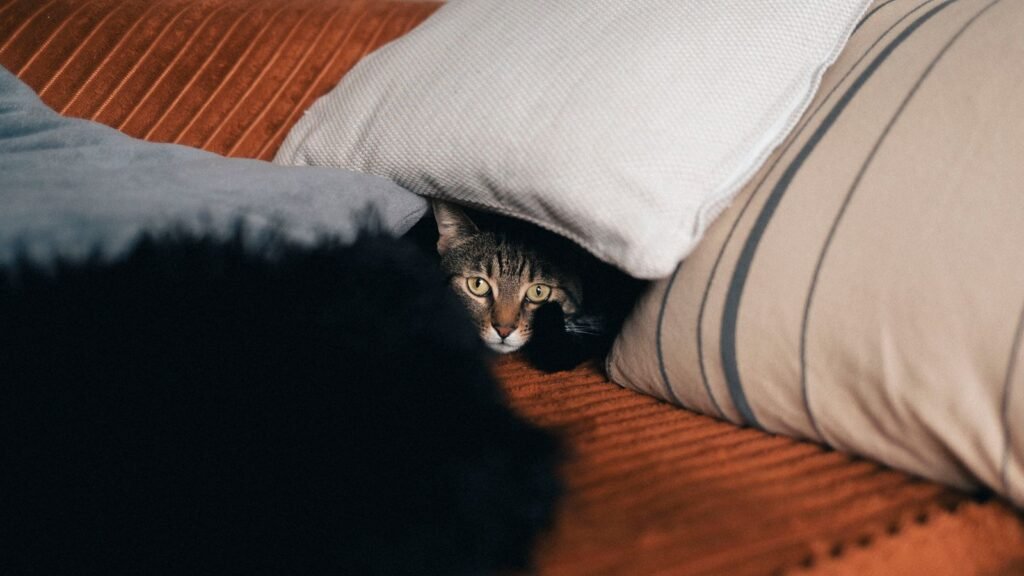
A cat hiding under the bed or behind the sofa is not always a worry, but a sudden change in how much your cat hides deserves attention. Cats hide to feel safe and to protect themselves from things they see as dangerous or stressful.
Cats do not always make it obvious why they have become withdrawn, but there is usually a reason, even a subtle one. This guide helps you separate normal hiding from stress and from illness. It also explains when to ring your vet.
Common Reasons for Cat Hiding
It is normal cat behaviour
Hiding is part of a cat's everyday behaviour. A cat may find a safe place to sleep, lie in wait to pounce on a toy, or simply feel safer out of sight. Cats also sleep for at least 12 hours a day and can feel vulnerable while asleep, so they often choose somewhere hidden and safe.
A new home or a new cat
A new cat in a new home may hide for a few hours, and some hide for longer. Usually a new cat hides for a few days at most, but every cat is different. If a cat keeps hiding for prolonged periods, something may not be right in its environment, so it is worth speaking to your vet.
Fear or something that worries your cat
A cat will hide when something or someone nearby concerns it. If you leave it alone, it will usually come out once the threat has gone. Common worries include other cats, fireworks and building works.
Sometimes a frightening event happens that you did not notice, such as a neighbour's cat, drilling or being shouted at. A cat can also learn to avoid a person or room because it now links it with something unpleasant, such as unwanted tummy touching or a loud washing machine.
Stress from changes at home
A new baby, a new cat or pet, a house move or redecorating can all unsettle a cat. So can smaller changes, such as moved furniture, moved food bowls or litter trays, changed bedding, or losing access to a favourite hiding place.
If a cat hides for long periods, it may be upset about something more permanent in its surroundings. This is often other cats in the home or a person who is over-enthusiastic with them. Long-term stress can be subtle, and it may look like hiding, resting more, pretending to sleep, or changes in eating, grooming, toileting or play.
Illness or pain
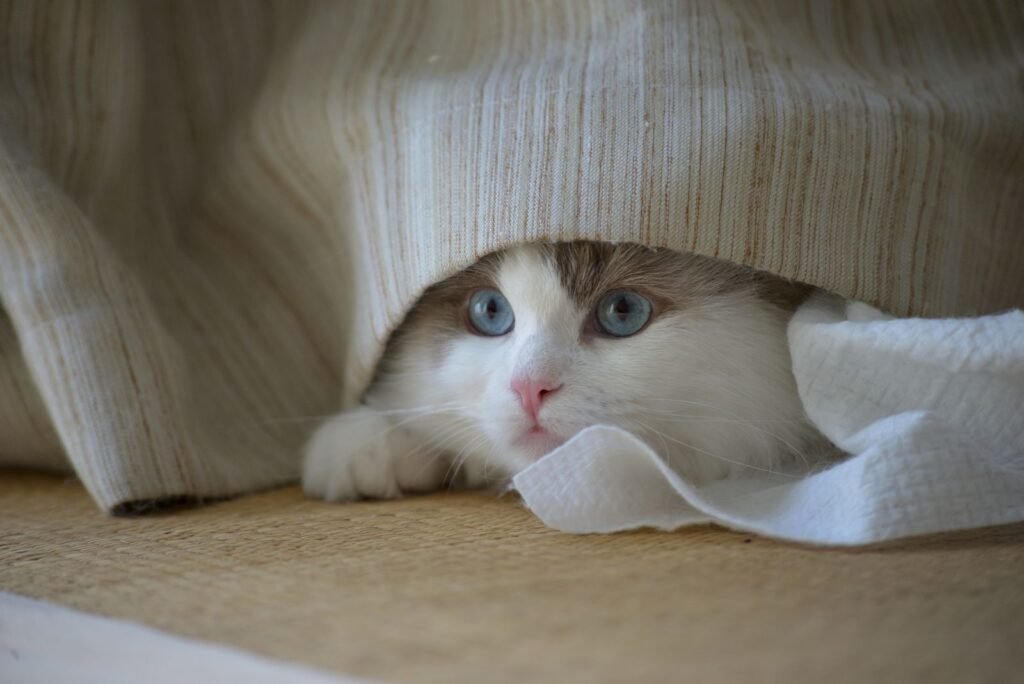
This is the key safety message. Cats are very good at masking illness. International Cat Care says they often become quiet and stoic and, where possible, hide away until they feel better. This behaviour is retained from their ancestor, the African wildcat, where hiding made them less vulnerable to predators.
Hiding or being more withdrawn than usual is listed as a sign of pain. Cats are also particularly good at hiding pain, so they are more likely to show slight changes in behaviour than a limp. Cats with long-term problems such as dental disease or arthritis can hide their discomfort for long periods. For a full list of pain signs, see How Can I Tell If My Cat Is in Pain?
Illness and stress can also feed each other. Stress can make medical problems worse and can cause problems such as stress cystitis, which is painful and potentially dangerous. This is one more reason why a vet check comes first.
What to Check When You See Your Cat Hiding More
You do not need to work out the cause yourself. These checks give your vet useful information.
- Is this a change from your cat's usual pattern, and has it gone on for a long time?
- Is your cat eating, drinking and using the litter tray as normal?
- Is your cat making frequent trips to the litter tray but passing little or no urine?
- Has anything changed at home, such as a new pet, a loud noise, redecorating or visitors?
- Are there other changes in behaviour or signs of pain? Our guide to pain in cats lists them in detail.
- Is your cat also tired, off its food, sneezing or being sick? Each has its own guide: lethargy, not eating, sneezing and vomiting.
Emergency: Contact a Vet Immediately If…
- Your hiding cat is straining in the litter tray, making frequent trips that produce little or no urine, crying out, licking its back end or vomiting. This could be a blocked bladder, which is an emergency. Never wait to see if it improves. See Why Is My Cat Straining to Urinate?
- Your cat is breathing with its mouth open, panting, struggling to breathe, or has pale gums.
- Your cat has collapsed, is weak or struggling to get up, or has repeated vomiting (especially if young or elderly).
- Your cat has a suddenly swollen or bloated belly, seems to be in severe pain, or may have eaten something poisonous.
- Your cat has had an injury, heavy bleeding, or a painful or closed eye.
Call your vet or the nearest emergency vet straight away. If in doubt, it is better to call for advice.
When to Contact Your Vet
- Your cat is hiding more than usual, or the hiding is new or prolonged.
- You are worried about your cat's eating, drinking or toileting.
- Your cat has stopped eating for more than 24 hours, or has been lethargic for more than 24 hours. Book an urgent appointment if it seems severely lethargic.
- Your cat has been vomiting for more than 24 hours, has blood in its vomit, cannot keep water down, or has pale or cold gums.
- There has been a sudden change in behaviour, or you can see any of the signs of pain.
Hiding is normal behaviour, so it does not always mean something serious. However, a sudden change should be checked, and your vet can rule out illness.
What You Can Safely Do at Home
While you arrange a check, a few simple steps can help a cat hiding away feel safe.
- Leave your cat in its hiding place until it feels safe. Trying to coax it out might make it more anxious and hide for longer.
- Do not disturb a cat that is using a hiding place unless it is essential, and avoid disrupting or cleaning those areas too often.
- Offer a choice of hiding places. They should be quiet, ideally up high, covered over (such as an igloo bed) and away from food, water and litter trays.
- In a home with more than one cat, give each cat its own safe hiding place away from the others, with enough spots that an assertive cat cannot take them all.
- For an older cat with stiff joints, provide warm, soft, ground-level places and gradual steps up.
- Keep food, water and a litter tray nearby, but not directly in or beside the hiding place.
- Keep a poorly cat indoors with a litter tray. If it is free to roam, it may not come back.
What Not to Do
- Do not try to coax your cat out of hiding.
- Do not shout at or punish your cat. It may start to see you as unpredictable and avoid you.
- Do not give human medicines, including painkillers. They are highly toxic to cats.
If your vet finds no medical reason, the next step may be a qualified cat behaviourist. Choose one who belongs to a regulated body, such as the Animal Behaviour and Training Council.
How Pet Med Direct Can Help
Pet Med Direct is an online pet pharmacy. If your vet finds a cause for your cat's behaviour and prescribes medicine, you can find out how pet prescriptions work and browse our cat medication range.
We also list a range of non-prescription products in our cat calming and stress category. They are not a substitute for finding out why your cat is hiding, so speak to your vet first.
Some pet medicines require a valid veterinary prescription. Pet Med Direct can only supply prescription medicines after the prescription has been checked. Always follow your vet's advice and the directions on the medicine label.
Frequently Asked Questions
Is it normal for my cat to hide?
Yes, sometimes. Cat hiding is part of normal behaviour, whether for sleeping, playing or feeling safe. However, a change from your cat's usual pattern, or hiding that goes on, needs thought and often a vet check.
How long will a new cat hide for?
Usually a new cat hides for a few days at most, but each cat is different. If it keeps hiding for prolonged periods, something may not be right, so speak to your vet.
Why is my cat hiding and not eating?
Poorly cats often do not want to eat, and eating less is also listed as a sign of stress. If your cat has not eaten for more than 24 hours, contact your vet. Our guide to why a cat is not eating has more detail.
Should I pull my cat out of its hiding place?
No. Trying to coax a frightened cat out might make it more anxious and hide for longer. Leave it alone unless it is essential to disturb it, and keep food, water and a litter tray close by.
Why do cats hide in boxes?
Boxes feel safe, private and warm, and they are fun to explore. They are fine as long as your cat can get out easily.
Could my cat be hiding because it is in pain?
It could. Hiding more than usual is listed as a sign of pain, and cats can hide pain very well. If you have any concerns about pain, take your cat to your vet for an assessment as soon as possible.
Related Cat Health Guides
Sources and Further Reading
- Battersea — Why is my cat hiding?
- Cats Protection — Cats Hiding
- Cats Protection — Why has my cat suddenly become shy?
- Cats Protection — Spotting Signs of Cat Stress
- PDSA — Preventing stress in cats
- International Cat Care — Stress in cats
- International Cat Care — Keeping your cat healthy
- Cats Protection — Signs Of Pain
- Battersea — How do I tell if my cat is in pain?
- Blue Cross — Caring for your sick cat
- Blue Cross — Emergencies in Cats
- PDSA — Blocked bladder in cats
- PDSA — Low energy (lethargy) in cats
- PDSA — Breathing problems in cats
This article was researched from the sources listed above. It is general information for cat owners and is not a substitute for advice from your own vet.

Need pet products or prescription medicines? Visit the Pet Med Direct shop.
Shop Pet Med Direct