✓ Registered Vet Practice
🚚 Fast UK-Wide Delivery, Including Northern Ireland
℞ Prescription & Non-Prescription Products
→ Need to upload a prescription?

Why Is My Cat Meowing More Than Usual?
A cat meowing more than usual may want attention, but a new change can also point to a health problem worth checking.
Quick Answer
- New or increased meowing can be a sign of a medical or behavioural problem, so a vet health check is the sensible first step.
- The most common reason cats cry is to get their owner's attention, but a new change should still be checked, even if your cat seems healthy.
- In older cats, more yowling can be linked to pain, confusion, an overactive thyroid, hearing loss or high blood pressure, so it should not be put down to age.
- Crying out while straining in the litter tray, especially with little or no urine, is an emergency, so contact your vet immediately.
- Write down when the meowing happens and any other changes, then take the notes to your vet.
A cat meowing more than usual can be puzzling, especially if the change seems to come from nowhere. Cats do not usually talk to each other with sounds. They use body language and scent, but they learn that meowing at people gets a response.
Some cats are simply chatty. However, excessive or increased vocalisation can also point to a medical or behavioural problem, so it is worth looking at the pattern. This guide covers the main reasons and explains when to see a vet.
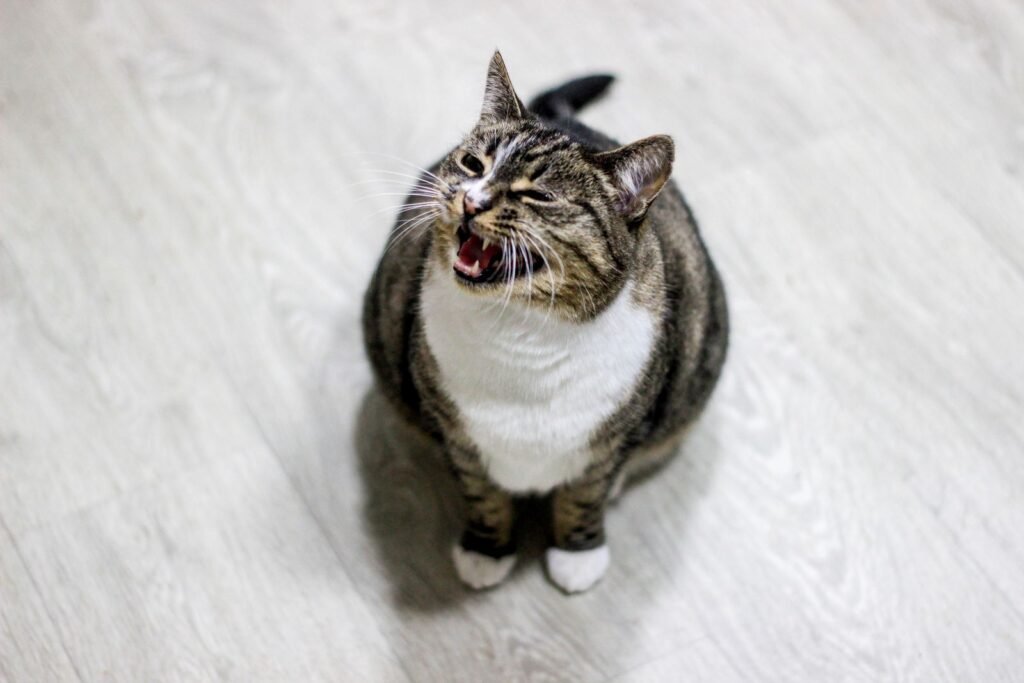
Medical Reasons for a Cat Meowing More
Start with the medical possibilities. Cats Protection's behaviourist advises a vet visit to rule out a medical problem even if a cat seems healthy. If nothing is wrong, your cat may simply be a chatty cat.
Pain or illness
If a cat starts crying more than usual, it could be ill or in pain. Vocalising, especially when moving or using the litter tray, is listed as a sign of pain. Frequent unpleasant or urgent-sounding meowing, groaning, hissing and growling are also listed.
Cats with long-term pain, such as dental disease or arthritis, can show little until the pain is high. See How Can I Tell If My Cat Is in Pain? for more.
An overactive thyroid
An overactive thyroid (hyperthyroidism) mainly affects cats over the age of 10, though it can occasionally affect younger cats. Signs include being more vocal, hyperactive and restless, along with weight loss despite eating more, increased thirst, peeing more often, vomiting and diarrhoea.
Cats Protection says affected cats may cry more because they cannot settle, feel more anxious and sensitive, and are hungrier, which may make them yowl for food. Symptoms appear slowly. Early diagnosis can make a big difference, and the condition is usually very treatable. Read more in What Are the Signs of an Overactive Thyroid in Cats?
Confusion in older cats (cognitive dysfunction)
Cognitive dysfunction syndrome is a decline in learning, memory and awareness in senior cats because of changes in the brain. It is often compared with dementia. Signs include disorientation, pacing or crying in the night, toileting in the house, and excessive vocalisation, which can be loud and disruptive at night.
The same behaviour changes can come from other diseases, including an overactive thyroid, chronic kidney disease, brain tumours, arthritis pain and high blood pressure. So your vet can only diagnose it once other conditions are ruled out. It cannot be cured, but the signs can be reduced with suitable management.
High blood pressure
High blood pressure is often a complication of another illness, such as chronic kidney disease or an overactive thyroid. Most cats show no signs until it is advanced, when it can cause sudden blindness. Other signs can include disorientation, bumping into objects and seizures.
Cats Protection's behaviour guide lists high blood pressure among the medical problems that can cause excessive vocalisation. Its older-cat guide also lists "yowling or seeming confused" as a possible sign of pain, cognitive dysfunction, anxiety, disorientation or high blood pressure. Regular blood pressure checks are recommended for cats over 7 years. See What Are the Signs of High Blood Pressure in Cats?
Hearing loss
Deafness often goes unnoticed. Cats Protection's older-cat guide lists no response when called or to loud sounds, being easily startled, loud miaowing and signs of dizziness or disorientation.
Behaviour Reasons for a Cat Meowing More
Attention, hunger and boredom
The most common reason cats cry is to get their owner's attention. They may want food, a door opened or a fuss. If you give a crying cat what it wants every time, it learns that crying gets results.
If your cat is still crying after its daily food allowance, try distracting it with play, and mention it to your vet in case it points to a medical condition. A consistent feeding routine means your cat does not need to remind you. Cats are also naturally most active at dawn and dusk, and 5am wake-ups can become a learned habit if you feed the cat.
Stress, anxiety and separation
Some cats cry when they feel stressed, anxious or frustrated. PDSA lists meowing or yowling more than normal among the signs of stress, but many of these signs can also be caused by medical problems. So contact your vet first when there is a sudden behaviour change.
Separation-related frustration can show as restlessness, excessive meowing, hiding and toileting outside the tray. It may be more common if your cat is never left alone for long or your routine suddenly changes.
Cats that are not neutered
Yowling is a common reproductive behaviour in both unneutered male and female cats. Puberty starts at around four months, and males may meow loudly, especially at night, to call a female. Females come into season repeatedly from early in the year through the autumn, and may call loudly, become restless and seek more affection.
Neutering prevents this calling, and spaying stops a female's seasons. Ask your vet about timing. Until a female is spayed, keep her apart from entire males at all times, because related cats will mate.
What to Write Down Before You See the Vet
A short diary can help your vet more than you might expect. Cats Protection advises keeping a note of any other changes in behaviour.
- When the meowing happens, such as time of day, before meals, at night or when you are out.
- Any change in eating, drinking, weight, toileting or sleep.
- Whether your cat is also restless, hiding, hunched or reluctant to jump.
- Any sign of confusion, such as seeming lost in familiar rooms, or of going blind or deaf.
- Anything new at home, such as a house move, building work, new pets or changes to your routine.
Emergency: Contact a Vet Immediately If…
- Your cat is crying out while straining in the litter tray, especially if little or no urine comes out. This could be a blocked bladder. A blocked male cat is not a condition to be left until the morning. See Why Is My Cat Straining to Urinate?
- Your cat is crying out with drooling, twitching, collapse or unusual movements of the head, neck or limbs. This may be a seizure. See What Should I Do If My Cat Has a Seizure?
Call your vet or the nearest emergency vet straight away. Never wait to see if it improves.
When to Contact Your Vet
- You have a cat meowing more than usual, or the meowing is new or out of character, even if your cat seems healthy.
- Your cat is older, especially over about 10, or you see weight loss, increased thirst or appetite, or restlessness.
- You notice disorientation, signs of going blind or deaf, or toileting changes.
- Your cat cries when moving or using the litter tray, or shows other signs of pain.
- Your cat keeps crying after its daily food allowance.
Do not assume it is just old age. Some of these conditions can be treated, and your vet may check blood, urine and blood pressure to look for an underlying cause.
What You Can Safely Do at Home
- Book a vet check first, especially for an older cat. If medical causes are ruled out, a qualified behaviourist registered with the Animal Behaviour and Training Council can help.
- Set aside time each day for attention and play, and make sure your cat has the resources it needs: a litter tray, scratch post, and food and water bowls.
- For a senior cat with cognitive dysfunction, International Cat Care suggests a night light, a consistent routine, easy access to food, water and litter trays, and timed feeders for early-morning food requests.
Do not punish or shout at your cat for vocalising, because punishment can leave a cat more anxious. Also, do not ignore a cry that could be pain or a blocked bladder, even if you suspect attention-seeking. Night-time crying can be a sign of pain or confusion too, so mention it to your vet.
How Pet Med Direct Can Help
Pet Med Direct is an online pet pharmacy. If your vet finds a cause for your cat's meowing and prescribes treatment, you can learn how pet prescriptions work and browse our cat medication range.
If your cat needs long-term medicine, our repeat pet prescriptions page explains the process. Prescription-only thyroid medicines are supplied solely against a valid prescription from your own cat's vet, and this is not a suggestion that your cat needs them.
Some pet medicines require a valid veterinary prescription. Pet Med Direct can only supply prescription medicines after the prescription has been checked. Always follow your vet's advice and the directions on the medicine label.
Frequently Asked Questions
Why does my neutered cat meow so much?
It could be a medical problem, learned attention-seeking, or simply a chatty cat. Some cats, particularly oriental breeds, are very vocal, but a vet check is still the sensible first step.
Why does my older cat yowl at night?
In an older cat, night crying can be a sign of cognitive dysfunction or pain. Cats Protection's behaviour guide also lists an overactive thyroid and high blood pressure among the medical causes of excessive vocalisation. Do not assume it is just age. Your vet may run blood and urine tests and check blood pressure.
Could my cat meowing more be a sign of pain?
Yes. Vocalising is listed as a sign of pain, especially when a cat moves or uses the litter tray, and so are growling and hissing. Some cats also purr when in pain, so context and body language matter. Ask your vet to check.
Should I ignore my cat when it meows for attention?
Rewarding every cry with food or attention teaches your cat that crying works. But you should not ignore a cry that could be pain or a blocked bladder. If you are unsure, speak to your vet.
Do cats cry tears?
No. Cats cry by making noise, such as a loud meow or yowl, or sometimes a faint whine or whimper. Watery eyes usually signal a health issue, so see Why Are My Cat's Eyes Watery or Runny?
Related Cat Health Guides
Sources and Further Reading
- Cats Protection — Why do cats cry?
- Cats Protection — The Behaviour Guide (2025 edition)
- Cats Protection — Why does my cat miaow at me? (behaviour FAQs)
- Cats Protection — Hyperthyroidism in Cats Explained
- PDSA — Hyperthyroidism in cats
- International Cat Care — Cognitive dysfunction syndrome in cats
- Cats Protection — Elderly Cats: Care Guide for Older Cats
- Cats Protection — Elderly cats, Essential Guide 16
- International Cat Care — Hypertension in cats
- Cats Protection — Signs Of Pain
- Battersea — How do I tell if my cat is in pain?
- Cats Protection — Does my cat have separation anxiety?
- Cats Protection — What happens to cats during puberty?
- PDSA — Cat neutering: a guide to castration and spaying
- International Cat Care — Seizures in cats
- PDSA — Blocked bladder in cats
- Vets Now — Blocked cats, cat cystitis, and the dangers of urinary tract infections (FLUTD)
- PDSA — Preventing stress in cats
This article was researched from the sources listed above. It is general information for cat owners and is not a substitute for advice from your own vet.

Need pet products or prescription medicines? Visit the Pet Med Direct shop.
Shop Pet Med Direct