✓ Registered Vet Practice
🚚 Fast UK-Wide Delivery, Including Northern Ireland
℞ Prescription & Non-Prescription Products
→ Need to upload a prescription?

What Are the Signs of an Overactive Thyroid in Cats?
Weight loss despite a good appetite is the classic sign of an overactive thyroid in cats, but the signs can be easy to miss.
Quick Answer
- The classic sign of an overactive thyroid in cats is weight loss despite a good or increased appetite, often with more thirst, restlessness, a fast heartbeat and an unkempt coat.
- It is usually seen in middle-aged and older cats, and rarely in cats under seven.
- Some cats do not fit the pattern and are weak, tired and eat less instead.
- A vet confirms it with an examination and a blood test, and most cats can be treated very successfully.
- Left untreated, it can affect the heart, blood pressure and kidneys, so contact your vet as soon as you notice signs.
Spotting an overactive thyroid in cats is not always easy. The signs usually start subtly and appear slowly, so you may not notice a problem at first.
Cats have two thyroid glands in the neck that control metabolism. In this condition, one or both glands enlarge and make too much thyroid hormone. The body then speeds up, and the cat burns energy too fast. The condition itself is not painful, but the signs, such as hunger, thirst and restlessness, can cause a cat a lot of distress.
Common signs of an overactive thyroid in cats
Not every cat shows every sign. These are the ones that UK vets and cat charities list most often.
The classic signs
International Cat Care lists these classic signs:
- Weight loss
- A good or increased appetite
- Increased thirst
- Increased activity, restlessness or irritability
- A faster heart rate
- A poor, unkempt coat
Some cats also have mild to moderate vomiting or diarrhoea. PDSA adds noisy, demanding behaviour and peeing more. It also lists hair loss, one or two small lumps in the neck under the skin, and a very fast heartbeat that you may feel when your cat sits on you.
Behaviour changes
Cats Protection explains that restlessness, anxiety and a big appetite can make an affected cat yowl for food. Blue Cross also lists peeing in different places around the house, outside the litter tray.
Some affected cats dislike heat and seek out cooler places. A few pant when stressed, which is very unusual in healthy cats. Panting or open-mouth breathing needs a vet straight away (see the emergency box below).
Cats that do not fit the pattern
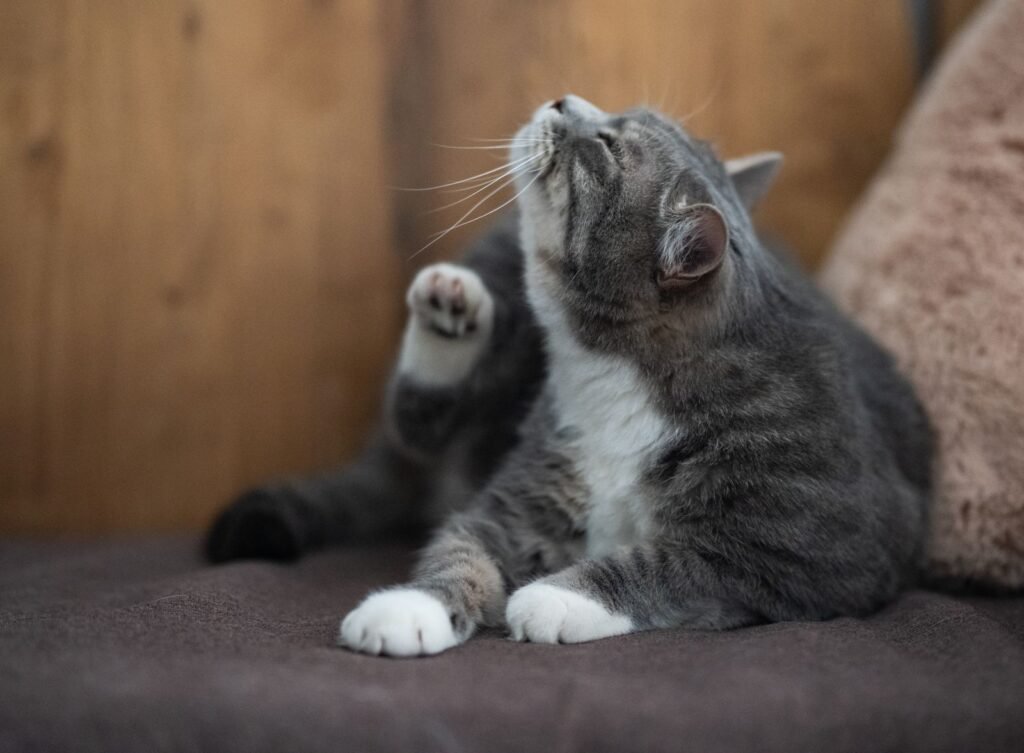
Most affected cats have a good appetite and seem restless. However, some are weak and tired and eat less instead. Other diseases in older cats can also hide the signs.
International Cat Care says the enlarged glands are not usually visible. A vet can usually feel them by gently feeling the neck, although some cats show no obvious enlargement.
Conditions that can look similar
Cats Protection lists kidney disease, diabetes, irritable bowel syndrome and cognitive decline as conditions that can seem very similar. They can also bring weight loss, more thirst and appetite changes. Because of that, a vet is needed to find the cause.
For more detail, see How Do I Know If My Cat Has Diabetes? and How Do I Know If My Cat Has Kidney Disease? Kidney disease and an overactive thyroid often occur together, because both are common in older cats.
Which cats get it?
The condition is usually seen in middle-aged and older cats, and rarely in cats under seven. Cats Protection says it mainly affects cats over ten. Male and female cats are affected equally.
In most cats the cause is a non-cancerous change in the gland, and cancerous growths are rare. The underlying reason for the change is currently unknown.
There is no scientific evidence that cat litter causes it. There is also no guaranteed way to prevent it, so the best step is to see your vet quickly when signs appear.
Why an overactive thyroid matters
Uncontrolled, the condition can affect the heart. The heart rate rises and the heart muscle can thicken, which can eventually lead to heart failure.
It can also cause high blood pressure, which can damage the eyes, kidneys, heart and brain. In most cats, high blood pressure causes no signs until it is advanced, when eye problems can lead to sudden blindness. Our guide to the signs of high blood pressure in cats has more detail.
In addition, an untreated overactive thyroid can make kidney disease worse more quickly. Blue Cross warns that untreated, the condition can result in heart failure, blindness or death. For that reason, International Cat Care recommends regular blood pressure checks for cats over seven, and for cats with an overactive thyroid.
What to check and note at home
Notes help your vet and speed up the diagnosis. Watch for:
- Weight loss, especially if your cat is eating well
- More drinking or peeing
- Restlessness, extra noise or demanding behaviour
- Vomiting or diarrhoea
- A scruffy or thinning coat
- A very fast heartbeat when your cat sits on you
- Peeing outside the litter tray
PDSA says you know your cat best. If you are worried, contact your vet even if the exact signs listed here are missing. For the wider picture on weight, see Why Is My Cat Losing Weight?
Emergency: Contact a Vet Immediately If…
- Your cat is struggling to breathe, panting or breathing with its mouth open.
- Your cat collapses, is weak, or struggles to get up.
- Your cat has sudden severe pain (such as crying or yowling), drags or cannot use one or both back legs, or cannot stand. PDSA links an overactive thyroid with saddle thrombus, a blood clot that blocks blood supply to the back legs, and calls it a life-threatening emergency.
- Your cat suddenly seems to lose its sight.
Call your vet, or the nearest out-of-hours emergency vet if yours is closed, straight away.
When to Contact Your Vet
- As soon as possible if your cat has lost weight despite eating well, or shows any of the signs above. Early diagnosis can make a big difference.
- If your cat is more thirsty, restless, vomiting or has a poor coat.
- If your cat is already being treated and its signs return or it seems unwell.
- If your cat is over seven and has not had a blood pressure check.
Do not stop thyroid medication unless your vet tells you to. If it is stopped, the signs return and the condition gets worse.
How vets diagnose an overactive thyroid in cats
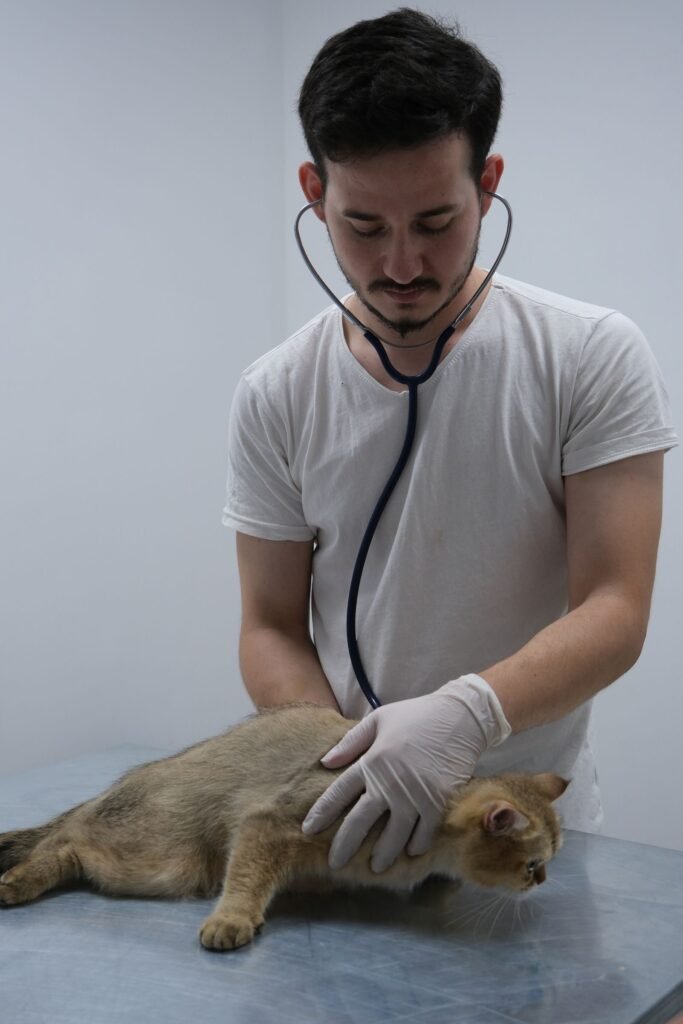
A vet usually suspects the condition from your cat's history and an examination. They feel the neck and check the heart rate. A blood test that measures thyroid hormone confirms it.
Sometimes extra tests are needed, because some affected cats have a hormone level within the normal range. Vets also check blood pressure and the kidneys with blood and urine tests, and sometimes check the heart.
Treatment options in general terms
There are four main options: medication, a special diet, surgery and radioactive iodine. Each has advantages and disadvantages, and the choice depends on the individual cat. Your vet will discuss them with you.
Medication
Anti-thyroid medication comes as a tablet or liquid. It controls the condition but does not cure it, so it is given for life. It needs regular vet checks and blood tests.
Side effects are uncommon. They can include a poor appetite, vomiting and tiredness, which usually settle after the first few weeks. International Cat Care says more serious problems are rarely seen. If your cat seems unwell on its medication, contact your vet.
Special diet
A special iodine-restricted veterinary food can work in some cats. It only works if it is the cat's only food, with no other foods, treats or prey. Cats Protection says the long-term effects are still uncertain, so this is a choice to make with your vet.
Surgery
Surgery removes the affected gland or glands under general anaesthetic. It can give a long-term or permanent cure, and cats are usually settled with medication first.
Risks include damage to the nearby parathyroid glands, which control calcium. A remaining gland can also become overactive later.
Radioactive iodine
This is a single injection that cures most cats and needs no anaesthetic. It is only done at specialist centres, and the cat must stay in hospital for a short time. Occasionally the thyroid level drops too low afterwards, and that then needs treating.
What not to do
- Do not rely on herbs, supplements, raw diets or homeopathy. Cats Protection says they do not treat the condition.
- Do not add high-iodine foods such as fish, fish oils or seaweed without asking your vet. Cats Protection says they can make the condition worse.
- Do not stop prescribed medicine, or add foods to a special diet, without your vet's advice.
Most cats can be treated very successfully, and many go on to live happy, comfortable lives for several years. After treatment, your vet will monitor kidney function, blood pressure and thyroid hormone levels. Treating the condition can also uncover hidden kidney disease, so follow-up checks matter.
How Pet Med Direct Can Help
Your vet decides which treatment suits your cat. If they prescribe medicine, our guides to how pet prescriptions work and repeat pet prescriptions explain how we can help.
We also list a prescription-only thyroid medicine category. These are prescription-only medicines, supplied solely against a valid prescription from a cat's own vet. A listing does not mean your cat needs them.
If your vet recommends a particular food, you can browse our cat food range, including veterinary diets.
Some pet medicines require a valid veterinary prescription. Pet Med Direct can only supply prescription medicines after the prescription has been checked. Always follow your vet's advice and the directions on the medicine label.
Frequently Asked Questions
Why is my old cat always hungry but thin?
Weight loss despite a good appetite is the classic sign of an overactive thyroid in cats. However, diabetes, kidney disease and other conditions can look similar, so your vet needs to check.
Is an overactive thyroid painful?
The condition itself is not painful. However, the signs, such as hunger, thirst, restlessness and vomiting, can cause your cat a lot of distress.
Can an overactive thyroid in cats be cured?
Some treatments, such as surgery and radioactive iodine, can cure the condition. Others, such as medication and a special diet, control it. Your vet can explain which suits your cat.
What age do cats get an overactive thyroid?
It is usually seen in middle-aged and older cats, and rarely in cats under seven. Cats Protection says it mainly affects cats over ten.
Can cat litter cause an overactive thyroid?
There is no scientific evidence that it can. The underlying cause of the change in the thyroid is currently unknown.
What happens if an overactive thyroid is left untreated?
Cats Protection lists weight and muscle loss, weakness, vomiting, diarrhoea and dehydration in the short term. Longer term, it can cause heart failure, high blood pressure and worsening kidney disease. That is why a prompt vet visit matters.
Related Cat Health Guides
Sources and Further Reading
- PDSA — Hyperthyroidism in cats
- International Cat Care — Hyperthyroidism in cats
- Blue Cross — Hyperthyroidism (Overactive thyroid) in Cats
- Cats Protection — Hyperthyroidism in Cats Explained
- International Cat Care — Hypertension in cats
- PDSA — Chronic kidney disease (CKD) in cats
- PDSA — Saddle thrombus (aortic thromboembolism) in cats
- PDSA — Breathing problems in cats
- Blue Cross — Emergencies in Cats
- Cornell Feline Health Center — Hyperthyroidism in Cats
This article was researched from the sources listed above. It is general information for cat owners and is not a substitute for advice from your own vet.

Need pet products or prescription medicines? Visit the Pet Med Direct shop.
Shop Cat Products