✓ Registered Vet Practice
🚚 Fast UK-Wide Delivery, Including Northern Ireland
℞ Prescription & Non-Prescription Products
→ Need to upload a prescription?
What is Cushing's Disease?
Why does it happen?
This page is for information and reference purposes only.
It is not a substitute for professional veterinary advice, diagnosis, or treatment.
Always speak to a qualified veterinary surgeon about your pet’s individual needs before starting, changing, or stopping any treatment.
Cushing’s Disease – Why does it happen?
Cushing’s Disease (also called Hyperadrenocorticism) is a common hormonal disorder in middle-aged and older dogs (usually over 6–7 years). It happens when the body produces too much cortisol – the stress hormone.
There are two main natural types:
Pituitary-dependent (most common, ~85% of cases): A small tumour in the pituitary gland in the brain.
Adrenal-dependent (~15%): A tumour in one of the adrenal glands near the kidneys.
(Iatrogenic Cushing’s is caused by long-term steroid medication and is managed differently.)
Why Does It Happen?
In a normal dog:
The pituitary gland (in the brain) releases ACTH, which tells the adrenal glands to produce the right amount of cortisol.
Cortisol helps the body respond to stress, control blood sugar, and manage inflammation.
In Cushing’s:
A benign(non-cancerous) tumour (in most cases) develops in the pituitary gland and over-produces ACTH.
The adrenal glands are constantly stimulated and enlarge, producing far too much cortisol.
In adrenal-dependent cases, the adrenal gland itself grows a tumour and produces excess cortisol without any signal from the pituitary.
The high cortisol levels then affect almost every organ in the body, leading to the classic signs.
Signs of Cushings:
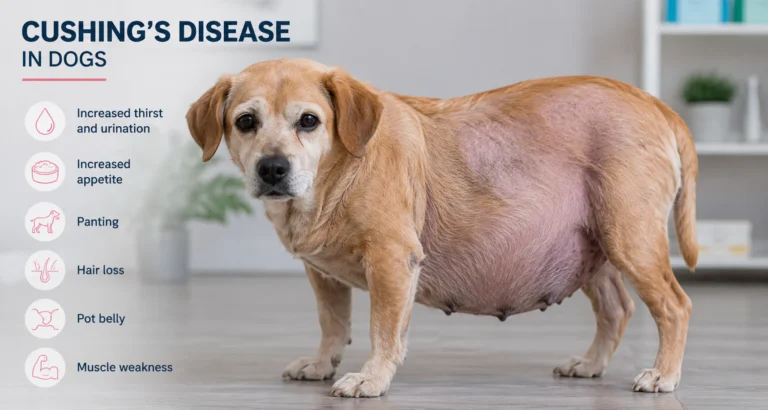
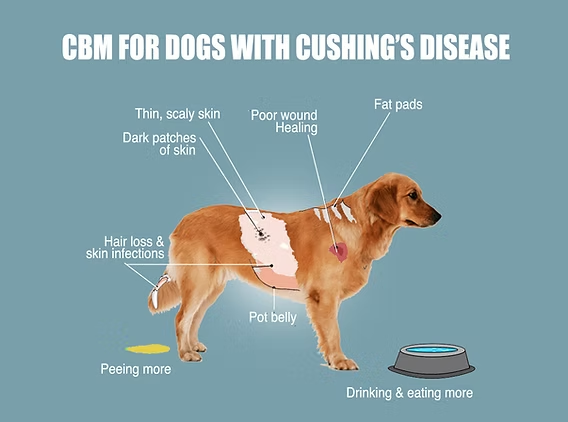
Increased thirst and urination (drinking and weeing a lot)
Increased appetite (always hungry)
Pot belly (swollen abdomen due to muscle weakness and fat redistribution)
Hair loss, thin skin, and poor coat (especially on the sides and belly)
Panting excessively
Muscle weakness and lethargy
Recurrent skin or urinary infections
Slow healing of wounds
In some cases: high blood pressure or diabetes
Many dogs show these signs gradually, so many owners often think their dog is “just getting old.”
How We Treat It
There is no cure for most cases, but it can be very well managed with medication. The goal is to reduce cortisol levels to improve quality of life and prevent complications.
Main Treatment: Trilostane
Most commonly used and safest option.
Works by blocking the production of cortisol in the adrenal glands.
Given as a daily capsule (usually once or twice a day).
Dose is carefully adjusted based on blood tests and how the dog is doing.
Monitoring:
Regular blood tests (ACTH stimulation test) starting a few weeks after beginning treatment, then every 3–6 months.
Vet will monitor for side effects (which can include tiredness, vomiting, or too-low cortisol).
Other Options:
Mitotane: Stronger drug sometimes used in difficult cases.
Surgery: Possible for adrenal tumours if only one gland is affected.
Supportive care: Treating infections, managing skin issues, and controlling blood pressure.
Key Take-Home Messages
Cushing’s is a progressive but very manageable condition. Most dogs respond well to treatment and can live happily for years.
Early diagnosis is important – the sooner we start treatment, the better the results.
Lifelong medication and regular vet checks are usually required.
Work closely with your vet: every dog needs an individual treatment plan.
If your dog is showing increased thirst, appetite, or a pot belly, speak to your vet about testing (a simple blood test can screen for it). With good management, many dogs with Cushing’s continue to enjoy a good quality of life well into their senior years.
This information is for reference only and should not replace advice from a qualified veterinary surgeon. Always speak to your vet before starting, changing, or stopping any treatment for your pet.
Shop for Cushing’s treatments below
What people say about our shop
Clients Testimonials

Incredible service!
Ordered my dog’s medication in the afternoon and it arrived the very next day. Couldn’t believe how fast it was delivered. I’ll definitely be using Pet Med Direct again!
Sarah J. - Manchester
Super quick delivery and great prices.
Placed my order for flea treatment on Monday morning, and it was at my door by Tuesday. Everything was well packaged and exactly as described. Brilliant service.
Mark R. - London
Fast and reliable.
I needed my cat’s prescription tablets urgently, and Pet Med Direct didn’t disappoint. The order was processed straight away and arrived quicker than expected. Highly recommend.
Laura H. - Glasgow
Excellent communication and next day delivery
I was kept updated from order to dispatch, and my parcel arrived the following morning. It’s great to find a company that genuinely cares about speed and service.
Tom D. - Belfast
Newsletter Updates
Enter your email address below to subscribe to our newsletter.
Your privacy is our policy.