✓ Registered Vet Practice
🚚 Fast UK-Wide Delivery, Including Northern Ireland
℞ Prescription & Non-Prescription Products
→ Need to upload a prescription?

Why Is My Cat Losing Fur?
A cat losing fur may be shedding normally, or may have a skin, parasite or health problem. Here is how to tell the difference.
Quick Answer
- Normal shedding replaces old hair and does not usually leave bald patches, so obvious bare spots, patchy fur or a thin coat are worth a vet check.
- In most cases a cat losing fur is removing it by grooming or scratching, because of itching, pain or stress, rather than the fur simply falling out.
- Possible causes include fleas and other parasites, allergies, ringworm, skin infection, stress, pain, hormonal disease and sun damage.
- Ringworm is a fungal infection that can pass between cats and people, so any suspicious bald patch should be checked by a vet.
- Contact your vet if you notice any change in your cat's coat, because hair loss is a sign and the cause has to be found before it can be treated.
If you have noticed your cat losing fur, it is right to look into it. Fur loss can show up as bald spots, patchy fur or a coat that simply looks thin.
Some of the conditions behind it are serious and can make a cat miserable. Hair loss is a sign, not a diagnosis, so your vet needs to find the underlying cause before it can be treated.
This guide explains the difference between shedding and a problem, the main causes, what to check at home and when to act.
Is Your Cat Losing Fur or Just Shedding?
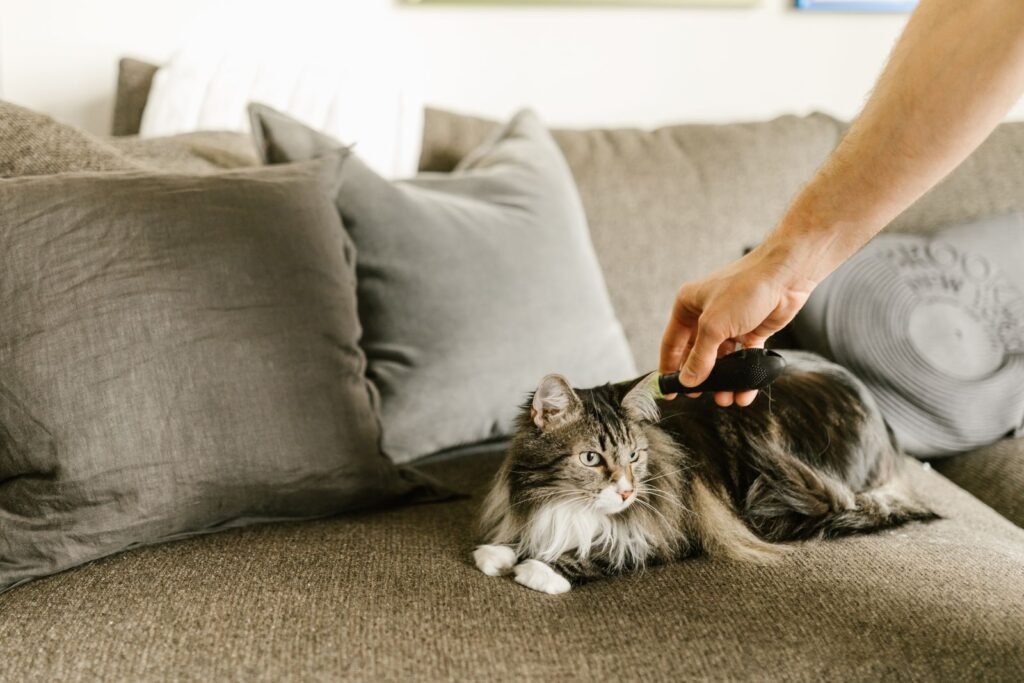
New hair growth comes with the loss of old hair. If your cat sheds without bald patches or matching hair loss on both sides of the body, it is likely to be normal coat replacement.
Shedding may be a problem if it leaves obvious bare areas or a visibly thinner coat. That is the point to ask your vet.
Itchy skin, fleas and allergies
Anything that makes the skin itch can lead a cat to lick, chew or scratch fur away. Fleas, allergic skin disease (atopy) and food allergies are common causes of itchy skin.
Allergy to flea saliva is one of the most common causes of over-grooming. It can cause a small, bumpy rash that feels like grit under the fur, often around the head, neck, lower back, tummy and back legs.
You may not see any fleas on an allergic cat, especially if the cat keeps removing them by grooming. Insect bites, mites and lice can also cause itch. Our guide to how to know if your cat has fleas covers the flea side in more detail.
Ringworm (a fungal infection)
Despite the name, ringworm has nothing to do with worms. It is a contagious fungal infection that spreads through tiny spores in the environment.
Typical signs are roughly circular areas of hair loss, often on the head, ears or legs, with broken hairs around the patch and scaly, inflamed skin. However, signs vary. Some cats have only mild signs, or no changes to the skin or coat at all.
Ringworm can look very like other skin problems, including flea allergy, so your vet will use tests to confirm it. These can include a special lamp, a look at hairs under a microscope and a fungal culture, which is the most accurate method. A culture result can take up to three weeks.
Ringworm may or may not be itchy, so do not rule it out just because your cat is not scratching.
Ringworm and people in your home
Ringworm can pass between cats and people. That is not a reason to panic, but it is a good reason to have a suspicious patch checked and to wash your hands after touching your cat. Blue Cross advises keeping children away from a cat with ringworm.
Young children, elderly people and anyone with a weakened immune system are more at risk. Blue Cross also advises taking extra care with hygiene if someone in the home is pregnant. If you notice skin changes after contact with an infected cat, seek medical advice as soon as possible.
The spores can live in the home for up to two years. Cats catch ringworm from an infected animal or from contaminated bedding and brushes. If one cat has it, your vet is likely to want to check the others too.
Skin infection and other skin disease
Bacterial skin infections often result in fur loss, although they are usually a complication of a bite, a wound or another skin problem such as an allergy.
Another example is feline eosinophilic granuloma complex. This allergy-related condition can cause painful, raised, red patches of furless skin, along with itchiness, ulcers and swollen lips.
Friction, such as from a poorly fitted collar, can also rub fur away.
Hormonal and body-wide illness
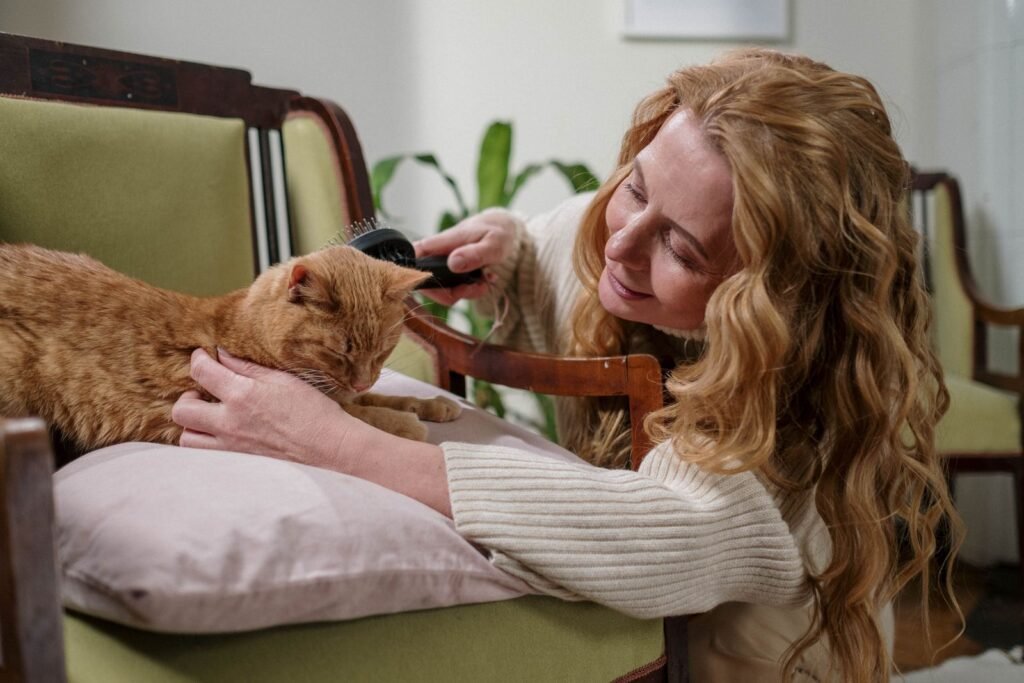
Hormonal diseases such as an overactive thyroid can sometimes cause hair loss. A poor coat with possible hair loss is one of the signs listed for an overactive thyroid, alongside increased appetite and thirst, weight loss and restlessness.
Diabetes, liver disease and the viruses FIV and FeLV can also lead to skin problems. Hair loss from hormonal disorders is not usually itchy at first, unless there is a secondary skin infection.
See our guide to the signs of an overactive thyroid in cats for more.
Pain, stress and over-grooming
Many cats over-groom and develop bald patches when they are stressed. A cat with a sore patch of skin or a painful body part may also groom that area more than usual.
Patches caused by grooming are often on the belly, the insides of the hind legs and the flanks, and are often symmetrical. Cats can also be secretive, so you may see a bald patch long before you see any licking.
Our guide to why a cat licks itself so much looks at the behaviour itself in more depth.
Sun, scarring and breed
Hair loss around the ears can be the first sign of too much sun. It can lead to scabbing, crusting and sores that will not heal, and white cats or cats with pale ears and noses are most at risk. Left untreated, sunburn can progress to skin cancer, so have sore, crusty ears checked promptly.
Permanent fur loss is possible if the skin and hair follicles are badly damaged and scarred.
What to Check at Home
When you spot a cat losing fur, you cannot work out the cause by looking. A few observations will still help your vet. Try to note:
- Where the fur is missing, and whether it is bald spots, patchy fur or a generally thin coat.
- How the remaining hair feels. Spiky, sharp stubble suggests the hair is being removed by grooming, whereas soft, normal hair suggests true hair loss.
- Any rash, scabs, dark patches, dry scaly skin or redness.
- Itching, over-grooming or biting at the skin, which some cats only do when alone.
- Other changes, such as losing whiskers, being less energetic, drinking more, or eating more or less than usual.
Emergency: Contact a Vet Immediately If…
- Your cat is straining to pass urine, making repeated trips to the litter tray with little or nothing passed, crying out when trying to pee, or passing blood in the urine. Over-grooming of the belly or around the back end can go with these signs.
A cat that is trying and failing to urinate needs to be seen urgently, and PDSA advises never waiting to see if it improves. Call your vet or the nearest out-of-hours emergency vet straight away, and read our guide on why a cat strains to urinate.
When to Contact Your Vet
- You notice any change in your cat's coat, including bald patches, thinning fur, scabs or sore skin.
- Your cat is scratching, licking or grooming more than usual, or the itching goes on for more than a few days.
- The fur loss comes with tiredness, extra thirst or a change in appetite.
- You think it could be ringworm, because it can spread to people and other pets.
Do not wait for it to settle. Areas of fur loss are at risk of other problems such as skin infections, so book an appointment promptly.
How Your Vet Finds the Cause
For a cat losing fur, diagnosis starts with a detailed history and a physical examination of the skin and the whole cat. Your vet will look for parasites and signs of skin infection.
Tests can include flea combing, skin scrapes, skin and hair samples, allergy tests, and blood and urine tests. Sometimes a treatment, such as a parasite treatment or a vet-supervised diet trial, is also used as a test.
Treatment depends on the cause. Some skin conditions cannot be cured but can be controlled, sometimes with lifelong treatment.
What Not to Do
Please do not try to treat the problem yourself without a diagnosis. Home remedies and unsuitable treatments may not work, could make things worse and can delay effective treatment. Skin ointments and creams made for people may be toxic to cats.
Be wary of non-prescription products that claim to treat flea allergy, as many lack evidence that they help and some could make skin worse.
How Pet Med Direct Can Help
Once your vet has found the cause, Pet Med Direct supplies a range of non-prescription cat skin care products and a cat grooming range. Ask your vet whether any of them suit your cat.
If your vet prescribes a medicine, you can find out how pet prescriptions work or look through our cat medication range.
Some pet medicines require a valid veterinary prescription. Pet Med Direct can only supply prescription medicines after the prescription has been checked. Always follow your vet's advice and the directions on the medicine label.
Frequently Asked Questions
Is my cat losing fur or just shedding?
Shedding without bald patches or matching hair loss on both sides is likely to be normal coat replacement. If you can see bare patches or the coat looks thin, it may be abnormal and is worth a vet check.
Can stress cause a cat losing fur?
Yes. Many cats over-groom and develop bald patches when stressed. However, it should not be assumed, because pain, itchy skin and illness can cause the same thing and a vet needs to find the cause.
Can I catch ringworm from my cat?
Yes, ringworm can pass between cats and people. Washing your hands after touching animals helps. In people it usually appears as a ring-shaped rash. The NHS advises speaking to a pharmacist first, and seeing a GP if it does not improve, is on the scalp, or your immune system is weakened.
Will my cat's fur grow back?
It depends on the cause, so your vet is the best person to ask. Permanent fur loss is possible if the skin and hair follicles have been badly damaged and scarred.
Does a bald tummy mean a urinary problem?
It can. Cats with lower urinary tract disease often over-groom the belly, leaving it bald, but allergies and other skin problems can cause the same pattern. If your cat is also straining to pee, treat it as an emergency.
Related Cat Health Guides
Sources and Further Reading
- PDSA — Hair loss (alopecia) in cats
- International Cat Care — Ringworm in Cats
- International Cat Care — Over-grooming in cats
- International Cat Care — Itchy cat: when it is not fleas
- Cats Protection — Skin disorders leaflet
- Cats Protection — Skin Problems in Cats
- Blue Cross — Ringworm in cats
- Blue Cross — Skincare for cats
- NHS — Ringworm
- MSD Veterinary Manual (Cat Owners) — Hair Loss (Alopecia) in Cats
- PDSA — Flea Allergic Dermatitis in cats
- Blue Cross — Hyperthyroidism (overactive thyroid) in cats
- Cats Protection — Why is my cat so itchy?
- International Cat Care — Feline idiopathic cystitis (FIC) in cats
- PDSA — Blocked Bladder in cats
This article was researched from the sources listed above. It is general information for cat owners and is not a substitute for advice from your own vet.

Need pet products or prescription medicines? Visit the Pet Med Direct shop.
Shop Pet Med Direct