✓ Registered Vet Practice
🚚 Fast UK-Wide Delivery, Including Northern Ireland
℞ Prescription & Non-Prescription Products
→ Need to upload a prescription?

Cat Flea Treatment Explained: Spot-On vs Tablets, Kittens and Home Protection
How to recognise fleas, how the main treatment formats differ, and how to protect your cat, your other pets and your home.
Quick Answer
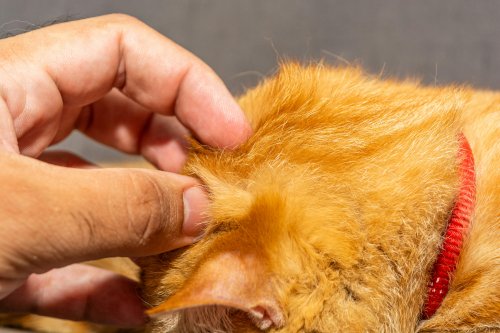
- Spot-ons are applied to the skin at the back of the neck, while oral treatments are swallowed. Neither format is automatically better, so the right choice depends on your cat, your household and the product label.
- Most of a flea problem is not on your cat. PDSA says about 95% lives in the home, so the home and every pet in it need attention too.
- Never use a dog flea product on a cat. Some contain permethrin, which is very poisonous to cats and can be fatal.
- Kittens, pregnant or nursing cats and unwell or older cats need extra care. Product age and weight limits vary, so check the label and ask your vet.
- See a vet if your cat has sore or broken skin, looks pale or weak, or is a young kitten with fleas.
Fleas are one of the most common reasons cat owners search for parasite advice. They are small, quick and hard to spot, and an infestation can build up before you notice anything.
This guide explains how to recognise fleas, why the home matters as much as the cat, and how spot-on and oral treatments work in general. It does not recommend any particular product. Your vet can advise on what suits your cat.
How Do I Know If My Cat Has Fleas?
Live fleas are often hard to see, and not every cat with fleas shows obvious signs. Cats also swallow fleas while grooming, which makes them even harder to find.
Scratching, overgrooming and skin changes
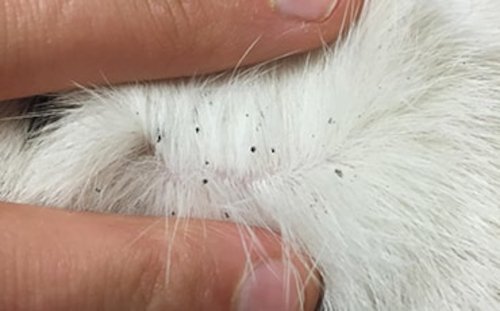
Signs can include more scratching than usual, hair loss, rough or spiky fur, bites or a rash, and sore or infected skin. Flea dirt is often found on the lower back and around the base of the tail. Our guide on how to tell if your cat has fleas goes through the signs in more detail.
Itching has many other possible causes, so see our guides to excessive scratching, excessive licking and fur loss.
The flea dirt test
Flea dirt is the dried droppings of fleas, and it contains digested blood. To check, comb your cat over a sheet of white paper. Dampen any black specks that fall off, for example with damp cotton wool. Flea dirt tends to dissolve and leave red-brown marks, while ordinary dirt does not.
A negative test does not prove your cat is flea free, because overgrooming can remove the evidence. For help finding fleas and ticks, see how to find fleas and ticks on dogs and cats.
Flea allergy dermatitis
Some cats react strongly to flea saliva. This can be linked to intense itching, a small bumpy rash around the head, neck, tummy, lower back and back legs, hair loss and red, sore skin. Cats with flea allergy often scratch, lick and bite at themselves, which can leave raw or infected patches.
PDSA notes that many flea products only kill fleas after they have bitten, so an allergic cat may still react. If you suspect flea allergy, a vet should guide treatment.
Tapeworm and anaemia
Cats swallow fleas while grooming, and fleas can carry tapeworm. International Cat Care names the flea tapeworm as a risk. PDSA advises worming your cat at the same time as flea treatment, because fleas can transmit worms. Our guide to signs of worms in cats explains more.
Heavy infestations can cause anaemia through blood loss. This can be life-threatening in kittens.
Why Does Flea Prevention Matter So Much?
The adult fleas you see on your cat are only a small part of the picture. PDSA says 95% of a flea problem lives in the home, mostly as eggs, larvae and pupae in carpets, bedding and soft furnishings. It gives an example in which a cat carrying around 50 fleas could mean up to 1,000 fleas and eggs in the home.
Cats Protection describes how quickly this builds up. Adult female fleas lay eggs daily, larvae live in the environment for a few weeks, and pupae can stay dormant for months. International Cat Care adds that pupae are in tough cocoons, adults emerge when they sense a host, and the full cycle can be as short as 15 days.
This is why treating only the cat that is scratching rarely solves the problem. Regular preventive treatment of every pet, plus attention to the home, is what breaks the cycle. International Cat Care also points out that cocoons resist treatment, so repeat treatments may be needed.
How Do Spot-On Flea Treatments Work?
A spot-on is a small amount of liquid applied directly to the skin, usually at the back of the neck where your cat cannot easily lick it. PDSA describes them as a small vial of liquid applied to the skin.
- Part the fur and apply to the skin, not on top of the coat, exactly as the label directs.
- Check the product is licensed for cats and suits your cat's age and weight.
- Follow the label on keeping your cat dry around the time of application. Instructions differ between products.
- Keep other pets from licking the treated area until it is dry.
- Wash your hands afterwards, as the label directs.
PDSA lists itchy skin, hair loss and sores where the product was applied as possible side effects. Tell your vet if you see them.
How Do Oral Flea Treatments Work?
Oral treatments are swallowed rather than applied to the coat. They come as tablets, chews, liquids or pastes, depending on the product. PDSA says tablets tend to suit cats that love their food, as some are flavoured or can be hidden in a treat.
International Cat Care says tablets are suitable if your cat can take them, and advises choosing a product licensed for cats on veterinary advice. If your cat is hard to tablet, tell your vet, who can talk through the options.
Other formats exist too, including collars and sprays. PDSA and International Cat Care both say collars are generally less effective and are not usually advised unless a vet recommends one. Sprays vary, and the product must be safe for cats because it can be groomed off. Powders and flea shampoos are generally not recommended.
Spot-On vs Tablets: What Are the Practical Differences?
No format is universally safer or more effective. What matters is a product licensed for cats, used correctly, with the right weight and age band.
| Question | Spot-on | Oral (tablet, chew or liquid) |
|---|---|---|
| How is it given? | Applied to the skin at the back of the neck | Swallowed, by mouth or with food, depending on the product |
| Handling | Needs a cat that will stay still while you part the fur | Needs a cat that will take a tablet or accept food or paste |
| Grooming and other pets | Other pets and children should not touch or lick the site until dry | Nothing is left on the coat to touch or lick |
| Washing or wet weather | Follow the label on keeping the cat dry | Not applied to the coat, so coat wetness is less of a concern |
| How long it lasts | Varies by product, check the label | Varies by product, check the label |
| Possible side effects | Skin irritation where applied, plus general reactions | General reactions such as stomach upset, depending on the product |
Your vet can help you weigh these up for your own cat, including whether a combined flea and worm product suits your situation.
What About Kittens, Pregnant or Nursing Cats and Older Cats?
Kittens
Indoor kittens can still get fleas. PDSA says not all products are suitable for kittens under 8 weeks old, and minimum ages and weights differ from product to product. Check the label and ask your vet before treating a young kitten. Kittens are more likely to become seriously ill, so do not delay if you find fleas on one.
Pregnant and nursing cats
Suitability in pregnancy and while nursing depends on the product. Always check the label and speak to your vet first.
Older or unwell cats
Cats with long-term illness, skin disease or ongoing medication may need a different approach. Tell your vet about any health conditions or medicines before starting a new flea product.
How Do I Keep All My Pets Safe?
PDSA advises treating your cat and any other cats, dogs and rabbits in the home on the same day. International Cat Care says growth-regulating products only work if every animal in the household is treated.
- Use products licensed for each species. A product for one species may be unsafe for another.
- Check that each product is not toxic to the other animals in your home. PDSA notes your vet may suggest leaving a few days between products when you first start.
- Keep cats away from a dog that has just had a spot-on until the area is dry, and stop them grooming each other.
- Keep to the weight band on each label, and weigh your cat rather than guessing.
- New pets should be flea free before they come into the home.
Why Can Dog Flea Products Be Dangerous to Cats?
- Some dog flea products contain permethrin, which is very poisonous to cats and can be fatal.
- Some household flea sprays also contain it, so check the label before using one around cats.
- A cat can be exposed by grooming or snuggling against a recently treated dog.
- Never apply a household flea spray to your pet.
Read our guide on why some dog flea treatments are dangerous to cats. If you think your cat has been exposed, call your vet or nearest emergency vet straight away.
How Do I Treat the Home Safely?
Because most of the problem lives in the home, treating your cat alone is not enough.
- Vacuum often, including carpets, soft furnishings and floorboard gaps. This helps but will not remove every flea. Empty or dispose of the bag promptly and clean bagless containers.
- Wash pet bedding hot. PDSA suggests 60 degrees Celsius.
- Consider a household flea spray, used strictly as the label directs. Check it is safe for cats and does not contain permethrin.
- Keep pets out of treated rooms for as long as the label says.
- Cover fish tanks while spraying, as some sprays are toxic to fish.
- Do not rely on plant-based remedies. International Cat Care says they are unproven and some are toxic to cats.
PDSA also suggests de-fleaing the home once a year and vacuuming regularly as part of prevention. Ask your vet for advice for your own household.
Emergency: Contact a Vet Immediately If...
- Your cat may have been exposed to a dog flea product, or shows tremors, twitching, drooling, seizures or collapse after any flea treatment.
- A kitten is weak, floppy or has pale gums and has fleas.
- Your cat has swallowed a flea product or household spray.
Call your vet or the nearest emergency vet straight away. If in doubt, it is better to call for advice.
When to Speak to Your Vet
- You think your cat has fleas and are unsure which product is suitable.
- Your cat has sore, scabby, infected or hairless skin.
- Fleas keep coming back despite regular treatment.
- Your cat is a young kitten, pregnant, nursing, older or unwell.
- Your cat has had a reaction to a flea product before.
PDSA says a flea product may be collected without an appointment if your cat has had a recent check. If skin problems have developed, an appointment is needed.
How Pet Med Direct Can Help
Pet Med Direct is an online pet pharmacy. You can find out how pet prescriptions work if your vet recommends a prescription product.
We also list a range of non-prescription products in our cat fleas and ticks category. Always check the label for your cat's age and weight, and speak to your vet if you are unsure.
Some pet medicines require a valid veterinary prescription. Pet Med Direct can only supply prescription medicines after the prescription has been checked. Always follow your vet's advice and the directions on the medicine label.
Frequently Asked Questions
Is spot-on or a tablet better for cat fleas?
Neither is better for every cat. The right choice depends on your cat's age, weight and health, how easily you can give it, other pets at home, and the product label. Your vet can help you choose.
How do I do the flea dirt test?
Comb your cat over white paper, then dampen the black specks that fall off. Flea dirt tends to dissolve into red-brown marks, as it contains digested blood.
Do indoor cats get fleas?
Yes. Fleas can arrive on people, other pets or clothing, and indoor kittens are still at risk. Indoor cats can still need regular preventive treatment.
How old does a kitten need to be for flea treatment?
It depends on the product. PDSA says not all products suit kittens under 8 weeks old, so check the label and ask your vet before treating a young kitten.
Can I use my dog's flea treatment on my cat?
No. Some dog products contain permethrin, which is very poisonous to cats and can be fatal. Use only products licensed for cats.
Why do I still see fleas after treating my cat?
Most of the flea population lives in the home as eggs, larvae and pupae, so new adults can keep emerging for some time. Treat every pet and the home, and speak to your vet if fleas persist.
Related Cat Health Guides
More cat advice is in our Cat Health Hub.
Sources and Further Reading
- PDSA - Fleas on cats
- PDSA - How to choose the best flea and worm treatment for cats
- PDSA - Flea Allergic Dermatitis in cats
- PDSA - Preventing fleas
- International Cat Care - Fleas and flea control in cats
- Cats Protection - Fleas
This article was researched from the sources listed above. It is general information for cat owners and is not a substitute for advice from your own vet.

Need pet products or prescription medicines? Visit the Pet Med Direct shop.
Shop Cat Products