✓ Registered Vet Practice
🚚 Fast UK-Wide Delivery, Including Northern Ireland
℞ Prescription & Non-Prescription Products
→ Need to upload a prescription?

Why Is My Dog Lethargic?
Is your dog lethargic? What lethargy looks like, the possible causes of low energy, and when to call your vet.
Quick Answer
- Lethargy is a vague symptom that can point to many different problems, from minor to serious, and it often looks like sleeping more, moving slowly and losing interest in play and walks.
- Heat or a long walk can make a dog tired, but lethargy can also be an early sign of illness.
- Possible causes include pain, infection, being overweight, heart disease, anaemia, kidney or liver disease, hormonal problems, medicine side effects, poisoning, a gut blockage and heatstroke.
- PDSA advises contacting a vet whenever your dog seems low in energy or not quite themselves. Vets Now says sudden weakness and lethargy in a younger dog may signal a more serious problem, especially if your dog also stops eating or drinking.
- Collapse, difficulty breathing, blue, dark or pale gums, a swollen abdomen and poisoning are emergencies.
Is your dog lethargic, or just not themselves? PDSA describes lethargy as a vague symptom that can indicate one of many different problems. It can be mild or severe, and it may come and go.
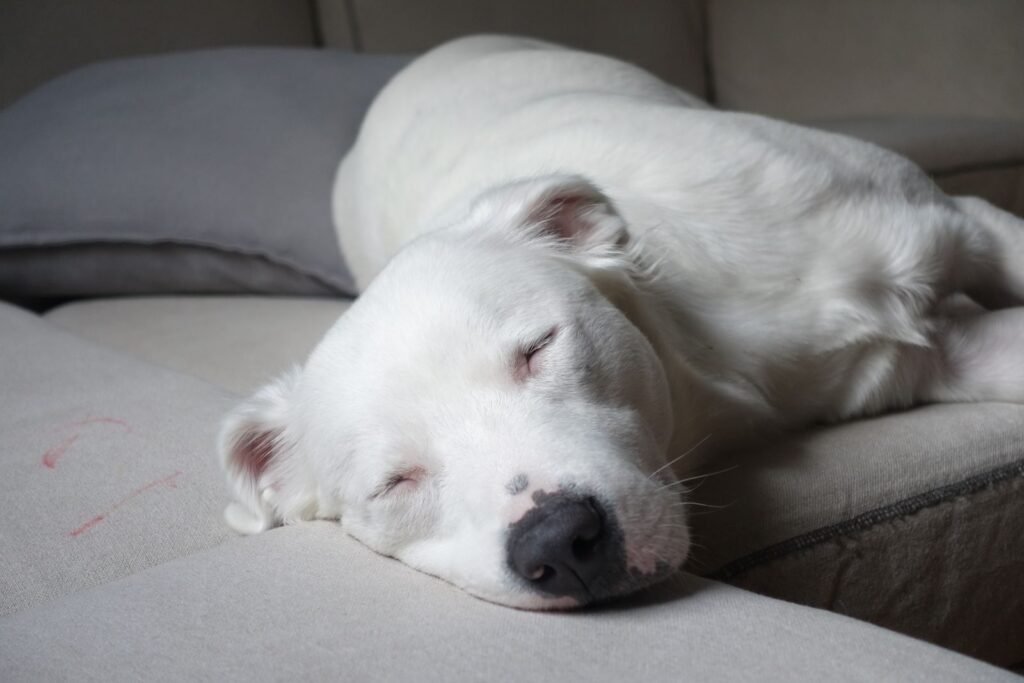
A lethargic dog often sleeps more, moves slowly and loses interest in play and walks. Vets Now describes it as sluggishness, drowsiness or dullness, such as a lack of interest in walks, play or food. Dogs Trust describes it as spending more time resting or sleeping, or responding less to commands and interaction. It says to contact a vet if this is out of character.
Heat or a long walk can make a dog tired. However, Vets Now says lethargy can also be an early sign of illness. Weakness is related but different: VCA describes it as struggling to stand, moving unsteadily, shaking, fainting or collapsing.
What Can Make a Dog Lethargic?
Pain or discomfort
Pain, such as from arthritis, is likely to cause lethargy. PDSA and Vets Now both list it as a cause.
Infections
Infections can cause lethargy. Vets Now names parvovirus, distemper, kennel cough and leptospirosis.
Being overweight
Overweight dogs tend to feel lethargic and move around less, according to PDSA. Vets Now calls obesity a major cause of exercise intolerance and lethargy.
It also says obesity raises the risk of heart disease, cancer, diabetes and arthritis.
Heart disease
Low energy is a common symptom of heart disease in dogs. VCA lists night coughing, breathing difficulty and a bluish tongue or gums among the signs of heart failure.
Anaemia
Anaemia means low red blood cells. PDSA says anything that causes anaemia is likely to make a dog much less active and very tired after exercise. Vets Now says anaemia is often caused by parasites such as fleas or intestinal worms.
Kidney, liver and hormonal problems
Kidney disease and liver disease can cause lethargy. Hormonal problems, including diabetes, Cushing's disease and an underactive thyroid, can cause extreme lethargy, according to PDSA.
VCA's page on weakness also lists low blood sugar, abnormal calcium or potassium, Addison's disease, nerve and muscle disorders, joint problems and cancer.
Medicines and flea or worm products
Vets Now lists newly prescribed medicines and new flea or worm products among the possible causes of lethargy. PDSA says to speak to your vet if you notice any side effects after giving a prescribed medicine.
Poisoning
Poisoning can cause lethargy. Vets Now gives garlic and onions as examples. VCA says poisoning of any sort is an emergency.
Gut problems
A gut blockage can cause lethargy, along with vomiting, diarrhoea, abdominal pain, constipation, reduced appetite and weight loss. If you think your dog has swallowed something it should not have, contact your vet immediately. PDSA says never to wait to see if problems develop.
Heatstroke
The RSPCA says heatstroke can cause weakness and lethargy. A dog may sleep more, struggle to stand or walk, or seem sluggish. VCA lists excessive panting, lethargy and distress as signs that can progress to unconsciousness and death.
Is It Normal for a Dog to Sleep a Lot?
Puppies normally sleep a lot. Vets Now says roughly 15 to 20 hours a day, and the Royal Kennel Club gives about 15 to 20 hours at 4 to 12 weeks, falling to about 12 to 14 hours beyond 6 months. It calls long sleeping totally normal in puppies.
However, Vets Now says a puppy that is constantly tired and listless while awake is almost certainly showing an underlying problem, and to contact your vet straight away. The Royal Kennel Club also lists sudden changes in a puppy's sleep pattern, such as seeming excessively tired, as a possible sign of a health problem.
In older dogs, gradual slowing down can come from osteoarthritis or other age-related conditions that cause pain or reduced exercise tolerance. The RSPCA warns that behaviour changes put down to age may have a medical cause.
Signs to Look For Alongside Lethargy
Note whether your dog shows any of these, as they can help your vet:
- Sleeping or resting more than usual
- Moving slowly and losing interest in walks, play or food
- Responding less to commands and interaction
- Not eating or not drinking
- Vomiting or diarrhoea
- Struggling to stand, moving unsteadily, shaking or fainting
- Seeming dull, avoiding going out or greeting people, staring at walls or seeming confused
Writing about older dogs, the Royal Kennel Club advises calling the vet if a dog seems dull, avoids going out or greeting you, stares at the wall or seems confused.
What to Do and What Not to Do
PDSA advises contacting a vet whenever your dog seems low in energy or not quite themselves. Do not force a lethargic dog to walk, play or do activities it does not want to do.
Before you call, it helps to note the things VCA says vets ask about:
- How long it has lasted, and whether it is constant or comes and goes
- Changes in activity, appetite, water intake, bowel habits and urination
- Any current medicines, and anything unusual your dog may have eaten
Emergency: Contact a Vet Immediately If…
- Your dog collapses. VCA says collapse should always be treated as a medical emergency, and Cornell says a collapsed or very weak dog should be seen immediately.
- Your dog has difficulty breathing, or blue, dark or pale gums or tongue.
- Your dog has a seizure. Seizures lasting over five minutes, or in clusters, need immediate emergency care.
- Your dog has a swollen abdomen, especially with unproductive retching, which may mean bloat. Cornell says bloat can be a life-threatening emergency, and VCA calls it one of the most serious emergencies in dogs.
- You think your dog has swallowed a toxin, a medicine or a foreign body, or has been poisoned in any way.
- Your dog is vomiting and also has lethargy, restlessness, loss of appetite or thirst, or diarrhoea. Dogs Trust says this needs urgent care.
- Your dog shows signs of shock, which VCA lists as noisy rapid breathing, a rapid heart rate with a weak pulse, pale gums, severe listlessness and cool limbs.
Call your vet or the nearest out-of-hours emergency vet straight away.
When to Contact Your Vet
- PDSA advises contacting a vet whenever your dog seems low in energy or not quite themselves.
- Vets Now says a younger dog that suddenly becomes weak, listless and lethargic may have a more serious problem, especially if it also stops eating or drinking, and to contact your vet for advice. For a puppy that is constantly tired and listless, it says to contact your vet straight away.
- With persistent vomiting or diarrhoea, VCA says to contact a vet for blood in the stool, signs lasting 6 to 12 hours, or a dog that becomes less responsive or weak.
Out of hours, if you feel it is an emergency, contact your vet's out-of-hours service or your nearest emergency vet.
If You Think It Could Be Heatstroke
The RSPCA warns that heatstroke can be fatal, so you need to act fast. Its first-aid steps end with transport to a vet. Stop exercise and move your dog into shade. Pour water that is cooler than your dog's body over the neck, belly and thighs, avoiding the head, and fan your dog. Then take your dog to the nearest vet in a cool, well-ventilated vehicle, and call ahead to tell the vet it is urgent. The RSPCA's rule is cool first, transport second.
The RSPCA says not to place damp towels over an overheated dog's body, because they can trap heat. If you see a dog in a hot car showing signs of heatstroke, the RSPCA says to dial 999.
How Vets Investigate Lethargy
Vets usually do a physical exam and ask about recent behaviour and health history. Blood, urine and faecal tests are common. Vets Now says X-rays, imaging or an ECG may be used to check the heart.
For weakness, which is related to lethargy, VCA lists first-line tests as a complete blood count, blood biochemistry, urinalysis and a thyroid hormone test. Depending on those results, additional tests may include kidney and liver function tests, X-rays or ultrasound, heart tests such as an ECG, and Addison's disease testing.
How Pet Med Direct Can Help
Pet Med Direct is a UK online pet pharmacy. Because lethargy in dogs can have so many possible causes, the first step is a vet check. If your vet recommends or prescribes treatment, you can browse our dog medication range and read how pet prescriptions work.
Parasites such as fleas or worms are one possible cause of anaemia, so you may find our Flea, Tick and Worming Guide for Dogs useful.
Some pet medicines require a valid veterinary prescription. Pet Med Direct can only supply prescription medicines after the prescription has been checked. Always follow your vet's advice and the directions on the medicine label.
Frequently Asked Questions
Why is my dog lethargic all of a sudden?
Lethargy has many possible causes, including pain, infection, heart disease, anaemia, medicine side effects, poisoning, a gut blockage and heatstroke. Vets Now says a younger dog that suddenly becomes weak, listless and lethargic may have a more serious problem, especially if it also stops eating or drinking. Contact your vet for advice.
Is it normal for my dog to sleep a lot?
For puppies, yes. Vets Now says they sleep roughly 15 to 20 hours a day. The Royal Kennel Club says puppies over 6 months move towards a more adult-like pattern of around 12 to 14 hours a day, though this varies between dogs. If your dog is resting or sleeping more than usual and it is out of character, Dogs Trust says to contact a vet.
Could my dog's tiredness be from the heat?
It could. Vets Now says very hot weather can make a dog lethargic, and the RSPCA says heatstroke can cause weakness and lethargy. Heatstroke can be fatal, so if you suspect it, cool your dog first and then take it to a vet.
What if my dog is lethargic and not eating?
Contact your vet for advice. Vets Now says sudden lethargy together with not eating or drinking may signal a more serious problem, and Dogs Trust says vomiting alongside lethargy, loss of appetite or thirst, or diarrhoea needs urgent veterinary attention.
Why is my older dog slowing down?
Gradual slowing down can come from osteoarthritis or other age-related conditions. However, the RSPCA says behaviour changes blamed on age may have a medical cause.
Can my dog's medicine make them sleepy?
They can. Vets Now lists newly prescribed medicines and new flea or worm products among the possible causes of lethargy, and PDSA says to speak to your vet if you notice any side effects after giving a prescribed medicine.
Related Dog Health Guides
Sources and Further Reading
- PDSA — Lethargy (low energy) in dogs
- Vets Now — Why is my dog lethargic and not himself? Causes of lethargy in dogs
- VCA Animal Hospitals — Testing for Weakness
- Dogs Trust — When to take your dog to the vet
- Cornell University Riney Canine Health Center — When to go to the ER
- VCA Animal Hospitals — Emergencies in Dogs
- RSPCA — How to recognise and treat heatstroke in dogs
- Royal Kennel Club — Why does my puppy sleep so much
- Royal Kennel Club — Senior dogs
- PDSA — Gut blockage (foreign body) in dogs
- RSPCA — Caring for older dogs
This article was researched from the sources listed above. It is general information for dog owners and is not a substitute for advice from your own vet.

Need pet products or prescription medicines? Visit the Pet Med Direct shop.
Shop Pet Med Direct